They say the worst vice is advice. However, if I were advising Pauline Hanson or One Nation, my first piece of advice would be remarkably simple: define your terms…
Every high-school debater learns the same lesson. Before you can win an argument, you must first define the topic. The side that owns the definition often wins the debate before it has properly begun.
The same principle applies in law. It is not uncommon to watch senior counsel spend hours arguing over the meaning of a single word, phrase or constitutional provision. Definitions matter because words matter. In many cases, the argument itself is won or lost on their interpretation.
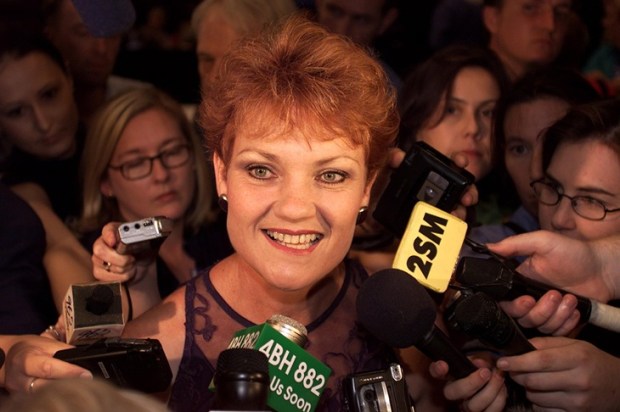
Which brings us to Pauline Hanson’s recent remarks about multiculturalism.
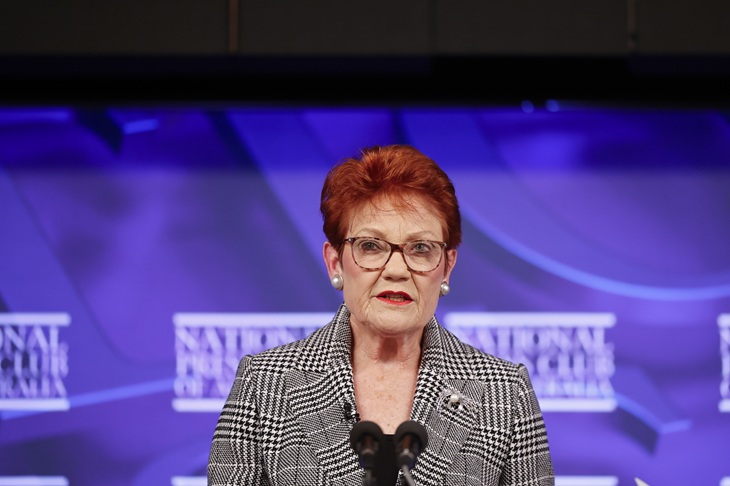
Hanson caused predictable outrage when she told the National Press Club that Australia should aspire to be a monoculture rather than a multicultural society. The reaction was immediate. Commentators accused her of wanting everyone to look the same, eat the same food, speak the same language, and abandon their heritage. Social media erupted. The usual battle lines were drawn.
Yet as I watched the debate unfold, I was struck by a different thought. I am no longer convinced that the people arguing about multiculturalism are actually talking about the same thing. In fact, I am not sure many of them know what the word means at all.
For decades, multiculturalism has been one of those concepts that everybody supports until they are asked to define it. Ask an Australian politician why multiculturalism is a good thing and the answer is usually some variation of the same theme: food. We are told multiculturalism gives us wonderful restaurants, diverse cuisines and the opportunity to experience different cultures through what we eat. That may all be true. It is also beside the point.
Food is not culture. At least not in the sense that matters politically. A society does not rise or fall because people enjoy different cuisines. Civilisations are not built upon recipes. Culture is something much deeper. It is a society’s collection of values, assumptions and beliefs about how life should be organised. It is what people regard as right and wrong. It is how they understand freedom, authority, responsibility, family, citizenship, law and community.
Politics, as the saying goes, is downstream from culture. But culture itself is downstream from values. That is where the current debate becomes confused. When Pauline Hanson speaks about a monoculture, many people hear ethnicity. What she appears to mean is values. Those are not the same thing.
The confusion is not entirely new. We have seen something similar before. For years, public debate over gender became bogged down because different people were using the same words to mean different things. What one side understood as biological sex, another understood as gender identity. Rather than beginning with definitions, we spent years arguing over conclusions. Much of the heat generated by that debate was the result of people talking past one another.
Something similar is now happening with multiculturalism. One side hears the word ‘culture’ and thinks of food, festivals, clothing, and language. The other hears ‘culture’ and thinks of values, institutions, and social norms. Unsurprisingly, they reach entirely different conclusions. Before we can decide whether Australia should be multicultural, monocultural, or something in between, we first need to decide what culture actually is.
Australia has never been ethnically homogeneous. Even before large-scale post-war migration, Australians came from English, Irish, Scottish, Welsh, European, and countless other backgrounds. What united them was not ancestry but a broadly shared set of cultural assumptions: freedom of speech, equality before the law, parliamentary democracy, religious tolerance, personal responsibility, and a belief that one’s children should have a better life than oneself. People can debate that list, add to it or subtract from it, but few would deny that Australia possesses a distinct civic culture.
A Greek-Australian, an Indian-Australian, and a Chinese-Australian can all belong to the same culture if they share the same underlying values. Equally, two people of identical ethnic backgrounds can belong to very different cultures if they hold fundamentally different views about freedom, citizenship, the role of the state, or the relationship between the individual and society. Culture is not inherited in the same way ethnicity is. It is learned, transmitted, and shared.
The real question is whether newcomers are expected to adopt it. This is where the multicultural debate often becomes strangely evasive. If multiculturalism simply means that Australians are free to maintain elements of their heritage while embracing Australian values, then most Australians already support it. Indeed, that is precisely how successive generations of migrants successfully integrated into Australian society.
If, however, multiculturalism means that all cultural values are equally valid and that Australia should have no dominant culture of its own, then we are discussing something entirely different. That is not diversity. That is fragmentation. A nation cannot function without some common understanding of who it is. Every successful society possesses a core culture. The French have one. The Japanese have one. The Americans have one. Even countries that celebrate diversity maintain a set of values that newcomers are expected to embrace. Australia is no different.
Which is why the debate over multiculturalism is ultimately a debate about definitions. The argument is not really about food. It is not about race. It is not even about ethnicity. It is about whether Australia possesses a core set of values that deserve to be preserved, transmitted, and defended.
The tragedy of the current debate is that very few people seem interested in discussing that question honestly. Instead, we argue about words. We accuse one another of motives. We talk past each other. And we leave the most important question unanswered.
What exactly does it mean to be Australian?
Until we can answer that, the multiculturalism debate will continue generating more heat than light.
Which brings me back to my original advice.
If Pauline Hanson wants to win this argument, she should stop talking about multiculturalism and start talking about culture. She should stop talking about monocultures and start talking about values.
Because before Australians can decide whether they support multiculturalism, monoculturalism or something in between, they first need to agree on what culture means in the first place.
And in politics, as in debating, the side that defines the terms usually defines the outcome.