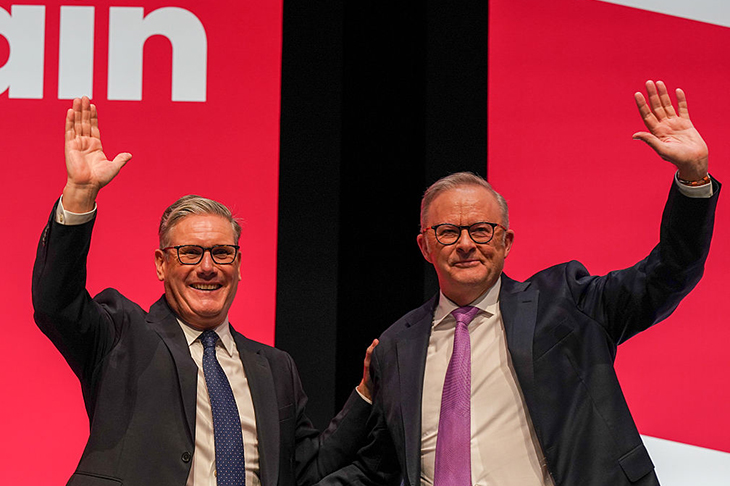
It seems like yesterday – last September, in fact – that Prime Minister Anthony Albanese arrived at Number 10 Downing Street like a latter-day Barry McKenzie, with his fiancée in one hand, and a miserly yet egotistical four-pack of Albo’s Pale Ale beer in the other, for a dinner for six with the Prime Ministers of the UK and Canada and their wives. At the time, Albanese was enjoying a victory lap. Despite a humiliating defeat in the Voice to Parliament referendum, he had avoided losing government after one term, instead winning an historic landslide to match that achieved by Sir Keir Starmer, a year earlier. Yet, less than two years after that landslide, Starmer has become the latest victim of Britain’s revolving-door premiership. With Andy Burnham poised to be the sixth prime minister in seven years, Britain’s governing parties have turned Number 10 into a short-stay rental.
For Albanese, the speed of Starmer’s rise and fall should serve as a cautionary tale: the parallels between the two PMs are more than passing.
Both are in office thanks to ‘loveless landslides’ in which their historic majorities in the lower house are based on only a third of the primary votes. Their victories were achieved not because they inspired enthusiasm, but because voters were fed up with the failure of their fractious conservative predecessors to address the critical issues facing their nations.
Starmer followed years of Conservative turmoil post-Brexit under David Cameron, Theresa May, Boris Johnson, Liz Truss and Rishi Sunak. Albanese followed the factional knifing of Tony Abbott and Malcolm Turnbull, and the curious Covid cabinet of Scott Morrison, in which he secretly held most of the portfolios.
In the face of this chaos, Starmer and Albanese each campaigned as a competent manager, seeking to reassure voters that he was a safe pair of hands. Yet both plummeted in popularity as they presided over ideologically driven net zero agendas, precarious energy security and soaring costs, which they sought vainly to blame on foreign wars.
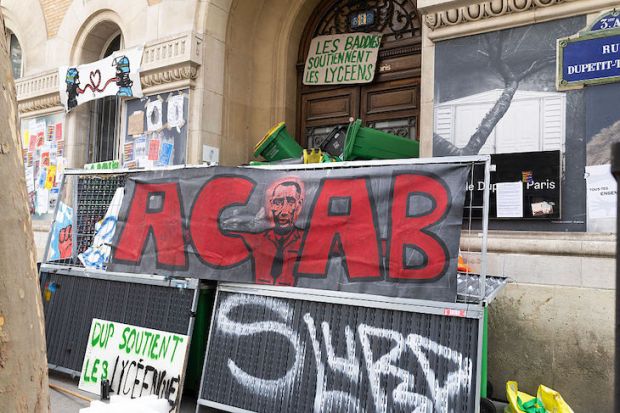
Each also pursued an anti-Israel foreign policy agenda, fanned by the lies and distortions of their respective national broadcasters, while their cities were riven by Islamist protests. Yet despite pandering to extremists, both disappointed their noisy activist base.
Both men emerged from parties that had spent years moving away from their traditional working-class bases. Each has struggled to hold together an increasingly diverse coalition of university-educated cosmopolitans, ethnic minorities, and blue-collar voters. As a result, both have struggled to convert parliamentary dominance into public affection. They were not popular; just less unpopular than their conservative opponents.
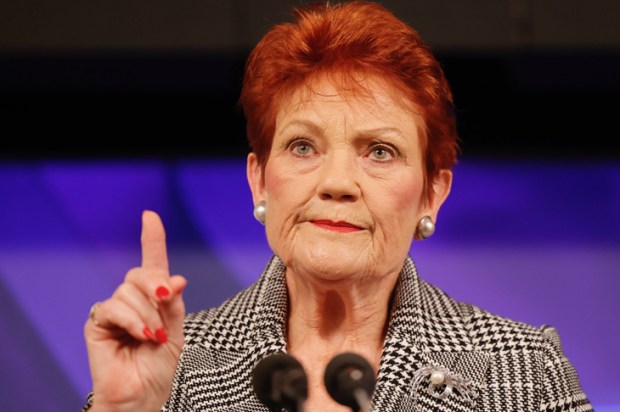
In both countries, voter anger about immigration has become the trigger for the rise of right-wing insurgent parties that call a spade a shovel and have promised decisive policy change to address voter concerns. Reform UK and One Nation stand poised to deliver shock therapy to the political establishment at the next election.
The irony for Starmer is that he came to office after a period in which the Conservatives repeatedly promised to reduce net migration, even as net migration reached record levels. Yet under Starmer, not only did the armada of illegal boats keep arriving, but Two-Tier Keir’s thought police intimidated or incarcerated anyone who dared to complain. But silencing dissent only increased the anger. The tragic death of Henry Nowak and the barbarous attempted beheading in Belfast sounded the death knell for Starmer.
In Australia, Albanese infuriated Australians during his first term with his proposed race-based Voice to parliament, which was resoundingly defeated at a referendum. Yet he performed a seemingly miraculous resurrection of his political fortunes in 2025.
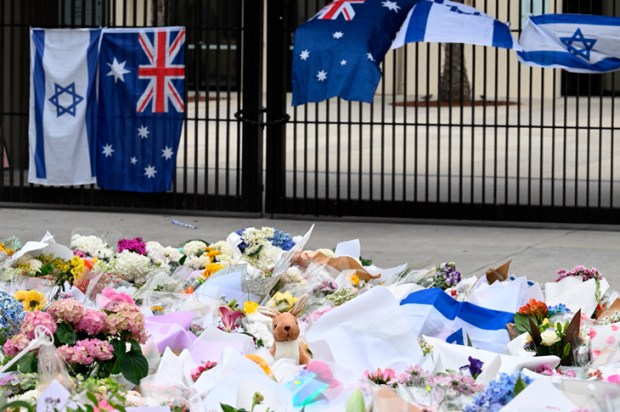
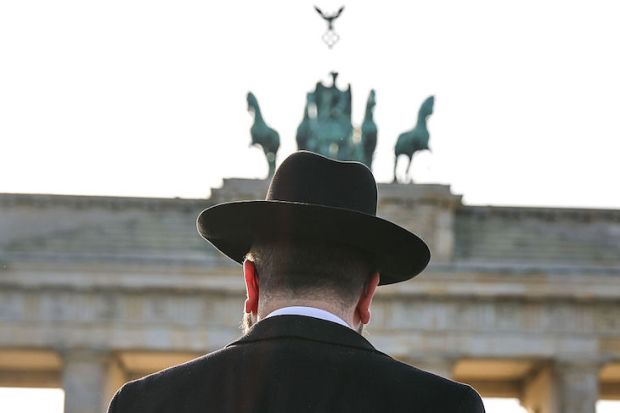
It was not to last. Labor’s indifference to a tsunami of Islamist antisemitism culminated last December in the nation’s worst terrorist attack, with the slaughter of 15 Australians celebrating a Jewish family festival at Bondi Beach, the quintessential symbol of the Australian dream.
At the same time, having opened the floodgates to the largest migration intake in the nation’s history, Albanese owns the housing affordability crisis, soaring rents, and infrastructure congestion.
His response was to blame the ‘boomers’ and ‘change his position’ on negative gearing and capital gains tax, using his budget to take a wrecking ball to the property market and wage class war on capitalists. All he succeeded in doing was to squander his own political capital.
Less than two years ago, Starmer was the golden boy in Downing Street. Today, he’s the caretaker, awaiting the removalists. The lesson for Albanese is stark: political power is not owned but leased, and parties are ruthless landlords.
Got something to add? Join the discussion and comment below.
You might disagree with half of it, but you’ll enjoy reading all of it. Try your first month for free, then just $2 a week for the remainder of your first year.