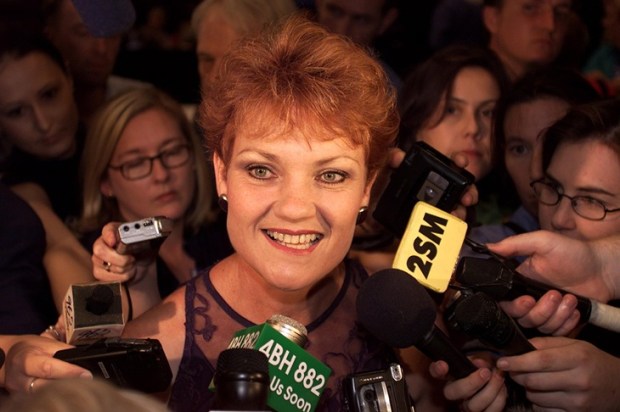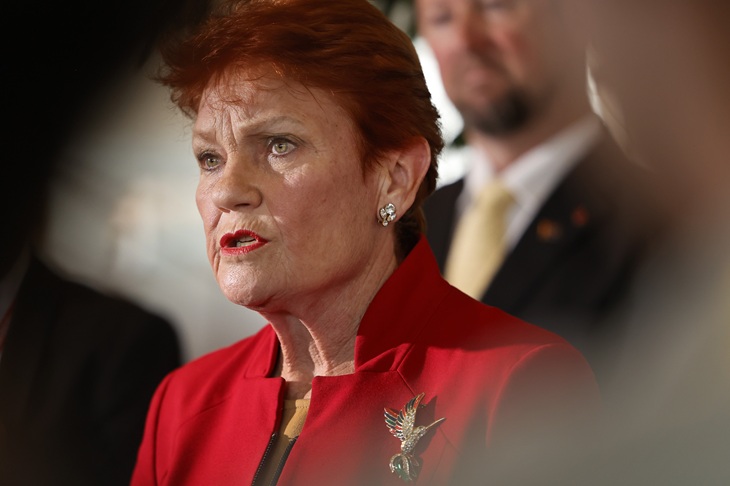
Pauline Hanson’s One Nation is currently one of the most popular parties in Australia, with polling suggesting that a growing number of Australians want Hanson to play a much larger role in national politics.
However, if One Nation is to seriously challenge the major parties, it must win over younger Gen Z voters – an area that remains one of the party’s clear weaknesses.
The method is easier said than done.
One Nation needs to speak directly to younger voters, while also encouraging younger supporters to become strong public spokespeople for the party. Younger voters are more likely to listen when the message comes from people who understand their concerns and speak in their language. But it also comes down to vision. The party needs to present a clear future for young Australians that appeals to them and gives them something to be excited about.
According to data published by the ABC, only about 7 per cent of One Nation’s total supporter base is made up of Gen Z voters. A large-sample poll conducted by the market research and political analytics firm Redbridge Group found that 19 per cent of Gen Z males intend to vote for One Nation. Among Gen Z males, Labor leads with 39 per cent, followed by the Greens at 24 per cent. Among Gen Z women, the Greens lead with 38 per cent, Labor sits at 26 per cent, the Coalition at 14 per cent, and One Nation drops to 11 per cent.
An overall breakdown from the Sky News Pulse/YouGov poll, conducted from June 9-16, 2026, showed Gen Z support sitting at Labor 44 per cent, the Greens 40 per cent, One Nation 19 per cent, the Coalition 17 per cent, and ‘none of the above’ at 12 per cent.
This is not anything new. Younger voters have traditionally been hesitant to vote for conservative parties, with a large portion of the youth vote influenced by universities and higher education environments that tend to lean progressive. For many young people, it can be difficult to feel any strong connection to conservative politics.
Labor, and especially the Greens, have traditionally been strong at grassroots campaigning. They get out into communities, present themselves as approachable, and make young voters feel as though their concerns are being heard. For the Greens, part of the appeal is that they present themselves as approachable and as being ‘one of them’. Younger voters respond to that. On the other hand, the Liberals have traditionally been weaker in grassroots campaigning, often relying too heavily on voters simply making what they believe is the ‘right’ choice.
You can see this on university campuses as well. Younger voters typically rally around the Greens and the Labor left, while conservative parties such as the Liberals often take a more behind-the-scenes approach with young voters.
One Nation is interesting because, for conservatives, it is seemingly the first real grassroots conservative party in Australia. This was seen during the ‘Fire the Liar’ campaign. Getting out and knocking on doors is effective, but door-knocking alone does not necessarily bring young voters across.
The American political model offers an example. Republicans performed far better when they invested in grassroots campaigning and specifically targeted younger voters. One thing they did particularly well was appeal to younger voters with a clear vision and message that spoke to their concerns. In the end, that approach helped them win.
One Nation must specifically target the youth vote and direct a message towards young Australians. Instead of politically glazing over young voters, the party needs to actually ask what they are worried about. It cannot simply act as though it already knows. It must physically ask. Once younger voters feel they are being heard, they are far more likely to listen – and possibly vote accordingly.
Pauline Hanson needs to offer a vision that is inspiring for young Australians, giving them a sense of where Australia should be heading, not only in the short term but also in the long term. It is all well and good to have key policy points, but selling them and directing them towards the youth vote is what matters.
That is what the major parties are failing to do. They are failing to properly address younger voters, while the Greens continue to do this very well. One Nation needs to adopt an opposite but similar strategy: provide an alternative to Gen Z voters.
Of course, this is easier said than done. There is hostility towards conservative politics among many young voters, partly because of the progressive culture embedded within Gen Z. However, it is likely easier to win over young male voters than young female voters. Pauline Hanson is in an interesting position because she is a woman leading a strongly conservative party.
Polling has also found that young women have shown an increased interest in women’s representation in politics. With Hanson’s two major conservative predecessors being men, she is in a position to capitalise on being a female leader while still pushing a conservative message. This could allow her to speak to young women in a way that previous conservative leaders have struggled to do.
Pauline Hanson’s vote is primarily led by Generation X and Millennials. However, there is still an opportunity for her and One Nation to win over more younger voters. The key is simple messaging that directly addresses the youth, provides a future for the country that excites them, and sells the conservative message in a way that feels relevant to their lives.