As the eyes of the nation flit between the dramas of Westminster, Wigan and the World Cup, there is no shortage of high-profile theatre from which to spin stories of national identity, decline or renewal. Yet on the great stage of British public life, there is a bleaker, more human-scale drama playing out. It’s a story unfolding in nurseries and primary schools, family homes and dentists’ surgeries. It is a simple story, and one that should convict the consciences of us all – Britain is no longer taking care of its children.
According to research by Kindred Squared, one in four children arrive at school still not toilet trained. Another study found that one in four five-year-olds suffer from tooth decay
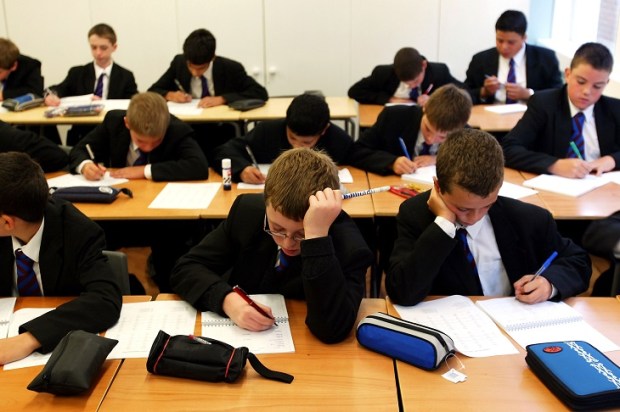
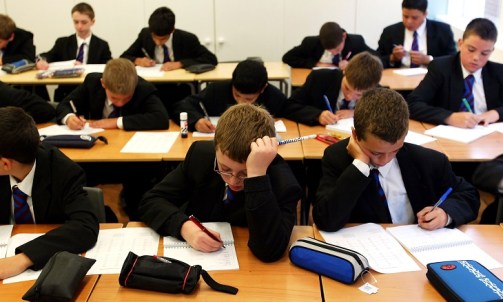
Talk to a teacher. Talk to parents. If you aren’t seeing it with your own eyes in the deteriorating behaviour of children, you’ll hear about it from friends and family. According to research by Kindred Squared, one in four children arrive at school still not toilet trained. Another study found that one in four five-year-olds suffer from tooth decay. Overall, 37 per cent of children starting their reception year are unprepared in some way, from attempting to tap and swipe physical books to lacking basic language skills. According to research by the Centre for Social Justice (CSJ), last year saw an all-time record for exclusions of primary schoolchildren, driven by a more than 70 per cent increase in reports of violence by children against teachers and one another.
We are witnessing the breakdown of the social contract on a grand scale and at a fundamental level. In the 1970s and 1980s, most children were out of nappies by 18 months. Nine out of ten children travelled to school on their own. The basic expectations that parents prepare children for adult life, that they teach them to respect adults and take care of themselves, are starting to disappear.
The British government is desperately trying to fix these problems. There are breakfast clubs for the one in seven children whose parents don’t feed them breakfast every day. There is supervised toothbrushing for schools in the most deprived areas. There is a social media ban to try to drag kids off their phones. All this is well-intentioned, but it doesn’t address the root cause: it is the job of parents to bring up children, not the state’s.
According to polling commissioned by the CSJ, the British public overwhelmingly agree. More than 90 per cent of Britons agree that it is the job of parents to ensure children brush their teeth and are toilet-trained, and 86 per cent see it as the job of parents to give children breakfast, with only 6 per cent believing schools should be responsible. Likewise, 85 per cent of respondents believed it was parents’ responsibility to ensure children behave well, and only 11 per cent thought it was primarily that of schools.
There’s a consensus around a social contract between state and citizen, families and society, one in which it is the job of parents to help ensure their children are good citizens and neighbours. Yet somewhere along the way, this social contract has broken down. And it’s not the only one.
Far too many young children now start life with rotting teeth and dirty nappies, and it doesn’t get better from there. Teenagers are growing up addicted to technology, stuck in their bedrooms and suffering greater rates of mental illness. More than one million young adults are currently ‘Neets’ – not in work, education or training. More than four million working-age adults are now on disability benefits (one in ten of the adult population), with nearly half of claimants suffering from ‘mental and behavioural disorders’.
It’s no surprise that our young people are demoralised and disengaged from the economy. Wages and growth are stagnant, and the relative cost of housing has doubled since the 1990s. The over-60s control more than half of all housing wealth, and retirees enjoy inflation-proofed state pensions even as young workers see their incomes destroyed through low growth, cost-of-living increases and inflation.
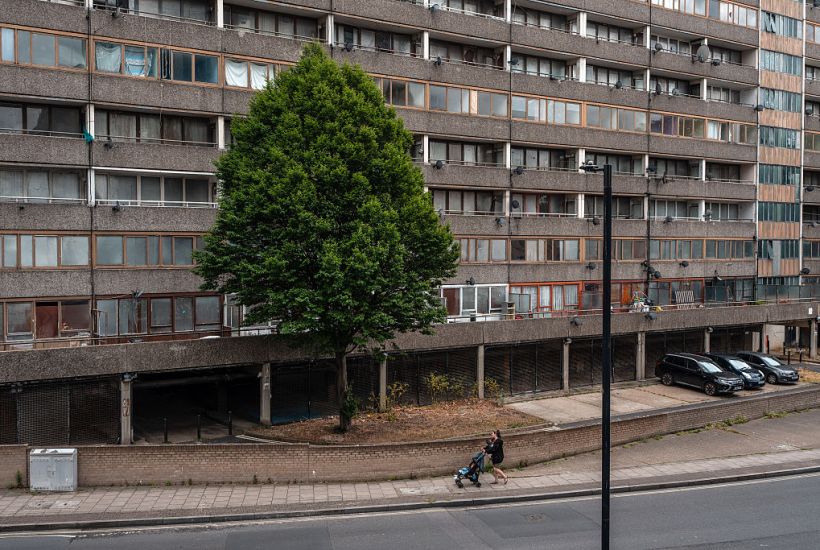
Whole parts of the country are simply ‘left behind’, offered welfare handouts by Westminster but denied access to public or private investment, as whole communities descend into generational worklessness. From the private sector to the welfare system, there is a loss of reciprocity and fairness, and a sense that the intergenerational ‘deal’ – that each generation will leave a better world for the next – has been utterly broken. For many people growing up today, the old paths to prosperity either don’t exist or are strewn with formidable new barriers and pitfalls.
How can this social contract be fixed? And what shape should a renewed British social contract take? These questions are the basis for a new area of research at the Centre for Social Justice, analysing the state of social responsibility in Britain today and sketching out the terms of a new deal on questions ranging from intergenerational justice to regional inequality.
For me, this means going back to fundamentals. We have an idea of the social contract in Britain, derived from Rawls, PPE courses and the post-war inheritance, that it is the job of the state to mend inequalities and produce ‘social justice’. But as the British government is forced to invest increasingly scarce resources in the most basic parental duties, we are encountering the sharpest limits of this approach. If we are to have high-quality public services and solve complex problems of poverty and social dysfunction, we will have to mobilise both individuals and wider civil society, rather than relying on an increasingly cash-strapped and ineffective state.
But we aren’t starting with a blank page. Britain has been here before. Our Victorian ancestors also had to deal with a dysfunctional welfare state (in the form of the poor laws), the breakdown of family life and a crisis of urban decay. As Dickensian stories of poverty and neglect re-emerge, old lessons and solutions will have to be relearned.
Nineteenth-century social reformers started from the bottom up, recreating civil society in the industrial cities where it had receded. Pioneering priests worked in new urban parishes, whilst mutual aid, working men’s clubs and building societies offered vitally needed economic, educational and social infrastructure. Municipal governments stepped in to produce fair and efficient utilities – the ‘gas and water socialism’ pursued by 19th-century Tories such as Joseph Chamberlain. Industrialists were heavily engaged in philanthropy and civic life, investing in the arts, sciences and the welfare of their workers.
Economic and social dynamism went hand in hand, and state, market and civil society were yoked together, however imperfectly. In the process, Britain became the orderly, public-spirited culture that, even now, we still like to define ourselves as. This slow stitching together of the social fabric produced the social unity and sense of duty that undergirded both our collective struggle in the second world war and the post-war settlement that followed it.
As our welfare system and public services are pushed to breaking point, it is time to revisit their moral basis, re-energise people behind an ethic of public service and recall people to their social responsibility to take care of and provide for themselves and their families.
In the first instance, we have to look at where the social fabric has worn thin and where our shared expectations have broken down. It’s easy to judge parents who struggle to get children school-ready, but it’s important to understand that the failure is not theirs alone. We are having fewer children and have eroded the historic authority of parents and elders. Once firm norms and expectations go unenforced, parents are neither directed nor helped by wider society. The neighbours who watched each other’s children, and the safe streets on which kids played freely, are a thing of the past. Parents are more isolated, and children more dependent and demanding, than ever before. The world of Just William, in which boys roamed the countryside and came home in time for supper, has fully departed – but existed within living memory.
In modern liberal societies, we often oppose duty and freedom, rights and responsibilities. But in reality, when you lose one, you inevitably lose the other. The far more disciplined childhoods of 50 years ago saw children offered now unimaginable freedoms of movement, able, from a young age, to play, explore and learn outside home and school. When you’re forced to be responsible for yourself, you gain agency and empowerment. When nobody does this, you end up helpless and passive. If this is true for our children, it’s just as true of wider society.
To relearn the language of social responsibility, we have to rebuild the infrastructure of social life. Between state and individual there is a yawning gulf, a ‘missing middle’ where intermediate institutions once existed. Local government has been cut back to bin collection and social care. Private companies have retreated from the grand philanthropic role they once held in public life. Charities and voluntary associations struggle to find cash and volunteers.
As politicians are fast discovering, public resources are both finite and under ever-increasing pressure. We cannot simultaneously mount a national defence against foreign threats, manage our overwhelmed justice system, build new infrastructure, pay out pensions, fund welfare, keep the NHS going and save the planet. We are placing impossible expectations on the state, with the result that we are trying to do everything at once and doing it badly, rather than doing a few things well.
At a certain point, matters of poverty, health, economic growth, the local environment, education and childcare have to become responsibilities for every one of us, and not just the man in Whitehall. Ordinary men and women have extraordinary capabilities that go untapped in a system in which social duties are outsourced to the state, and communities suffer from the collective neglect of their members.
In the coming weeks, the country will be having many debates over public policy, with the usual arguments about tax and spend, cut or borrow. Amid the noise, we risk neglecting the most urgent priority: how we unleash the potential of the British people, and how we help ordinary people step up and take a positive role in their society.