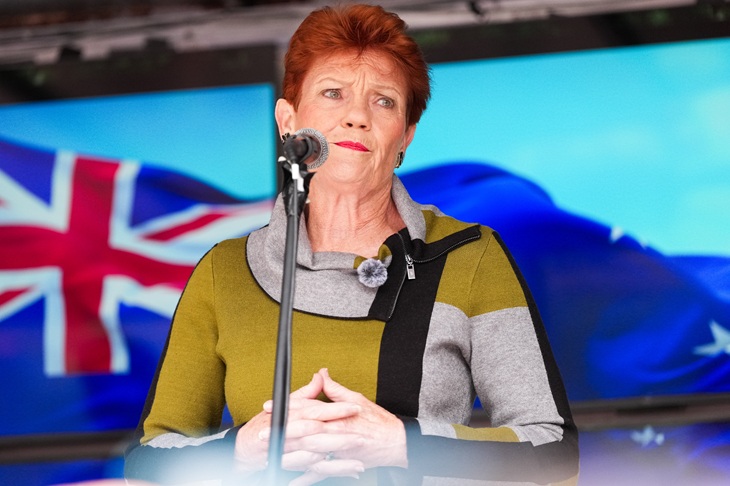
Like most political commentators, we have been transfixed by the meteoric rise of One Nation as a credible political force in Australia.
However, in listening to our fellow commentators, one gets the impression that One Nation is perceived merely as a ‘populist’ aberration and, when it matters, the electorate will return to the comfortable bosom of the Uniparty.
In our opinion, such a view is based on a misunderstanding of ‘the Holy Grail of populism’.
There is strong anecdotal evidence that the view of One Nation as a populist aberration may also be entertained by conservative voters.
Recently, one of the authors of this piece suggested to a friend, who has always been a committed Liberal voter, that it might be an opportune time to place his vote with One Nation. However, the friend dismissed the idea and indicated that he will continue to vote for the Liberal Party. Considering we have a preferential system of voting, it was then suggested to him that he might preference One Nation. Although he did not expand on his voting preferences, the friend assumed that he still considers One Nation as a protest party, not a party of government, and that embracing ‘populism’ is somehow a contemptible un-Australian activity.
This refrain is also heard in the corridors of power, especially among Labor politicians who view One Nation as an irritating, but transient, annoyance and expect that sanity will prevail at the ballot box. In propagating this view, they anticipate that One Nation will not present a danger to the Labor Party, considering the government enjoys a mega majority of 94 seats in Parliament. They are convinced that support for One Nation will eventually evaporate because populist parties come and go and, therefore, are but ephemeral phenomena.
Opponents of One Nation regard One Nation as a fringe party that has risen to prominence because of its anti-immigration stance and opposition to changing ethnic demographics. Never mind that ill-conceived mass migration to Western countries, especially in Western Europe, is causing a disturbing increase in the crime levels and other socio-economic difficulties, as well as destroying any sense of social cohesion and patriotism. Others have even claimed that the policies of One Nation are rooted in Fascism, a claim eagerly cultivated by the progressive intelligentsia.
Curiously, in his #1 New York Times bestseller Liberal Fascism, Jonah Goldberg reminds us about the ideological associations between the Left and the Fascist movement as primarily two statist ideologies that favour governmental intervention in almost every single aspect of our personal lives. And yet, since the Left likes so much to call a ‘Fascist’ any individual deemed worthy of excommunication from the body politic, this has led many people to look for Fascism in the wrong places. These are the main points Goldberg would like his readers to take away from his erudite book:
- Original or ‘classic’ Fascism was not right-wing as we understand the term, and quite to the contrary.
- Anglo-American Conservatism has neither roots in, nor affinity for, Fascism.
- Contemporary Leftism, in great part due to its own dogmatic support of state-imposed progressive policies, retains an undeniable affinity for fascistic ideas through its profound indebtedness to statism.
In our opinion, rather than constitute a harmful political movement, what the ruling classes tend to describe as ‘populism’ represents no more than a popular support of ordinary citizens for politicians who bravely attempt to restore the democratic and egalitarian values and traditions of the West. It is instructive, therefore, to ascertain how the ‘populist’ parties describe themselves:
Populist parties … define themselves against the elite and for ‘the people’. They argue, in essence, that a corrupt or out-of-touch ruling class has betrayed ordinary citizens, and that only they – the populists – can restore what has been lost. … crucially, the rise of right-wing populism in particular is not … an economic story. It is a cultural one. It is about values, identity, and the pace of social change.
In an Australian context, One Nation personifies this definition by focusing on the economic harm caused by current elevated levels of immigration, the Net Zero fantasy, and its unscientific demonisation of carbon dioxide. Ultimately, however, notes Goldberg rather insightfully, this sort of environmentalism is fascistic:
…not because of its airy and obscure metaphysical assumptions about the existential plight of man. Rather, its most tangible fascistic ingredient is that it is an invaluable ‘crisis mechanism’. Al Gore constantly insists that global warming is the defining crisis of our time. Sceptics are called traitors, Holocaust deniers, tools of the ‘carbon interests’. Alternatively, progressive environmentalists cast themselves in the role of nurturing caregivers. When Gore appeared before Congress in early 2007, he proclaimed that the world has a ‘fever’ and explained that when your baby has a fever, you ‘take action’. You do whatever your doctor says. No time to debate, no room for argument. We must get ‘beyond politics’.
In practical terms, this means we must surrender to the all-controlling, all-encompassing ‘Nanny State’, and create the sort of ‘economic dictatorship’ the ruling classes eagerly yearn for. Of course, there is also the advancement of governmental policies that actively promote the extensive Woke agenda, the disintegration of traditional family values, the eradication of the Christian roots of our society, and the abandonment of the principle of equal citizenship that is so essential for the proper realisation of the rule of law.
Patrick J Byrne, a former national President of the National Civic Council, credits the devastation of the agricultural and manufacturing sectors, which is directly provoked by constant state interventionism, as fuelling One Nation’s rise. As such, One Nation, in demanding immigration reforms, combines its call for an economic rejuvenation with a revitalisation of Australian values.
‘Populism’ has been immortalised by US President Donald Trump’s promise after his first election victory in 2015 ‘to drain the Washington swamp’. In an earlier article, published in 2022, one of the authors of this piece argued that populism had not yet reached Australian shores. At the time of writing that article – only four years ago – Australia had already been flooded with legislation providing for the imposition of stiff penalties on, or ostracisation of, those who oppose gender transitioning laws, affirmative action, voluntary assisted dying, climate change and zero emissions fantasies, vaccine mandates, among other progressivist practices. He suggested that a sensible right-of-centre politician had not yet emerged and that the Australian polity was content to persevere with their comfortable middle-class lives, provided the progressive policies did not directly affect them. However, he prophesied that ‘there can be little doubt that eventually populism will reach the shores of Australia’ and when it does, it will need to fight the rambunctious media, slick virtue-signallers, and myopic politicians.
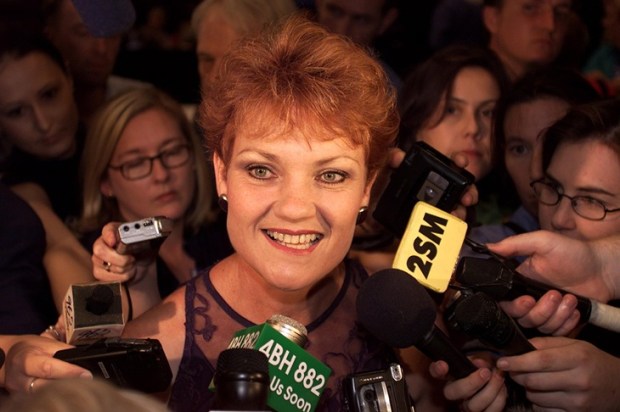
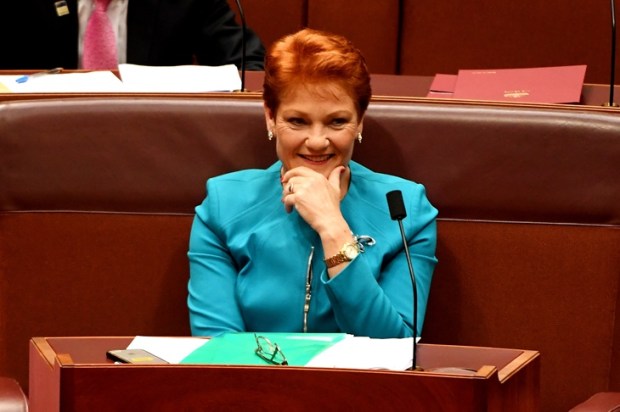
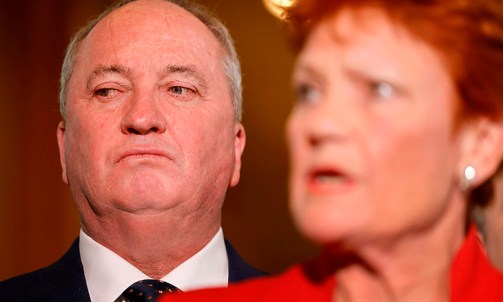
The negative portrayal of the One Nation Party by sections of the media, ruling elites, and academic commentators constitutes a denigration of the will of the people. Quite frankly, it is a repudiation of democracy. This denigration assumes that the understanding of ‘democracy’ must necessarily be compatible with the elitist views of the progressive left-wing forces that have sought to refashion societies during the last two decades. Of course, the politicians desist from directly attacking Pauline Hanson because if they were to accuse her of ‘racism’ and ‘xenophobia’, they would effectively call her supporters – one third of the electorate – racist and xenophobic. The progressive ruling classes certainly have not forgotten the deplorables comment of Hillary Clinton during the 2015 American election campaign!
An interesting point, often overlooked in the commentaries, is that many of the policies and views of One Nation regarding these unpopular policies and socio-cultural developments, which have so fundamentally altered Australian culture and values, were once arguably held by Labor and the Coalition. Views, such as fairness for the working class, mitigation of corporate greed, protection of free speech and freedom of religion, protection of the traditional family, among others, were standard promises made by the Uniparty. However, as argued by Ben Harnwell, who is an editor for Steve Bannon’s War Room, ‘They are the ones who lost that base by changing their political agenda. Instead of the welfare of the working class, they started going on about unisex bathrooms and pronouns and drag queen story hour.’ He rhetorically asks, ‘Well, tell me how that’s going to help the guy working in the factory or his wife who works two jobs?’
If Harnwell’s analysis is right, we may not have seen the end of One Nation’ surge in the opinion polls. It certainly explains why even Labor votes are hemorrhaging to One Nation. After all, this party now appears to far better represent the true voice of the average Australian who eagerly desires to restore the values and traditions that, in the past, led to the greatness of our once prosperous and harmonious nation.
Indeed, One Nation may have found the Holy Grail of populism!
Gabriël A. Moens AM is an emeritus professor of law at the University of Queensland and served as pro vice-chancellor and dean at Murdoch University. He also served as the Garrick Professor of Law at the University of Queensland.
Augusto Zimmermann is foundation dean and professor of law at Alphacrucis University College. He served as associate dean at Murdoch University. He is also a former commissioner with the Law Reform Commission of Western Australia.
Zimmermann & Moens are the authors of ‘The Legal Right to Disobey Law: A Natural Law Approach to Free Speech and Civil Disobedience’ (Sidestream Press, 2026)