How many Australian businesses must fail before another generation of politicians learns one of the oldest lessons in economics? State-directed planning and political capital allocation is a path to poverty not prosperity.
Capital is one of the most misunderstood things in our public debates. Politicians treat it as a fixed pile in a vault, waiting to be redistributed by the clever and the caring. It is nothing of the sort. Capital is patient money placed at risk on a promise about the future; a bet that the rules will still be the rules in ten years, that a contract signed today will be honoured tomorrow, that the government will not move the goalposts the moment an investment begins to pay off.Remove that confidence and the capital does not get redistributed. It just does not show up.
This is why sovereign risk matters, and it is the quiet catastrophe unfolding in Australia. Not a crash, just a slow bleeding away of the willingness of investors to commit their money.
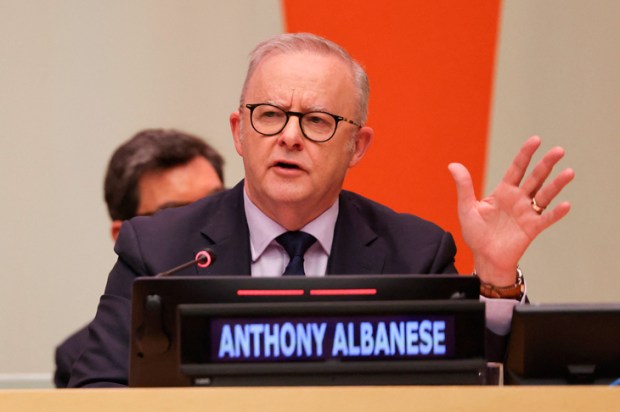
The Albanese government’s record follows a clear pattern. The superannuation system: Division 296, arriving 1 July, levies an extra impost on larger balances. A tax the government was forced to redesign after first proposing to tax unrealised gains. Negative gearing and capital gains: perennially placed on the table, lifted off, modelled, leaked, denied, now hanging over every investment decision in the country.Each intervention is sold as fairness. Together they deliver one message to anyone with capital: whatever you build here, the government reserves the right to return for a larger slice once you have finished building it.
Then there is gas. Investors sank tens of billions into Australian projects on the understanding that they could sell what they produced at the price the market set. The government changed the terms after the fact with price caps, a mandatory code, rewriting the economics of projects already in the ground. You can argue the politics. What you cannot argue away is the signal. In Australia, the deal you struck is provisional.
At this point, the government’s defenders will reach for a familiar rebuttal. Australia’s corporate tax rate, they note, is 30 per cent, well above the OECD average of 23.6 per cent. A high-tax environment, the argument runs, explains any investor hesitation better than sovereignty concerns do.
This comparison is almost entirely misleading, and the government knows it. Australia operates a full dividend imputation system, one of only a handful in the world, and by far the most complete.
When a company pays tax on its profits, that payment is not a final tax on the company. It is a prepayment on behalf of shareholders. When dividends are distributed, shareholders receive franking credits representing the tax already paid at the corporate level. Those credits are set against the shareholder’s personal tax liability and, since 2000, any excess is refunded in cash. The Parliamentary Budget Office is unambiguous: in an imputation system, the tax paid by companies is not on their own behalf but on behalf of their owners. Company tax is simply a withholding mechanism.
The consequence is that no Australian resident pays double tax on corporate income. The 30 per cent rate is not a corporate tax burden but a prepayment at the individual’s eventual marginal rate.
Compare this with the countries against which Australia is unfavourably measured. The United States taxes corporate profits, then taxes dividends again, at preferential but still substantial rates. Germany did the same until 2000, when it abolished its imputation system. Most of Europe double-taxes. The United Kingdom scrapped its dividend credit system in 1999 and replaced it with a modest allowance now shrunk to £500.
The countries with lower headline corporate rates are, in the main, taxing corporate income twice. Australia taxes it once. The comparison on which the government’s defenders rely upon dissolves on contact with the facts.
There is a further dimension the tax commentators ignore. The largest single channel of foreign capital inflow into Australia is not equity but debt. Hundreds of billions of dollars annually in borrowings by Australian businesses and governments from offshore lenders. Interest on that debt is deductible to the borrower, taxed only in the lender’s home jurisdiction, and attracts no Australian company tax whatever. On this dominant category of foreign capital, the 30-per-cent rate is irrelevant.
Which leaves sovereign risk standing largely alone as an explanation for what the data shows. And the data is pointed. The four years from 2020 to 2023 saw $189 billion in foreign direct investment, the lowest four-year total since the period to 2010, and 30 per cent below the peak four years of 2016 to 2019.
In 2022, Australia ranked seventh globally as a destination for foreign direct investment, attracting flows equivalent to 4.6 per cent of the world total. A single year later, it had fallen to twelfth, its global share almost halved to 2.7 per cent. Meanwhile, the withdrawal rate on Foreign Investment Review Board applications doubled, reaching almost a quarter of the numbers approved. This is a strong signal that investors are being turned away before a formal refusal is recorded.
Foreign investors do not read Hansard. They do not follow which faction won which preselection. They run a screen across forty countries and flag Australia as elevated risk. They remember that Australia keeps changing its rules: that signed contracts get reopened, that tax treatment shifts, that the government reserved the right to impose domestic reservation and price caps on gas projects already operational. So they file Australia alongside the economies where political caprice outranks the rule of law.
There will be no single moment of reckoning and no headline that captures it, and that is precisely the danger. A government can preside over the slow flight of capital and never see its own fingerprints on the wreckage, because the damage takes the form of things that simply never happen. The factory not built. The founder who took the idea to Singapore. The pension fund in Toronto that quietly trimmed its Australian weighting and moved on without a word.None of it bleeds in the quarterly figures. None of it can be undone by the next ministerial press release.
Confidence, once a country starts spending it, turns out to be the one form of capital no treasurer can borrow back. Somewhere on a screen in Tokyo or Seoul, Australia has already moved a few places down the list. No announcement. No media conference. Just a lower number beside a country that should know better.
Got something to add? Join the discussion and comment below.
Dimitri Burshtein is at Eminence Advisory. Peter Swan AO is at the UNSW-Sydney Business School.
You might disagree with half of it, but you’ll enjoy reading all of it. Try your first month for free, then just $2 a week for the remainder of your first year.