In 1973, Opec Arab members cut production and imposed an oil embargo to inflict revenge on Western countries for supporting Israel during the Yom Kippur war. Within six months, the oil price quadrupled.
The embargo inflicted so much economic damage the ‘1973 oil price shock’ still stands as modern history’s most successful exploitation of a ‘chokepoint’, which is defined as when something is restricted or blocked to achieve a political goal. Opec succeeded because Western reliance on its oil had grown by 1973.
Even so, oil’s political clout didn’t endure. Real oil prices declined by 1975 because non-Arab Opec members boosted production to exploit higher prices, Westerners cut oil consumption and their governments invented the concept of ‘strategic reserves’ to mitigate against supply disruptions. (A revolution in Iran triggered the 1979 oil price shock, not oil’s weaponisation.)
Skip six decades and much more than oil’s dependence has been weaponised. Yet for all the attempts and the economic mayhem they cause, chokepoints have proved a poor way to dominate or exclude enemies.
The political weaknesses of chokepoints include that they are hard to implement and maintain. Another is that implementers often defang their sanctions for fear of unintended consequences. Other drawbacks include that targets act to reduce their venom. Those pursued can evade sanctions, adjust behaviour, find alternatives, retaliate or bear the economic pain.
Take how poorly chokepoints have worked politically for the US, the main initiator of economic warfare due to the chokeholds gifted by the country’s economic size, the US dollar’s reserve status, the linked importance of the US banking system, the world’s reliance on US capital markets and the dominance of US tech firms.
From 1979, the US has sanctioned no country more than Iran, especially since 2006 when Washington sought to force Tehran to forgo nuclear weapons. As Edward Fishman documents in his book Chokepoints, the US passed laws to stop foreign companies doing business with Iran, banned Iranian banks from the US financial system including the messaging system, sought to cripple Iran’s oil exports, forced foreign banks to banish Iran (secondary sanctions), muscled through a UN resolution to allow sanctions on Iran’s energy sector, pressured central banks to stop dealing with Iran, and targeted Iran’s central bank to freeze export inflows.
These efforts crippled Iran’s economy and led to the nuclear deal of 2015 where Iran agreed to freeze its nuclear program to access some blocked foreign earnings. The agreement was always controversial such that President Donald Trump jettisoned the pact in 2018 and re-sanctioned Iran. Sanctioned still, Iran is yet to renounce nuclear ambitions, even after military attack.
Another example of the political failure of chokepoints is how US-led sanctions failed to quell Russia’s aggression against Ukraine since President Vladimir Putin in 2014 began a war in Ukraine’s eastern Donbas region and annexed Crimea. None of the economic agony or threats of more pain stopped Russia invading Ukraine in 2022. Nor have post-invasion sanctions forced Moscow to abandon the war.
Protectionism, when it weaponises domestic demand à la Trump’s tariffs of 2025, garners little success politically either. Trump’s tariffs appear to have failed to revive US manufacturing, attract investment or correct the US trade imbalance because the US share of world trade of 13 per cent is too small to be much of a weapon.
China retaliated against Trump’s tariffs by exploiting its 90-per-cent chokehold on the production of critical minerals needed for advanced technologies. Beijing’s export ban succeeded politically in that Trump reversed tariffs on Chinese goods and offered to sell China advanced microchips.
But the US and allies have since sought to weaken China’s dominance of critical elements by investing in production. Rare earth minerals, for the most part, are unlikely to prove a durable geoeconomic winner for China because they aren’t rare.
Another faltering chokepoint is Washington’s tech embargo on China. It has failed to end China’s trade malpractices, prevent China from approaching US tech supremacy nor stopped Beijing assuming political control of Hong Kong.
While Washington’s sanctions hurt telecom ZTE Corp and Huawei’s 5G business, broader US efforts to stymie China’s tech industry floundered because the EU refused to join the campaign and the Chinese developed their own tech.
Nor is Washington’s weaponisation of microchips likely to secure dominance in artificial intelligence. Export controls on chips are too easy to outwit. Improvements in AI models depend on more than chips; algorithms, design and optimisation techniques matter too. US foes are often developing better AI tech anyway.
For another chokepoint flop, China’s economic intimidation of Taiwan coupled with military and diplomatic pressure has only pushed Taipei towards the West, such that the island is entrenched in its security, supply chains and investments.
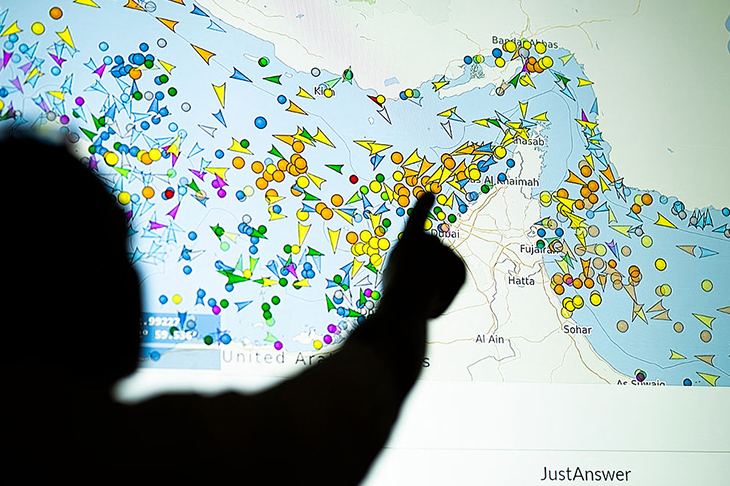
Critical minerals, finance, technology and trade depend on the legal system for their power as economic weapons. Geography is a chokepoint that relies on military force for empowerment, as shown by how Iranian threats of drones, mines, missiles and armed speedboats have turned a global lifeline, the Strait of Hormuz, into a chokepoint.
The world hosts many other potential marine chokepoints, natural and man-made. But shipping has alternative routes to most. In time, even reliance on the Strait of Hormuz, which has no alternative sea route, can be reduced. Pipelines can be built to transport oil and gas. Rail and trucking options exist. Production of blocked non-energy essentials can shift elsewhere.
But the immediate economic cost of chokepoints is prompting countries to protect against such shocks. US foes are already defusing Washington’s weaponisation of the greenback, Wall Street and Silicon Valley.
As Washington recognises its fading leverage, the US and allies will prioritise their economic security. The vicious cycle will hark to the warning from Eswar Prasad, the author of Doom Loop, that the world is embarking on the era ‘in which economic, political, and geopolitical forces bring out the worst in one another’.
As defensive measures against chokepoints fragment globalisation, chokepoints will become even less able to achieve political goals. But expect more of them as inflicting chokeholds makes politicians look responsive.
Sanctions, to be sure, are preferable to warfare. But their political failures often make them a prelude to combat. For all the rising profile of chokepoints, in geoeconomics they are subservient to industry policy, especially China’s. The US oil blockade of Cuba could prove politically effective. But that’s an act of war.
Leaders need to recognise the political futility of chokepoints. The reason the 1973 oil price shock was politically effective was that revenge is a modest goal.
Got something to add? Join the discussion and comment below.
You might disagree with half of it, but you’ll enjoy reading all of it. Try your first month for free, then just $2 a week for the remainder of your first year.