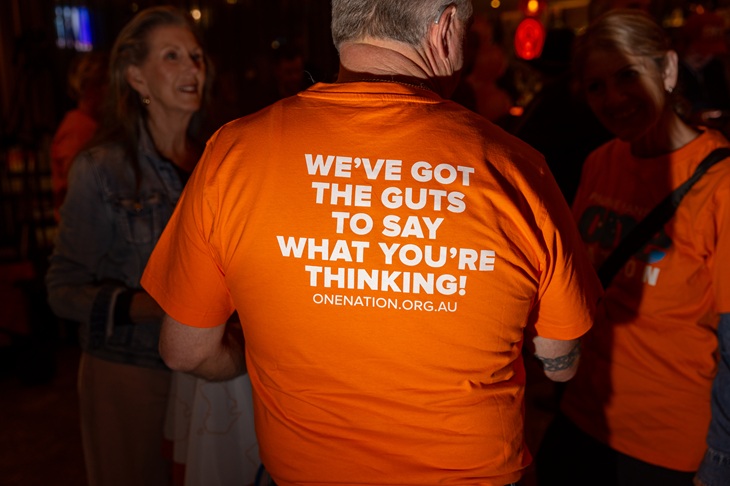
One Nation voters are not what you may think they are.
After the May Budget, more than 300 of them told our pollsters who they really are: not the dispossessed, but homeowners whose one real asset is the roof over their heads, and who have stopped believing either major party is on their side.
Picture a One Nation voter. Now look at the data.
One week after the May Budget, Agenda C Synesis surveyed more than 1,200 Australians, including over 300 who now back the party, and the portrait is not the caricature.
Two in three own their home, outright or on a mortgage. Beyond the front door, though, the investments thin out fast: only three in ten hold shares, fewer than one in five own an investment property, and more than a third hold no investments at all. Their one real asset is the house. Most finished school or hold a trade, and the largest group earns between $75,000 and $150,000.
These are not the dispossessed and they are not the idle rich.
They are working Australians whose wealth begins and ends with the family home, and who feel they are running to stand still. They are also the voters who just pushed One Nation past the Coalition, in all recent polls.
What changed is not their bank balance. It is their patience.
Three in four of them say this government broke a clear election promise, and nearly half the country agrees. When a government is elected on one position and governs on another, the breach is never really about tax. It is about trust, and trust does not come back with a press conference.
Here is the part the Coalition keeps missing.
A third of its 2025 voters have already moved to One Nation, and most of One Nation’s support today did not vote for the party last year. Among the One Nation voters now reconsidering, not one currently names the Coalition as their next stop. That sounds terminal. It is not. Nationally, the Coalition remains the second most common destination for Budget-driven switchers, behind One Nation.
The base has not been lost. It has been put on hold, pending a reason to come back.
They are not voting blind, either.
Around half say the changes will discourage Australians from starting a business, and half say the same about the clean-energy firms the country claims it wants to build. Two in three expect rents to rise. Close to half say they will personally invest less, from shares to property to start-ups. They have read the room and decided the people in charge no longer act in it.
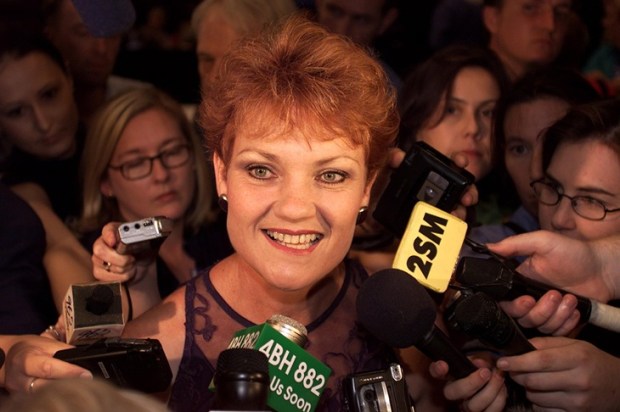
Which brings up the thing polling cannot put a number on, but anyone listening can hear. These voters are not rewarding polished policy. They watched One Nation fumble its housing plan and walk it back, and it barely moved them. What they reward is harder to fake: the sense that Hanson means what she says, where the majors sound focus-group-tested. A government can get every detail right and still break the one promise that counted, and to these voters that is the worse sin. Talk to them and the rest follows: a belief that most who come to this country want to belong and make a fair go of it, and a worry that Australia is drifting from what made that possible. Agree or not, it reads as conviction, and they know the difference between conviction and a media conference that is all talk and no action.
Her operation is sharper than the majors care to admit, too. It organises online faster and cheaper than any campaign headquarters, lets new tools hone a message past anything a war room would clear, and asks no one’s permission before it travels.
So what brings them back to the majors? Not what the parties keeps reaching for.
Not a leadership change, not a new party president.
These voters are not waiting to hear who is in charge. They are waiting to hear what they will be given, and whether the promise will hold. The Coalition’s strongest card is not a personality. It is a memory: the years from 1996 to 2007, when the experienced, sensible side of politics last governed and these households watched their homes, savings and wealth grow. The offer that moves them is not a new face. It is a credible plan to do it again, and the discipline to promise only what it means to keep.
That is the whole task, and it fits on a corflute. Make a promise on what matters. Say it out loud. Keep it. Fumbles and all, one leader still reads as closer to that than the majors, who keep handing these voters reasons to doubt. Until that flips, the anger has somewhere to go.
Call them Menzies’ forgotten people in modern form. They own their homes, they pay their taxes, they turn up on polling day, and their vote counts for exactly as much as a pollie. They have stopped waiting to be remembered. But they would still answer a side of politics that remembered how to keep its word and deliver a promise.
Carrington Brigham is a digital communications strategist and business founder who has advised political leaders and chief executives on digital strategy and campaigns. He is Managing Director of Agenda C.
Source: The Considered Response, Agenda C Synesis, fielded 22 to 26 May 2026, one week after the Federal Budget. National online sample n=1,232 (margin of error approximately 2.8 per cent), weighted to the 2021 ABS Census by age, gender and location; fieldwork by Antenna Insights. One Nation voter subsample n=307, which carries a wider margin of error, so subgroup figures are indicative. First preferences: Labor 29%, One Nation 24%, Coalition 18%.