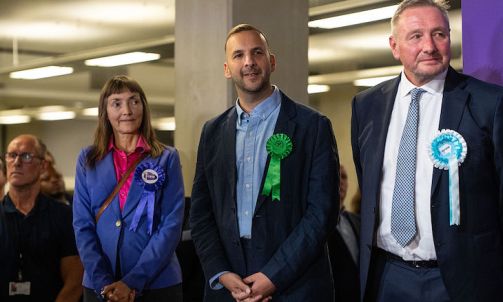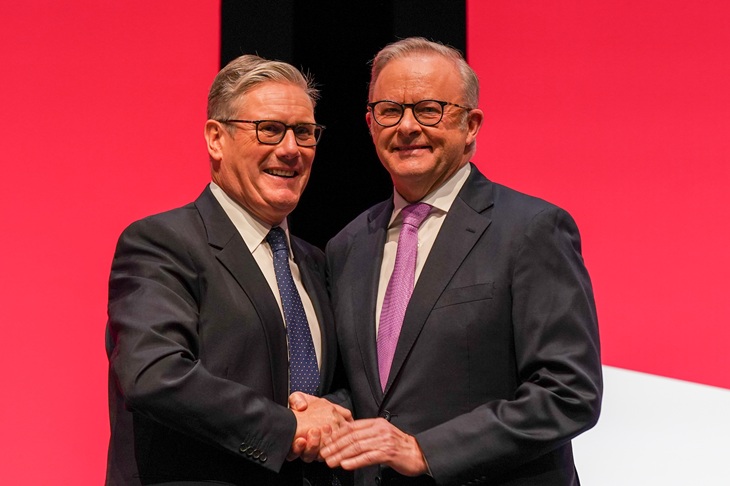
On the night of June 18, in a sliver of north-west England few outside Wigan could place on a map, Andy Burnham collected nearly 55 per cent of the vote and a return ticket to Westminster.
Four days later Sir Keir Starmer announced he would go.
The Greater Manchester mayor – the ‘King of the North’, the most popular figure his party has produced in a decade – declared for the leadership the same afternoon.
Britain is set to install its seventh Prime Minister in ten years.
In the midst of this churn, this revolving-door politics, it is tempting for me – like others – to reach for an Italian comparison. Watching Burnham, I am reminded of Matteo Salvini: a proud second-city politician turned national contender, a man who reads the public mood the way a sailor reads the sea – a political lifer who’s spent his working career entirely focused on achieving his dream of being Prime Minister, caring about the position a lot more than what to do with it; twisting, turning, and avoiding getting pinned down.
Matteo Salvini and Andy Burnham have more in common than either would thank me for noting. Both built their base in the north, in a great regional city pitted against a distant capital. Both have almost no real-world experience, entering politics young and not leaving. Both have spent years continuously reinventing themselves to stay visible and in lockstep with the electorate. Both have wanted the top job for the better part of two decades, and both have watched it go to other people.
The comparison is seductive. It is also – in a way that matters – wrong. It’s not just that Burnham is about to get what he’s always coveted. It’s that the different weaknesses of the two men present a small key that opens a large door: the question many voters in Western democracies are asking without quite saying it. When does the churning stop?
I’ll begin with Salvini, because his arc is almost complete while Burnham’s has started a new phase. The lazy reading of Salvini is that he’s a chameleon, one the public eventually saw through. A man who turned the Northern League, a party founded to wrench Padania free of Rome, into a national-populist vehicle flying the tricolour; who, at his 2019 peak, took 34 per cent in European elections and looked to be Italy’s rising star. He gambled, pulling his party out of government in the heat of an August on a beach in Romagna, and lost. The verdict almost wrote itself: the trickster was found out.
Except it misses a few points. Salvini sits today as Deputy Prime Minister, his League still polls at 7-8 per cent, and his party leadership continues to 2029. He was not rejected for insincerity. He was out-assembled – overtaken by Giorgia Meloni, who consolidated the same disaffected Italian electorates into a better-fitted vehicle and walked through a door Salvini had spent six years failing to open.
The framework (SynthPol) I have spent a year building insists on a distinction commentary often misses. Salvini did one durable thing: he re-anchored his party. The League he inherited was a regional rump; the League he leaves behind speaks for a national substrate, which is precisely why it can survive after his eclipse. What he could not do was convert that into the leadership of a country. He read every wave and rode most of them, but he never planted a flag around which enough people could rally.
That is the type – call him a surfer. The surfer’s gift is real, and the best surfers are wonderful to behold. They recognise the swell before the consensus and move into it. On the upswing, in their deft manoeuvres, they can prove unbeatable. But either the surfer falls or the wave peters out. And the moment someone plants a serious flag in the sand, and offers something other than spectacle, the surfer is just another person on a board – doing their own thing – looking for the next set. Salvini is a surfer. So, I would argue, is Andy Burnham.
To see what the surfer lacks, we can study Meloni. She did not re-anchor an existing vehicle; she built a fresh one. Brothers of Italy was a 4 per cent splinter when she took it over. She did not attempt to take and pivot the old Berlusconi machine, Forza Italia, to fit a new electorate. She understood it could not be done – it was the vehicle for a previous era, and the previous-era machinery could not be refitted, only replaced.
So she built an era-appropriate vehicle from the ground up and then did the thing surfers don’t: she stood still – and for long enough that people noticed and gained interest.
Out of power, she kept her strategy despite the various labels meant to denigrate and confuse. In power, her approach revealed the commonsense that had existed all along, the practicality which neither legacy parties nor technical experts had the courage to pursue. Meloni ended up cutting the deficit from 8 per cent of GDP to 3 per cent, and driving Italy’s bond spread to 16-year lows. The people who wanted to file her as a convulsion saw, to their visible irritation, that Meloni had established a new standard.
As I have already highlighted, Meloni’s reward is on the calendar. If she is still in office by September 4 this year, Meloni’s government will become the longest continuously serving administration in the 80-year history of the Italian Republic, surpassing Berlusconi’s team in 2001.
Now set that record beside the British one. Six Prime Ministers from 2016, soon to be seven. Liz Truss left after only 45 days. Australia managed six different Prime Ministers after John Howard – seven premierships, if you count Rudd’s two delighted bites at the cherry.
What is this turnover, then? It is not noise; not even malaise. It is a diagnostic. When legacy parties stop fitting the electorate beneath them, leaders cannot assemble a durable majority. Their vehicles cannot carry voters – so the leaders churn, each discarded in turn for failing to achieve results that their outdated machinery has made impossible.
Italy spent half a century in that condition. The cure, when it came, was never a better manager. It was someone who fitted a vehicle to the substrate and held a position long enough for the substrate to find it. Thatcher did it, and Meloni has done it. Tony Blair also achieved the same thing, but from the left. New Labour was a vehicle refit, catching the rising urban intellectual. Turnbull, in his wisdom, was 20 years too late. In any case, the successful flag-planter is not a creature of the right. She or he is a creature of conviction, and conviction has no party.
This brings us to an enigma whose fate has divided many commentators: Kemi Badenoch.
Her situation appears anomalous. Badenoch’s personal ratings are the best of her leadership and still rising: the June Ipsos has her at -12, her highest yet, against a Conservative party score of -24. YouGov in May had her personal net at -17, the best of any Tory leader in five years, with over 75 per cent of 2024 Conservatives now favourable.
Meanwhile the party, polling about 19 per cent, is third after Reform, level with or slightly ahead of the Greens. They shed 500 councillors in May and two front-rank defectors – Jenrick and Braverman – to Nigel Farage. Leader up; vehicle down. People are split on Badenoch’s future precisely because the numbers show no clear picture.
We need the right framework. Badenoch’s biography has plenty of texture. As a teenager she worked at McDonald’s. She took an engineering degree before entering finance. There is no hereditary-establishment bone in her body. The problem is not so much her CV; it is that the voter who likes her and the electorate that her party needs to win over are, these days, two different sets of people.
Badenoch’s rising stock is concentrated in the residual Conservative – the Tories of 2024 who stayed, the respectable cohort – Charles Moore’s sensible, ‘don’t shout at me’ voters. They define themselves in opposition to Reform. However, I suspect that she leaves the displaced voters, those who have already gone to Farage, entirely cold. Her personal capital is real; simply it is being spent on holding a constituency that is shrinking.
Contrast those who have planted a flag. Farage is not broadly popular – his own national net favourability is deeply negative – but among Reform voters he enjoys overwhelming support, and Reform is the most popular party in the UK. The people who like the leader are the vehicle’s base; there is no gap, because the leader and the party are in unison.
The same is true of Meloni and of Pauline Hanson. Badenoch’s gap – the daylight between her rating and her party’s – is not a mystery, a quirk of nature. Nor is it a problem to be solved by a strategy which no one has quite seen yet. It is a diagnosis. It is the measured distance between who likes her and who her party needs.
We can see her as a third type, neither surfer nor flag-planter, but a custodian. The competent steward of a vehicle she cannot refit, popular with the cohort that has elected to stay in the building. She is even attempting narrow repairs – the reversal on Net Zero won a real, specific district. The oil-and-gas voters of Aberdeen South apparently forgave the Tory track record, taking them on their latest promise. But a refit which works for one specialised group is hard to generalise.
When the leader consistently outpolls her party, the leader is not the variable. Her competence is genuine – but largely beside the point. Instead, the outpolling suggests that the vehicle is not working for the underlying substrate.
Burnham is often described, by friends and in my own model, SynthPol’s, earlier iterations, as an outsider to the party machine – and on one axis he is. He built his power in a metropolitan mayoralty, far from the parliamentary apparatus which selected and protected Starmer; he has rarely had to pass its loyalty tests.
But there is a second axis, and on it he is not an outsider at all. He read English at Cambridge, went in as a special adviser, became an MP at 31 and a middle-ranking minister soon after. He is outside the machinery but inside the class. Structurally an insurgent; biographically an incumbent. And that combination is one signature of a political surfer; a man the displaced electorate will not, in the end, take as one of their own, however well he manoeuvres the wave.
His admirers thinking of Australia reach for a homely comparison – more Hawke than Keating, the warm everyman against the cold technician – and the warmth appears real. So is the authenticity of origin. He is genuinely of the north-west: two seats between Manchester and Liverpool, and Everton FC through the lean years.
But authenticity of origin is not the same as conviction of purpose, and it is the second the surfer lacks. The most accurate British verdict of the week was the unkindest: that Burnham appears to believe in nothing, having tended to take the line of whichever leader happened to be in front of him.
He arrives at the threshold of Downing Street with no manifesto – a blank page where policies should be, his party readying to hand him the premiership four days after he re-entered the Commons. Four hundred MPs are about to invest their futures in a man whom most have never worked alongside, a figure marketed to them as deliverance.
None of this is new in politics. Louis-Napoleon ran for the French presidency on a poster of his own profile and a single word – Lui, Him – and governed France for 20 years before Bismarck pronounced him a sphinx without a riddle. Does this apply to Burnham as well? He looks great on Wikipedia in his black outfit: perhaps the perfectly coiffured blend of Italian socialist and Steve Jobs. However, being the screen for a projector works only so long as the right film is being played.
A second engine drives the present churn in Western politics. Britain shows it nakedly. Starmer was not discarded because his party found a better idea; he was discarded because, we assume, more than two hundred of his MPs looked at the next election and saw the imminent loss of their seats. These seats are the only job they have ever known. Burnham – also a lifer in his own way – understands their exposure.
A chamber of MPs, with no other livelihood, will throw a leader overboard to save itself – and call the splash renewal and public interest rather than fear. So Burnham can inherit the churn but he is unlikely to end it, because ending it requires a flag the broad electorate trusts, and the surfer’s entire method, the chameleon adaptability – the flexibility that carried him through the wave – is the very thing that works against that trust.
I suspect Burnham will last about as long as Salvini lasted, perhaps as long as Turnbull lasted: long enough to ride a wave of initial enthusiasm – but not long enough to lead Britain into some new era.
So what does any of this mean in Canberra, where no one votes in Makerfield and the Italian Republic’s 68th government may be a pub-quiz answer on the Kingston foreshore as locals watch Canberra Raiders finish the regular season first but fail to capture their ultimate prize?
It means more than it looks. Australia started this experiment before the UK, but its version is different because of the electoral system and the existing terrain. The post-Howard churn – Rudd, Gillard, Rudd again, Abbott, Turnbull, Morrison, Albanese – is the same disease Britain has, the legacy vehicles no longer fit the necessary base, the leaders repeatedly discarded, near always for failing at the impossible. Abbott saw the problem, but the party didn’t like the implications.
However, where the UK’s churn is loud and visible, translated into council wipe-outs and a national psephologist issuing his verdict on the BBC that Britain is ‘no longer a two-party system,’ Australia’s has – until recently – been more taciturn in a way that should worry rather than reassure.
One Nation now leads both major parties on the primary vote across the pollsters – 31 per cent in Newspoll, 30 per cent in DemosAU, a touch under 30 per cent in Morgan – and yet Labor is still the firm favourite to govern, because the preferential count converts that primary lead into something well short of a majority of seats.
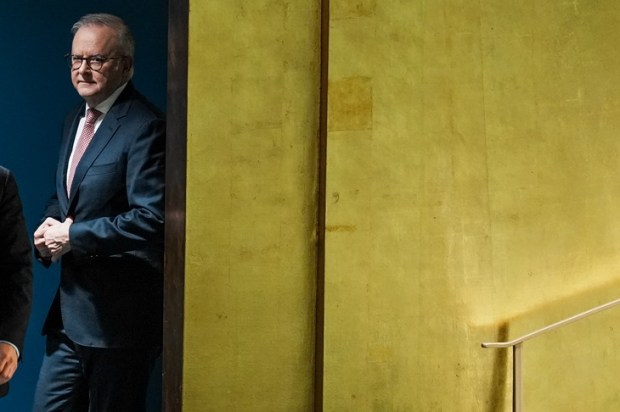
Anthony Albanese sits at a record-low net approval, worse than Scott Morrison ever managed, and remains, on the models, the likeliest man to be prime minister after the next election. How strange that is. It is the counter-image of Kemi Badenoch. In Badenoch, the leader’s rating runs ahead of a dying vehicle; in Albanese, the man survives behind an insulated one – almost like Tom Cruise in that movie with the tagline ‘Live Die Repeat’.
This shouldn’t hide that both countries face the same upheaval. The phenomenon, at its root, is the same, just seen from two different sides. In an era of political dissolution, the leader’s number has come unhooked from the vehicle’s fate, because what now governs the vehicle is the fit of the substrate beneath it – and, in Australia’s case, the voting system has not yet translated the electorate’s shift into seats.
Australia’s relative calm on the surface does not reflect Labor’s manifest capabilities or voters’ ambitions for respectability. Instead factors, such as compulsory preferential voting, damp the seat signal. The substrate underneath has moved further than in Britain – One Nation has now repeatedly topped the primary polls.
However, One Nation and other alternative vehicles are held below their weight at the final count, which offers the incumbent a deceptive serenity – a camouflage of political brilliance. Yet – the preference flows that are protecting the majors will drain, cycle by cycle, and when they cross the threshold at which the old order can no longer recover them, the translation arrives all at once.
The reckoning is delayed, not avoided. Australia is not more stable than Britain. It is transiting the same realignment, more quietly but with the scope to go much further.
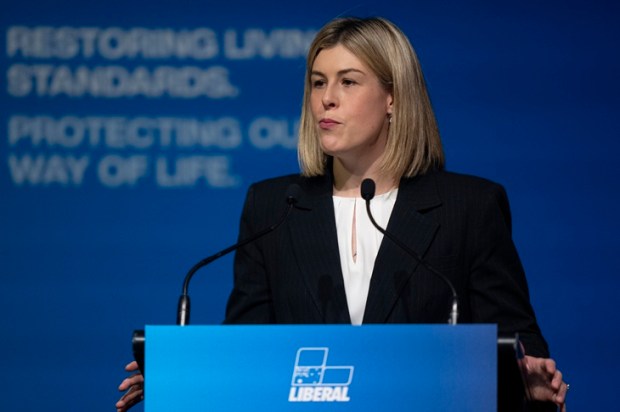
If we consider the party leaders in Australia through the lenses that I have developed here and in earlier articles, it is hard to see legacy vehicles coming back into line with our electorates. Angus Taylor, leader of the Liberals, is spoken of as an alternative Prime Minister; he is in truth a custodian of the Liberal right – a Rhodes scholar from Oxford by way of McKinsey, the wrong biographical signature for the base his vehicle has shed, steering a party collapsed to the high teens.
His one creditable recent act, the post-budget economic speech, will be discounted for its timing. It is as likely to repel the Liberals’ last base as it is to attract back lost voters. He is Badenoch’s analogue, down to the daylight between his own standing and the party’s. Taylor captains a vehicle which remains past its day. Even if he is a sympathetic figure – a description that seems to haunt him like a Dickens novel – Taylor has the wrong signature for the party’s abandoned voters and the wrong machinery.
Now set beside him Matt Canavan, the leader of a country remnant most of the press gallery files under sideshow. Canavan has not planted any flag but rather ‘chanced it’ by attacking Hanson. What makes him nonetheless the better-placed of the two, and it is not close, is the vehicle beneath him.
The Nationals are the one legacy party on the right whose vehicle still fits its substrate: regional, concentrated, the geography barely contestable by Teal, Green, or Labor. And it is the only vehicle on the right with many strategic paths still open: build out, merge, or hold the ground as a disciplined independent.
On the two questions political dissolution actually turns on – does the vehicle fit, and can it still be moved – Taylor holds a losing hand that skill will struggle to redeem, while Canavan has a potentially winning hand. The tragedy is that he may decline to play it. He has spent his energy attacking Hanson rather than developing a distinct plan of his own for the Nationals. It is an instinct that drifts a junior partner into absorption and ends, a generation later, as the name on someone else’s letterhead.
Hanson has planted a flag – and it offers a standard for Australia’s shifting electorates in a way none of the others do. As a result, she is leading the primary at last – but blocked from winning outright by the two obstacles my framework keeps identifying. The first is the conversion wall, turning popularity into seats.
The second is the institution wall: as the Liberals’ own Jane Hume has tartly observed, One Nation has elected more than 50 people in the past decade or so and kept fewer than ten beyond a single term. In contrast, Meloni has succeeded in building a party larger than herself. Hanson, for now, has a brand that lasts as long as her name is on the machine. That, not her age, is the thing standing between her and a thoroughly modern Italian ending.
Compare the three countries together – Australia, UK, Italy – and the shape is clear. Italy’s proportional system let the flag-planter convert a voter surge straight into government, and the situation resolved: Meloni assembled, the churn stopped, and longevity returned. The UK’s first-past-the-post system has translated the same surge into more violent and visible outcomes, without a durable solution. The churn continues, leaders stumble forward – more inside the governing party than out – while party MPs hope desperately for someone to plant a flag. It is something which Burnham, for all his clear capability, will find hard to do.
Australia’s compulsory preferential system does the most deceptive thing of all: it freezes the surface – insulating an unpopular incumbent, keeping down an ascendant flank – so that the legacy commentariat puts out a story of natural stability and a party goes to bed believing in its own special destiny, all while the voter pushes further away.
Nevertheless, the cure across all three is the same – the system does not change it. Voter demand is not for a keener surfer or a more competent and intelligent custodian. It is for a flag-planter, with a signature the displaced majority will accept as its own and a vehicle fitted to carry it. The system decides only how the cure will arrive: smoothly in Rome, painfully in London, and not at all in Canberra – until preferences finally give way. The preference-isolation of the outer suburbs remains an obstacle, not a solved problem, and Hanson’s primary lead does not, by itself, dissolve it.
So what ends the churn is not found in movement: it is not a chameleon like Salvini or Burnham, or a manager like Badenoch and Taylor. It is found in stillness: a flag – and nobody among the legacy parties is truly planting one. In Britain, Andy Burnham will read the waves and surf them as well as he can. However, he is unlikely to still the storm.
In the 1990s Blair planted a flag from the left; in the 2020s Meloni planted one from the right. The structure itself does not have a preference. In Australia new vehicles are forming while older ones are changing drivers. Everyone is calling it renewal. However, the largest group of displaced voters has already decided.
They have witnessed enough surfers. They have had enough management. They are reaching for a new standard that they can believe in and rally around. By 2028, we should see whether Australia’s preferences finally break and start a new era.