Labour’s almost messianic embrace of Andy Burnham, the near-crazed glint in the eyes of the party’s backbenchers when they whisper his name, is how I imagine fans of the Beatles in their heyday looked. It is the final proof, if proof were needed, of the clown world that is politics in the Labour party. Of course, the weight of expectation being put on a man who would barely qualify as a fourth rater will make the inevitable bloodbath all the more vicious and amusing when Burnham inevitably fails – and fails spectacularly.
Burnham is now being presented as some steady, statesmanlike, experienced figure waiting in the wings to ride in and rescue us
Yes, Burnham won the Makerfield by-election by a considerable amount. Yes, it was potentially a tough seat for Labour to win. But Reform handed it to him on a plate with a desperately poor candidate whom they had clearly failed to vet adequately. Is that all it takes to make you PM in the eyes of Labour MPs?
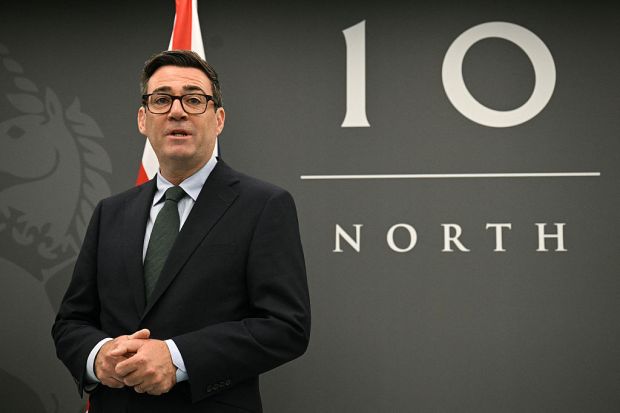
Burnham is now being presented as some steady, statesmanlike, experienced figure waiting in the wings to ride in and rescue us – a King Arthur out of Silbury Hill to save Britain in its darkest hour, the anointed King in the North. This is beyond satire, ludicrous beyond words. But it is happening. It is real. King Andy is going to be crowned PM, and far too many in the Labour party really believe he is some kind of messiah to let you sleep easily at night.
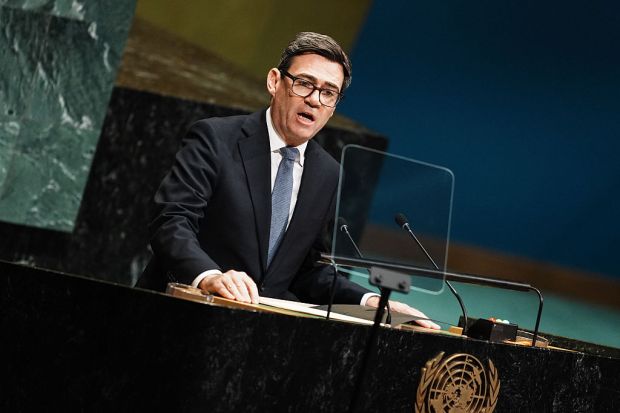
The assumption behind why Burnham is Labour’s great hope rests on the remarkable lack of examination or discussion of his ‘achievements’, either during his time in Westminster or as Mayor of Greater Manchester.
Andy Burnham first came to national attention as a young minister. He was nicknamed Bambi because of his doe-like brown eyes and soft skin. He rose relatively quickly and was Health Secretary between 2009 and 2010, a period when the department was still dealing with the consequences of the contaminated blood scandal.
The subsequent public inquiry exposed long-standing serious failures in how the crisis had been handled. Burnham’s own record in the role was repeatedly questioned. After the 2010 election, he was politically damaged and spent several years out of the national spotlight before reappearing and running for Mayor of Greater Manchester.
Now, in recent years, he has been rehabilitated. His supporters point to Manchester’s Bee Network as his signature achievement, yet industry figures have dismissed the city’s transport network as a costly smoke-and-mirrors operation propped up by huge taxpayer subsidies. But Burnham’s supporters think that rebranding buses and spending public money proves he has the mettle to rescue the entire country.
We saw something similar with Gordon Brown. As Chancellor, he was praised by Labour types as a serious and capable figure. However, upon becoming prime minister, it was plain to see not just how limited Brown was, but also how potentially dangerous his combination of thin skin, arrogance, and total lack of self-awareness could be.
Both cases highlight the illusion of competence that gets attached to Labour’s chosen champions. Closer examination of the chosen ones’ careers reveals how easy it is to construct this illusion around professional politicians.
Burnham’s supporters think that rebranding buses and spending public money proves he has the mettle to rescue the entire country
Their CVs are usually long on Norman words and very short on Anglo-Saxon ones. They accumulate endless titles and move swan-like through a succession of senior roles. But when you look for clear examples of success, difficult decisions taken, or risks accepted, these things are always hard to find.
The very system they work in rewards the careful avoidance of decisions rather than their taking. Avoiding a mistake that could end your career is valued far more highly than achieving a result. We saw this clearly under recent Conservative governments, where multiple Home Secretaries and ministers responsible for borders and immigration accumulated senior titles and reputations as experienced operators while net migration continued to rise sharply, with little fundamental reform delivered.
The simple act of surviving long enough to land the next job is treated as evidence of competence. Career politicians learn early that the path of least resistance, the easy way, is to manage problems rather than to solve them.
Andy Burnham has spent his entire career inside this broken system and generally seems to operate very comfortably within its demands. Kemi Badenoch, by contrast, has shown far less inclination to rush in with an opinion on everything. In an age where appearing to have an opinion on everything is often treated as a sign of political seriousness, this represents a real point of difference, dare I say, authenticity?
The current political culture struggles to distinguish between the appearance of competence and its reality. Figures whose records contain long stretches where few risks have been taken or big achievements delivered are routinely described as experienced and ready for office. The gap between the polished public image and what has actually been achieved is almost never examined in any sustained way.
The consequences are increasingly damaging to Britain, a country with a weak economy and an increasingly fractured society. Running a government department or leading the country involves making serious and difficult decisions. Instead, the system encourages the careful management of reputation and image, and the steady accumulation of titles.
Andy Burnham’s current position as the probable next Prime Minister follows this same pattern. Whether the outcome is ultimately successful or not, the ease with which his damaged political record can be put aside in favour of a conflated view of his successes and steadfastness shows how little serious scrutiny our political system applies to those who have waited long enough in the wings or have been anointed as the saviour.
‘Andy can do it,’ we’re told. He’s ‘The King of the North’, the man to save Labour. It’s not true. Burnham is far more likely to be a very naughty boy and no messiah at all.