Giorgia Meloni and Pauline Hanson began in almost the same place. One is three months from making history. The question is whether the other will do so in a similar fashion.
We begin with the parallel, because it is uncanny.
These are two women, a generation apart, from the wrong side of the establishment’s tracks. One ran a fish-and-chip shop in Ipswich. The other grew up in Garbatella, a working-class quarter of Rome the left had always assumed it owned. Neither came up through a university faculty, a party secretariat, or a family name. Both were treated, for years, as something the respectable parties needed to keep at arm’s length – and both turned that treatment into their entire political identity.
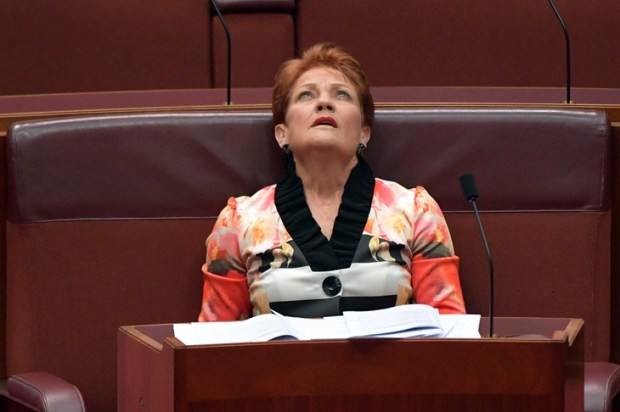
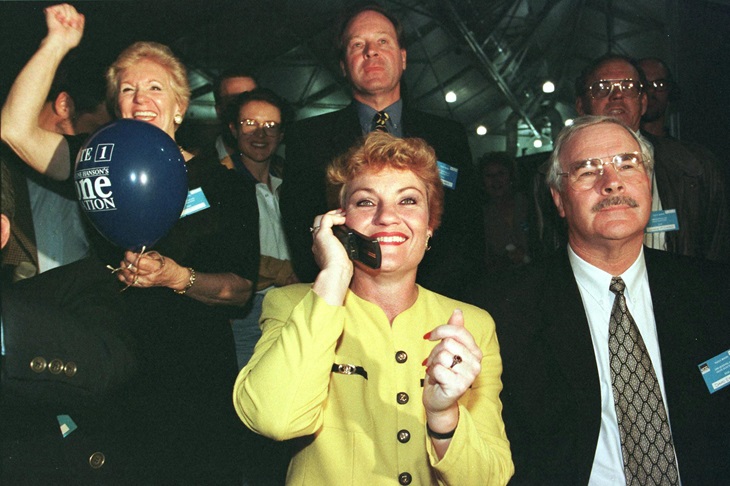
Pauline Hanson was endorsed as the Liberal candidate for Oxley in 1996, then disendorsed mid-campaign over what she had said about Aboriginal Australians. It was too late to reprint the ballots. She won the safe Labor seat with the word ‘Liberal’ still beside her name and a party that wanted nothing to do with her.
Her maiden speech warned that Australia was in danger of being ‘swamped’. Within a year she had a party of her own, and it carried her name on the masthead: Pauline Hanson’s One Nation.
Giorgia Meloni joined the youth wing of the Italian Social Movement in 1992, at 15 – the MSI being the party founded in 1946 by the unreconciled remnant of Mussolini’s republic. That pedigree was, for decades, the single most disqualifying fact in Italian public life. She built her party, Fratelli d’Italia, out of its inheritance in 2012, naming it after the opening words of the national anthem. It polled around 2 per cent. The serious people did not take it very seriously. Both women made their sex an asset when their opponents sought to make it a liability. The Italian left set Meloni’s defiant Rome rally cry – I am Giorgia; I am a woman, I am a mother, I am Italian, I am a Christian – to a mocking dance track. And it was indeed the left who were willing to humiliate a striving woman and her beliefs. The plan backfired: the words became an anthem instead of a humiliation.
When Australia’s commentariat reached, as it near always does in moments of weakness, for the misogyny line, Hanson answered with ‘please explain’ in 1996 and ‘suck it up, sweetheart’ in 2026, and the rebuke landed on the people delivering it. The attack authenticated the target. Again, it near always does against this kind of figure. Both built their movements on the same compound grievance – borders, culture, the forgotten worker, the striver – and both endured a long wilderness before the breakthrough. Hanson’s first party fragmented after 1998; she lost her seat, was jailed in 2003 on a conviction the courts later quashed, and spent a decade as a punchline before returning to the Senate in 2016. Meloni languished in the low single figures until 2018.
The establishment in both countries filed them under the same heading: a convulsion, not a structure; a flame that briefly flared and would fade. It is still the view expressed even this week in mainstream Australia.
In September 2022, Fratelli d’Italia took 26 per cent of the Italian vote – the largest single party – and on 22 October Meloni walked into Palazzo Chigi as Prime Minister. The post-fascist outsider – the woman the respectable right had spent 30 years quarantining and the left had spent bullying – would now run the country.
She did not merely win. She made herself practical, on purpose, in the places that mattered. She backed Ukraine when Russia expected the European nationalists to wobble. She kept Italy inside the euro and worked the budget through Brussels rather than against it. She turned out to be, much to the bewilderment of everyone who had filed her as ‘extreme’, a pragmatic partner.
Europe’s strong woman, the magazines now call her, the indispensable centre of the continent’s politics. Perhaps that should never have surprised anyone: Meloni is a second-generation single mother.
And now Meloni – the outsider, the working-class girl, the single mum, the pariah by pedigree, the defiant woman of conviction who turned the mockery of Italy’s avowedly feminist left into a marching song – is on the brink of another achievement. On September 4, 2026, barring a last-minute collapse no one in Rome expects, Giorgia Meloni will pass Silvio Berlusconi’s 2001 government and lead the longest continuously serving administration in the eighty-year history of the Italian Republic – a nation that has burned through 68 governments.
It is a remarkable achievement, and one that has largely gone unnoticed in the international press. It is fair to say that Meloni and her genuinely unique record have received scarcely a fraction of the coverage that Jacinda Ardern, Sanna Marin, or Julia Gillard have enjoyed.
The interesting question is what Meloni’s experience augurs for Hanson’s own future. It is no longer so much whether Hanson is about to follow her into power – that is more conceivable now than it has ever been. Indeed, Meloni and Hanson both have the correct biographical signature for the times in a way that Angus Taylor doesn’t. It is more whether Hanson might, despite her age, become one of Australia’s longest-serving leaders. The question is not preposterous, even though the answer is not straightforward.
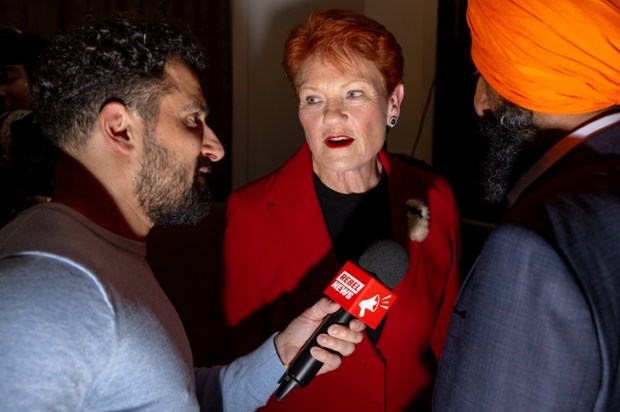
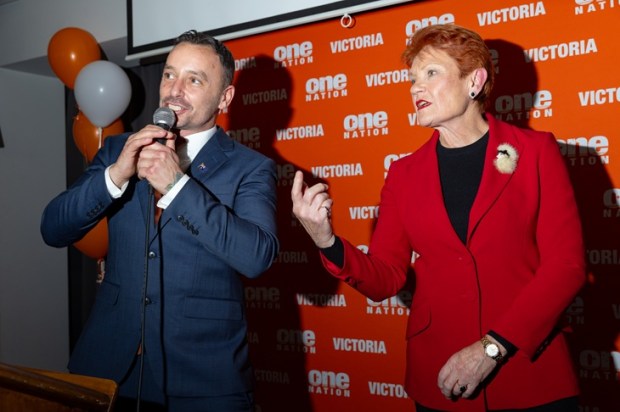
Pauline Hanson, 30 years after Oxley, leads the polls against both sides of politics. By mid-2026, One Nation sits ahead of both Labor and the Liberals on the primary vote. Hanson’s party has already taken more than a fifth of the vote and four seats at the South Australian state election in 2026, outpolling the Liberals. It has now captured the previously safe Liberal seat of Farrer. From here, though, the task gets harder.
Italy rewards the assembler. Its proportional system asks an insurgent only to become the largest partner in a coalition and then to lead it. The Italian right united. Salvini, his star now faded, and the League fell into line. What remained of Berlusconi’s once formidable party, Forza Italia, followed suit. Twenty-six per cent was enough to make Meloni the senior partner of a governing bloc. The bar was never ‘win the country’; the bar was ‘lead the right’, and Meloni cleared it.
She did not need to ally as a junior partner, and she did not have to destroy an incumbent to govern. She became the incumbent, because the Italian right had no entrenched centre-right machine occupying the ground she wanted.
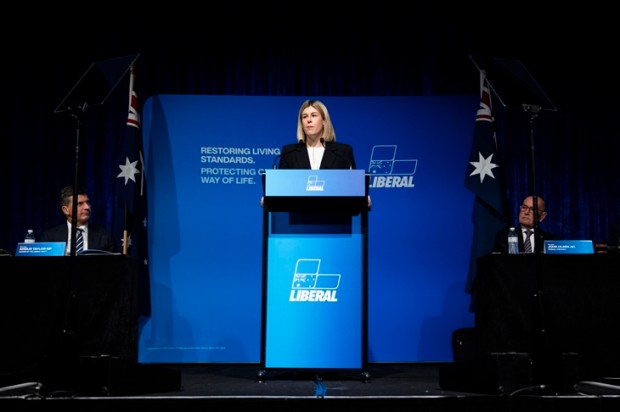
That option does not exist in Canberra. The Liberal Party is standing where Hanson wants to be. And Australia rewards the incumbent. Single-member seats, compulsory voting, and full preferences mean a populist flank can accumulate first preferences for years while its voters’ second preferences will drain dutifully back to the Coalition – until the day they don’t. One Nation’s preferences to the Coalition still run at something like seven in ten, even if the figure is falling.
Because the right in Australia already has an incumbent vehicle sitting in the chair One Nation would need to occupy, the bar here is not ‘lead the right’ – it is ‘replace the right’. And oddly enough, the path of least resistance might lead through Labor’s electorates.
Whatever the case, the same insurgent energy – the same vote share, very nearly the same woman – converts to a head of government in Rome and, for now, to a flanking operation in Australia. Not because Meloni is the cleverer politician, but because the room she was entering had the door ajar. The room Hanson targets does not.
The fringe-to-government transition is plainly possible – Meloni has proved it in one of the most haunted political cultures in Western Europe. On the other side of politics, Sinn Féin has done the same – First Minister in the North since 2024, and the most popular party in the Republic, even as Fianna Fáil and Fine Gael combine to keep it out of office. Resorting to a lock-out should look familiar!
Hanson’s vehicle still faces two challenges: first, wresting the ground from a party that will not cede it, despite the seductive offer of preference sharing – the opening gambit in a long game – and then strengthening enough to govern capably. Can Hanson lead a new combination of voters to replace, in a durable way, a tired and increasingly dated set of inherited parties?
This is where Hanson faces the real test. Meloni is not just 48; she managed to build an institution – a party now larger than the Prime Minister who leads it. That is the durable element, the legacy: not the leader, but the machine beneath her. Hanson is over 70, and One Nation remains a brand that serves only so long as the name on it. Even if Hanson succeeds in future elections – and I wouldn’t bet against it – staying is the harder problem.
Hanson’s age is something to be admired. If only we could achieve half the things she has done at a similar life-stage. However, it turns the building of a durable party institution into a race against time.
Australia is in transition. The interregnum is here; preferences are loosening; projections now envisage One Nation as a party of weight rather than an oddity or curiosity. Whether Hanson can follow Meloni’s example in more than one aspect depends less on the woman herself than on whether the movement around her can build out.
High-profile commentators keep calling for leaders of an apparently different calibre. Each day I see references to Churchill or to Thatcher. However, these commentators forget that, before their moment came, those figures too were seen as loose cannons, eccentrics, even failures. Party heroes tend to be canonised in hindsight, and only after they have built something which lasted: Churchill won the war; Thatcher remade her party.
The vindication was never the person’s character, in itself; it was the durable machine that the person was finally allowed to build. It is not impossible for Hanson to join this illustrious list of political luminaries. It just requires an imagination which standard bureaucracies do not have. If Hanson is to join that prestigious company, it will have to be on similar terms – and organisation-building is not a quick process.