Each party has major, consequential decisions to make in Australian politics these days.
One of the more interesting is not the Liberals, who remain lost, nor Labor, who until a month or two ago would rush back into their offices and, Britain in their minds, would chant with eager anticipation, ‘Magic mirror on the wall, who is the fairest one of all?’ They knew the answer.
Nor is it necessarily One Nation. Their path forward is clear: reject any deal with the Liberals; build out their organisation; go after Labor without mercy; field candidates wherever they can. Don’t get tricked by wishful thinking among establishment journalists – including that now sprouting in the British press after the recent UK by-elections. The future is theirs for the taking if the effort is made, and the strategy pursued without distraction.
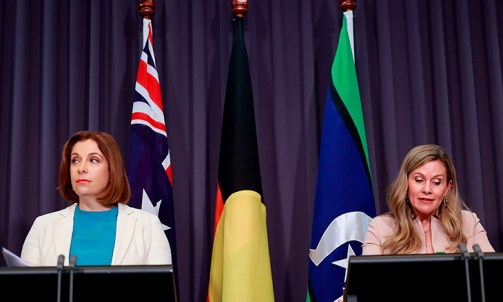
While Canberra tests the ability of One Nation to win and debates the Liberal Party’s recovery prospects, and while Redbridge consoles Labor with quantitative proof that all is not lost, it is rather the Nationals who are facing a once-in-a-century opportunity to redefine themselves – and the Australian right with them.
A common reading of the Coalition’s position in June 2026 treats the Nationals as collateral damage. Redbridge Group’s post-budget multilevel regression and post-stratification (MRP) modelling, first published in May 2026, projected a worst-case scenario in which not one Nationals MP remained.
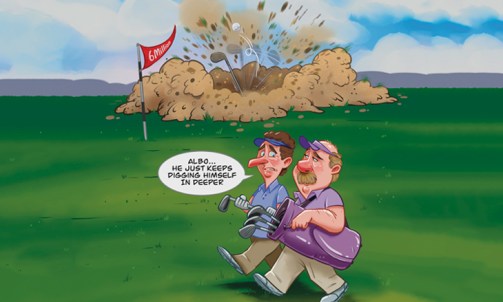
The underlying belief in Redbridge’s analysis seems to be that the Coalition is one bucket and that this bucket no longer holds water. For a while the Liberal-National team had valiantly struggled until someone spoke out at last: ‘There’s a hole in my bucket, dear Liza.’ Being one bucket, the fate of one party is the fate of the other: both parties fall together. However, this reading is wrong, and the methodological gap that produces it matters as much as the conclusion.
What aggregate modelling cannot see
MRP and uniform swing models are both calibrated on aggregate Coalition vote intention, because that is what national polls reliably measure. They cannot decompose how the Coalition’s decline distributes between Liberal and National components without separate component-level polling, which is rare. Under pressure conditions, they implicitly assume the same decline for both vehicles. It is the most defensible methodological choice in the absence of better data. It also produces scenarios with no Nationals re-elected when the model is asked to extrapolate hard enough.
However, the same decline for both partners in the Coalition is not what the record shows. The event that first comes to mind is the 2016 federal election. Turnbull’s soft-left platform produced a significant loss of Liberal seats while the Nationals held their rural substrate through a differentiated message. The Coalition scraped through only because of the Nationals’ relative performance, not despite it, and the result should have sent an obvious message.
The same pattern appeared in NSW state data: from the 2011 Coalition peak to the 2023 election, the Liberals fell nearly three times as far as the Nationals did in absolute terms, roughly 12 points to 4.
Like Redbridge, I too believe the current evidence suggests something is now in motion more dramatic than recent patterns. But it is not equal decline in the Coalition or even asymmetric Liberal decline in a robust, fit-for-purpose alliance. It is an outright failure of the Liberal-vehicle, with the Nationals positioned – if they have the gumption – to take over as Australia’s legacy vehicle on the right wing in a changed world with new polarities.
What South Australia revealed
South Australia’s state election this year neatly shows the lost opportunity. It produced a striking result in Narungga, the Yorke Peninsula seat where the Nationals do not operate as a separate party. The Liberal incumbent collapsed to just over 22 per cent of the primary vote. One Nation, taking almost 38 per cent, won the seat. One Nation’s primary performance was so strong it survived the preferential rollback.
The outcome reflected the absence of a Country Party to absorb the displaced vote. South Australia’s 1932 Liberal-Country fusion removed the rural-conservative vehicle 94 years ago. Voters had been forced into the Liberal option ever since. And when the Liberal vehicle started to fail, the substrate – having no alternative – went straight to One Nation.
A political vehicle appears to last only as long as it fits the substrate, and when the fit fails the substrate does not dissolve – it migrates to whatever vehicle might carry it better. South Australia had nothing standing between the failing Liberal Party and One Nation, so the migration was immediate and complete. Where a fitted vehicle exists, the substrate stays; where none does, it walks.
The conventional reading treats this as just bad news for the Coalition. The structural reading is sharper: the substrate that took One Nation to victory in Narungga is the substrate that the Nationals should be representing wherever it exists. They should not be allowing Liberals to run candidates in electorates that are not naturally attuned to the Liberal vision centred on urban professionals and intellectual business owners.
It is not hard to identify electorates aligned with the Nationals heritage: outside the urban centres, regions that are part of the material economy, less interested in abstract debates, and often culturally conservative. The Liberals and Labor still maintain a serious presence beyond the urban centres, but both parties long ago abandoned voters found in the physical economy: the battlers, the manual workers.
SynthPol’s seat-level analysis identifies over 20 federal seats in this category. Three anchor the Labor-held cluster: Robertson, Paterson, Spence – outer-urban and regional districts, where the trades or manual class is institutionally hostile but culturally conservative. They vote Labor out of habit.
Three anchor the Liberal-held cluster: Forrest, Barker, Durack – rural seats where the Liberal vehicle, in its current form, is the wrong one for the substrate. Canning, in WA, is one of the cleanest anchors for a campaign that targets the tradie cohort. Mandurah and Wannanup, where my in-laws and all their friends live, are found at its core.
Why the substrate is durable, not transient
The conventional academic reading treats populist-substrate movements as a temporary backlash. Pippa Norris’s framework is that populism reflects an older voter, largely white male, a cultural reaction to displacement. She implies that the substrate will age out. We’ll soon be rid of these dinosaurs and can relax.
Establishment journalists fall into a similar group – the protest movement, lacking respectability, will lose energy. In the end, everyone wants to be respectable above all else. These journalists, and nervous party leaders, betray their underlying bias for almost Victorian middle-class affirmation by pointing out all that is wrong with the insurgents.
Of course if their worldview were correct Trump would never have won, and Farage or Hanson would have disappeared decades ago – when people first woke up to the true nature of these flawed characters.
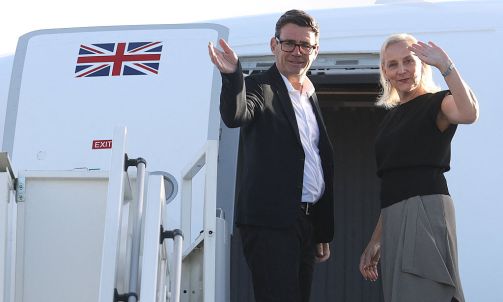
If the Nationals believe that academics and journalists are right – and Canavan has implied as much by attacking Hanson rather than reconsidering his party’s purpose – then the Nationals need simply wait out the turmoil, hold onto their existing seats, and watch the populist force dissipate. Labour in Britain have attempted this strategy – following the example of Germany’s legacy parties and tampering with convention or precedent as though such things didn’t matter in a democracy – without clear success. And hence the desperate cries for Burnham to save the British people.
The Norris reading has been failing empirically for a decade – at least since Trump – if not longer. And other, less academically popular, frameworks have instead been gaining empirical confirmation across Anglosphere democracies.
Reform UK saw its national-equivalent vote share overtake the Conservatives in 2025, and its party win more than 1,450 seats in the British local elections this year. It could be argued that the most recent by-elections in Britain have, more than anything else, rewarded the unrelenting cynicism of political elites.
The substrate behind Trump, Reform, and One Nation is not a cohort; it is a class. It is most unlikely to age out. Almost counter-intuitively it should grow in importance. The size of the high-value non-STEM urban professional eco-system, the home of the symbolic elite, will not expand enough to counter-balance other demographic trends.
Back in Australia, the Liberals have had multiple near-death moments in their history. They face another now. They have chased their target urban substrate precisely at the point when it is peaking out; and at a time when this substrate is spoiled for choice. Inner-urban voters can select Liberal, Teal, Labor, or Green. They have no special driver to favour the Liberals.
In contrast, the Nationals and their predecessor Country Party have survived every Coalition crisis since 1920. Though the Nationals’ rural substrate is smaller in overall numbers, the seats are more concentrated: in interior New South Wales, rural Queensland, regional Victoria – geography not easily contestable by Teals or Greens, only partially by One Nation, and increasingly less by Labor or Liberals. If the Nationals stick with their base, without looking to the Liberals for validation or favour, then I believe they have a future that a lot of conventional analysis misses.
The trilemma
Indeed, circumstances help resolve the Nationals’ position with unusual precision. They are the one party on the right whose vehicle still fits its substrate – regional, concentrated, culturally settled, the geography barely contestable by others. So as the Liberal vehicle fails and the material-economy substrate it abandoned begins to migrate, the Nationals are left holding the only intact legacy vehicle on the right, sitting squarely over demand.
A party in that position, with an existing vehicle for a substrate up for grabs, has specific options. Three come to mind: build out its vehicle until large enough to fully capture the migrating demand, merge its vehicle into the more exposed one of its senior partner, or become a small independent highly defensible kingmaker. Path A, Path B, Path C.
Path A – the Farage path. Refuse Coalition-stability framing, run separate candidates in seats where the material economy is strong, where the self-employed, non-diploma, culturally conservative substrate is powerful, and build out a substantive rural-and-regional platform, emerging after 2028 as – potentially – the most solid party for ignored districts.
Charles Moore in the Telegraph wrote of the electorate’s ‘fondness for legitimacy and an accompanying suspicion of those who over-claim and shout the loudest … [its leaning toward] prudence in a country which, even now, has a lot to lose’. However, this ignores history: Reform is simply following a path that Labour successfully achieved between 1924 and 1945.
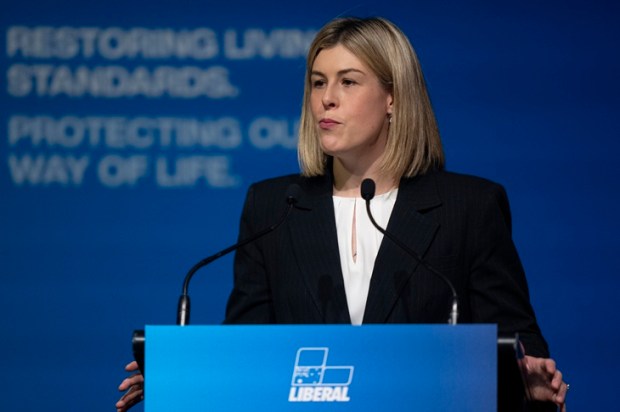
The Australian Liberals today, like the UK Liberals 140 years ago, consciously abandoned a key electorate. The Liberals’ new leader, as a representative of the successful intellectual class and the symbolic economy, still has the wrong biographical signature. The party has frittered away most of its credibility. Taylor’s post-budget speech, while praiseworthy, will be discounted for its timing and will probably turn away the Liberal Party’s last base – the one Turnbull doubled down on.
If the Nationals do follow this path, it does not mean that the Liberals will always lose or that the Nationals will always win. The same goes for Reform or for One Nation. After Gladstone spurned voters in Britain’s material economy in favour of its more intellectual elements the party did not collapse permanently or even lose continuously. Simply the party’s era was coming to an end.
Path B – the Liberal Unionist path. Accept full absorption into a Liberal-dominated vehicle in an attempt at combined recovery, formalise the LNP-Queensland model nationally. However, I expect that in a generation the Nationals will be reduced in this scenario to a letterhead. Joseph Chamberlain was one of the most gifted politicians of his time, and led one of the most powerful movements of his era out of Gladstone’s party after 1886 – but allied with the Conservatives rather than build out his own vehicle. Not long after his career-ending stroke, in 1912, the Liberal Unionists merged formally with the Tories.
The official party name in Britain remains the Conservative and Unionist Party, but the unionist moniker no longer means anything.
Path C – the kingmaker path. In this scenario, the Nationals recognise they have one of the most defensible institutional structures on the right; they seek to leverage this and become a more focused, assertive Nationals vehicle. It would not be the first time in Australia; and it is not inconceivable, in this context, that the Liberals’ primary vote stays too low to secure an outright majority.
Germany offers a blueprint. Bavaria’s Christian Social Union (CSU) – a rural-conservative junior coalition partner – has achieved policy and organisational independence from its senior partner while retaining coalition benefits. Bavaria’s CSU runs its own ministers, its own platform, and has its own institutional architecture. It presents the credible threat of running independent candidates outside Bavaria as the leverage that helps discipline the relationship.
Neither Path A nor Path C is unprecedented; they are both proven canonical moves in European politics. The point is to maintain the strategy over the longer-term rather than lose faith based on results at any moment in time.
The partnership question
The interesting question is not whether the Nationals should ally with One Nation. It is whether they should recognise that One Nation and the Nationals are addressing structurally adjacent substrates and that the Liberal Party, in its post-2015 form, may not survive long enough to be a senior partner for either of them.
The substrate evidence is growing. One Nation has been ahead of the Coalition continuously from May. If this configuration holds through 2028, the question for the Nationals is whether to be on the sinking ship or to be alongside a boat that is rising. The Liberals, in this configuration, become like the SPD – a legacy party, but in Australia, declining around five primary-vote points per cycle on average; never quite collapsing, yet never quite recovering. They would occupy the structural role of Germany’s Social Democrats after 2005 or Britain’s Liberal party after 1924, whose descendants are the Liberal Democrats.
The new governing coalition, if it forms, would be One Nation as one partner and the Nationals as the other – addressing structurally adjacent rural, regional and trades-cohort substrates from two natural complementary positions – with the Liberals available as a coalition counterparty when stability requires a third partner.
Preference flows do not yet show two natural partners – they suggest close to the opposite. In WA, the only state where both run in their own name, One Nation’s preferences break to the Liberals over the Nationals by more than four to one, and the Nationals’ own preferences run to the Liberals at nearly two in three. In Queensland, One Nation’s preferences flow almost 60 per cent to the merged LNP.
That is the old axis still doing its work: the insurgent’s preferences draining dutifully back to the established vehicle, exactly as they have for decades. One of my model, SynthPol’s, assumptions is that when the inherited political axis dissolves the One Nation and Nationals preference streams stop running through the Liberals and start finding each other – and the day they do is the day an exclusive One Nation–Nationals arrangement begins to pay.
The Nationals in this configuration would not be junior partner of an ascendant senior party in the way that they have been for the past 75 years. They would be a structurally distinct party with their own substrate and their own platform, their own institutional shape – more like what they enjoyed at two points in their history: in Queensland under Joh Bjelke-Petersen and then in WA under Brendon Grylls between 2008 and 2013.
What is at stake
All three paths remain open to the Nationals. But SynthPol’s central prediction if Nationals make no clear choice is that they will drift into Path B. In such circumstances, Nationals are indeed bound to the Liberals and their fate. Redbridge may prove right. And in this scenario I expect the Liberals and Nationals will open merger negotiations late 2027 or early 2028 – and the Nationals will disappear forever as a separate identity in Australian politics.
The Coalition combined under one brand might offer an aggregate primary with an upper limit in the high 20s at the federal level rather than feared outcomes: below 20 per cent for the Liberals and the unlikely zero for Nationals. However, an organisational architecture in which Liberal machinery dominates probably means Liberal candidates into previously Nationals seats within a generation. I suspect that the Nationals as a distinct political force would end the same way as the Liberal Unionists did a century earlier: a name on the letterhead – nothing more.
A choice is hard to put off. The federal election by May 2028 will register whichever path the National party has taken – by decision or by drift. Mainstream commentary cannot see the choice because the methodology used to forecast Coalition fortunes cannot decompose what is actually happening inside the alliance.
Structural analysis of the kind needed to see it requires looking in a holistic fashion across a wide range of factors: the electorate, substrates, vehicle architecture, geographic distributions, historical outcomes, and international parallels in countries like Bavaria, Poland and Italy. It is not a scenario that naturally appears in MRP models or polling crosstabs.
The Nationals are not the Liberals. The next 18 months will determine whether they continue to be merely a junior partner sinking in the storm, or whether they become something the Australian political system has not seen in its fullest form for almost a century – a rural party that has its own structural project, leveraging valid templates from both history and overseas, and reconnecting strongly with one of the most defensible voting blocs in the country.
Labor, this past month, asked the mirror its oldest question and for the first time heard an answer it did not want. The Nationals have a mirror of their own, and theirs – almost alone among legacy parties just now in Australia – still offers them something positive in the reflection. The only question left is whether they have the nerve to recognise it, and the harder nerve to act on it.