The South Australian state election in March saw Labor comfortably home, yet again, but the insurgent One Nation became the second most popular party in the state.
One Nation drew 22.5 per cent of the first preference vote, relegating the Liberals, with their 19.4 per cent, into third place. (One Nation did even better in the Legislative Council – our Upper House – with 24 per cent of the vote to the Liberals’ 17.6 per cent.) The SA Liberals, like their federal parent party by all indications, should get an entry in the political science textbooks in the ‘existential crisis’ chapter.
As Paul Collits notes, despite One Nation’s breakout vote performance and finishing in the top two placegetters in about half the state’s 47 electorates, it was left to the protection racket known as compulsory preferential voting to see Labor, on 37 per cent of the vote, win almost 75 per cent of the seats whilst the outvoted Liberals even eked out a one-seat win over One Nation with five seats to four. Still, Pauline’s party served notice, in big red letters, on the directionless SA Liberals.
The Voice is on mute
If the state election was the main bout, however, there was also a less advertised undercard, a superannuated Aussie Joe Bugner vs some ex-NRL has-been, if you like, which failed to excite anyone, apart from the most dedicated fans of the more lowly-ranked electoral pugilists.
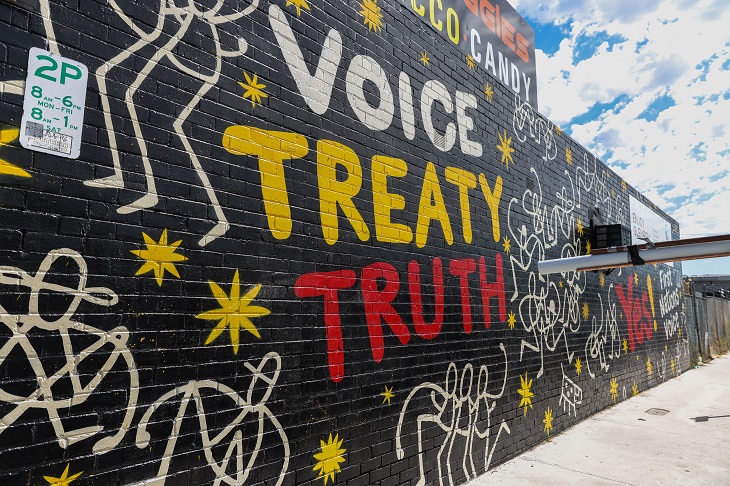
Held concurrently with the state election was the second election for the South Australian ‘First Nations Voice to Parliament’. It is, in my opinion, an irrelevant and expensive Woke vanity project (or, as One Nation’s Cory Bernardi, put it, ‘trendy nonsense’) legislated by the Malinauskas Labor government in 2023 despite 64 per cent of South Australians rejecting the national version of a Voice in the 2023 referendum. South Australia had the second highest ‘No’ vote of all the states.
The SA Voice election results showed, once again, that hardly anyone cares for the Voice experiment. Interest amongst the South Australian Aboriginal population was, for the second time around, impressively low. The number of candidates nominating for election to the Aboriginal chamber fell by almost half, from 113 in 2024 to just 64 candidates in 2026 whilst voter turnout remained subterranean. Only 3,504 of SA’s estimated 32,000 Aboriginal or Torres Strait Islander population who were eligible to vote in their special Voice election bothered to show up on the day or to post in their vote. So, barely 11 per cent of the state’s Aboriginal voters cared about their very own, special Parliament. So much for ‘racism’ being behind the ‘No’ vote in the national Voice referendum.
Those elected to the SA Voice this time often had a vote tally under three figures whilst six female candidates (each electorate has to have, by law, equal numbers of elected males and females) got in under the women-only provision so they did not have to have their popularity tested through submitting to the rough democracy of an actual vote.
Some Voice apologists have argued that Aboriginal voters stayed away from the ballot box because the SA Voice is purely consultative and lacks the powers that a constitutionally enshrined Voice would have, but it is still telling that, given the prominence of Aboriginal identity politics in Australia, when the Voice was actually road-tested, Aborigines themselves rejected the premise.
Most urban Aboriginal people, it seems, care not for special powers, privileges, and perks and will happily go about their modern lives, fully-integrated into their ‘colonisers’ civilisation with its myriad benefits and opportunities, ignoring any temptation to wallow in self-pity and grievance-mongering.
The Aboriginal Voice concept has again had its mute button pressed but some on the identity-politics Left continue to refuse to take ‘No’ for a Voice answer. In a sane world, Voice proponents would now shut up shop and move on. But we live in a world where ‘anti-racist’ virtue must be signalled at all costs, whether democratic or fiscal.
What if they held an election and nobody came
‘What if they held a war and nobody came?’ went the famous 1960s anti-war slogan (taken from a Carl Sandberg poem) suggesting that if citizens simply refused to fight then war would not happen (the politicians and newspaper editors aren’t going to fight it, that’s for sure).
In a similar vein, although much more distastefully so for the Left, we could ask, ‘What if they held a Voice election and nobody came?’
The SA Voice election has just given us the answer, that, when left up to normal people, a race-based, two-tier democracy in Australia just won’t be happening.