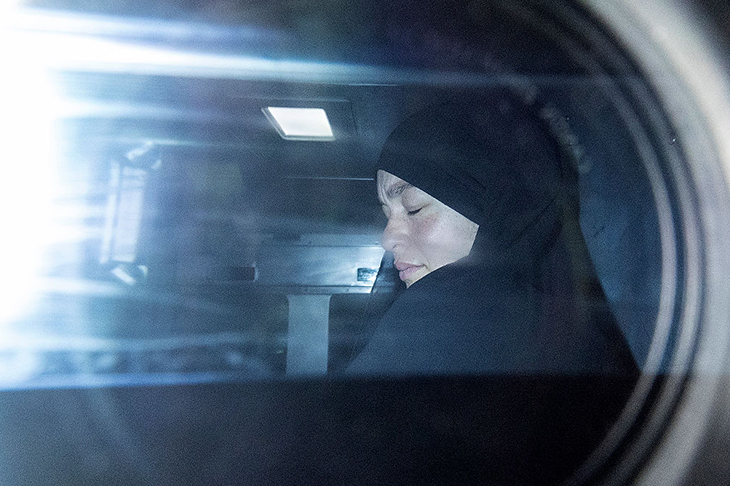
The return of Isis ‘brides’ alongside the anticipated trial of an alleged Isis-inspired Bondi terrorist has forced Australia to revisit an uncomfortable question: what does modern Islamist extremism actually look like?
For many Australians, the answer seems obvious. Isis (‘Islamic State in Iraq and Syria’), an Al-Qaeda affiliate, has represented Islamist extremism in its starkest form: black flags, public executions, oppression of women, online radicalisation and mass violence. Isis also instituted sexual slavery of religiously permissible captives, particularly Yazidi women and girls.
The radical Islamist ambitions of Isis (also known as Islamic State) were declared openly. It sought a global caliphate governed by a rigid interpretation of Islamic law, rejecting democracy, secularism and national borders.
Its ideology was rooted in an extreme form of Salafi-jihadism, a militant interpretation of Sunni Islam that aimed to restore the ‘pure’ practices of early Islam. The conflicts in Syria and Iraq were framed as an apocalyptic struggle between true believers and enemies of Islam. Sophisticated online propaganda targeted young people worldwide, offering identity, belonging and purpose through participation in the caliphate.
Because Isis was so overtly brutal, its ideology appeared easy to identify.
But the greater danger is not always the most visibly violent form. It could be a sophisticated version embedded within state institutions, diplomacy and international legitimacy. That is why comparisons between Isis and the Iranian regime deserve serious examination.
Iran and Isis are not identical. Isis was a Sunni jihadist movement built around territorial conquest through terror. Iran’s ruling ideology emerged from a radicalised form of political Shiism expressed through a theocratic system. Unlike Isis, Iran is a sovereign state with embassies, bureaucracy and elections, albeit tightly controlled ones. It is also the major global sponsor of terrorism.
Isis destroyed states. Iran learned how to operate through them. Yet beneath these differences lies a disturbing overlap in ideological structure. Each follows a Sunni or Shia politico-religious ideology of Islamist extremism, also known as radical or political Islam. Both systems rest on the belief that political legitimacy derives not from citizens, but from divine authority.
Isis declared a caliphate under Abu Bakr al-Baghdadi and demanded allegiance from Muslims worldwide, insisting that God’s law superseded all human systems. Iran’s 1979 Islamic Revolution established a different but related doctrine: velayat-e faqih, or ‘guardianship of the Islamic jurist’, which grants political and religious authority to the Supreme Leader until the return of the Mahdi, or Hidden Imam, a messianic figure in Shia Islam.
In both systems, human rights are contingent on theological interpretation, and dissent is framed not as political disagreement but as punishable moral deviation.
Isis expressed this through grotesque public violence. Iran institutionalised repression of dissidents, summary executions and suppression of protests through law, surveillance and state power. Women’s bodies became central terrain in both systems.
Isis imposed total gender segregation, forced marriage and sexual slavery. While Iran’s system is less overtly barbaric, it similarly invests in controlling female visibility and autonomy through mandatory hijab laws, morality policing and restrictions justified in religious terms. Both also frame themselves as civilisational projects extending beyond national borders, aiming to impose their version of global Islamist dominance while seeking the demise of the West.
Isis explicitly sought a borderless caliphate across the Muslim world. Iran does not advocate a Sunni-style caliphate but has spent decades exporting its Shia revolution through aligned militias, ideological networks and proxy movements stretching across Lebanon, Iraq, Syria, Yemen and abroad. This colonialist project has destabilised the region and beyond.
Iran’s mounting nuclear programme and arsenal of far-ranging ICBMs that can reach Europe and the United States have strengthened its imperialist enterprise. Iran reportedly conducts foreign interference operations targeting dissidents and opponents abroad. Much of this activity is linked to the regime’s Islamic Revolutionary Guard Corps and its extraterritorial Quds Force that often utilises proxy networks and criminal intermediaries to maintain plausible deniability while advancing strategic interests.
Isis pursued overt conquest. Iran developed influence through layered sovereignty. Rather than annexing territory outright, the Islamic Republic projected political, military, economic and ideological power through aligned non-state actors operating across sovereign nations.
Both Isis and Iran have pursued expansion beyond conventional nation-state behaviour, and both justified that expansion through sanctified political narratives.
Islamic State’s brutality alienated local populations and made long-term governance impossible. Iran’s ambitions proved more durable because they operated through institutions.
Fusing religious authority with statecraft, Iran built intelligence networks, military structures, courts, economic systems and diplomatic relationships capable of sustaining ideological governance over decades. It learned how to appear simultaneously revolutionary and legitimate.
That is why comparisons with Isis provoke discomfort. The implication is not that Iran behaves identically to Isis, but that extremist religious governance does not cease to be extremist simply because it becomes institutionalised.
Western democracies often recognise danger more easily when it arrives with jihadist flags and execution videos. We struggle more with systems that exercise similar impulses through constitutions, ministries and international negotiations.
The return of Isis-linked women to Australia highlights this tension. Public debate focuses heavily on whether these women remain ideologically dangerous, whether they can be rehabilitated, and how extremist belief systems survive after territorial defeat.
But extremism did not disappear when the caliphate collapsed.
Isis adapted after losing territory, encouraging decentralised ‘lone wolf’ attacks abroad. The territorial project was largely halted, but the ideological framework endured. That endurance should caution against simplistic understandings of Islamist extremism or radical Islam as merely a security issue. These movements are sustained by religious fervour, anti-Western narratives and a vision of victory.
One of the greatest mistakes liberal democracies make is assuming radical Islamist politics become moderated once institutionalised. The opposite may occur as institutions allow ideology to become resilient enough to shape generations.
When governments claim divine legitimacy, compromise becomes weakness, opposition becomes impurity, and violence can be glorified as moral obligation.
Isis embodied this logic in its most theatrical and violent form. Iran’s version proved more disciplined, more strategic, and therefore more enduring.
The black flags of Isis made its ideology easy to fear. Its state-based variants are harder to recognise precisely because they have learned how to survive in plain sight.
Got something to add? Join the discussion and comment below.
You might disagree with half of it, but you’ll enjoy reading all of it. Try your first month for free, then just $2 a week for the remainder of your first year.