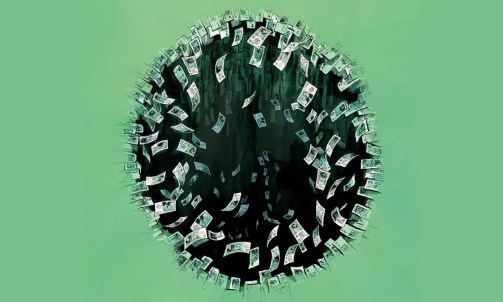
Australia is heading for a recession.
Policymakers may not want to admit it yet, but the warning signs are flashing across almost every part of the economy.
Rising interest rates, weakening property markets, and deteriorating business confidence are creating an increasingly fragile economic environment.
The Reserve Bank is already fighting inflation driven by years of stimulus and government spending, while the inflationary effects of the Iran conflict are still working their way through global supply chains.
Australia now stands alone among developed economies in continuing to hike interest rates, with more to come.
Treasury is tipping inflation to hit 7 per cent by the end of the year from its current rate of 4.6 per cent.
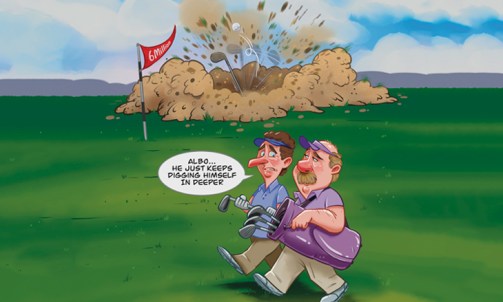
Further hikes risk inducing a recession, but the RBA is stuck between a rock and a spendthrift treasurer.
The first sign of a downturn can be seen in the property market. New listings are surging across capital city markets – a leading indicator of decline. Sydney’s auction clearance rates are at levels not seen since 2018; Melbourne’s are back to pandemic lows.
Proposed changes to Capital Gains Tax concessions and negative gearing, expected in the coming budget, may accelerate the retreat of investors from the housing market.
In some parts of the country, that process has already begun.
A 10 per cent correction in the housing market is not out of the question, and it could be one that lasts years.
In a country where the banks dominate the ASX, a housing downturn rarely stays confined to housing.
The economy itself is beginning to stall.
Official inflation figures increasingly feel detached from lived reality. They do not capture the cost of buying a home, while mortgage repayments are swallowing unprecedented portions of disposable income.
In recent years, living standards in Australia have declined faster than in any other developed economy, while living costs, interest rates and the tax burden have all climbed sharply.
Construction costs are rising at a time when we are struggling to build more houses.
At its most recent meeting, the RBA revised down its productivity and growth forecasts and revised up unemployment forecasts. Since 2016, Australia has had zero productivity growth, and since 2022, it has been negative.
Of course, if it already feels like we’re in recession, it’s because we are. We have been in a per capita recession for the best part of the last two years – now a headline recession is also on the cards.
Ironically, it is Australia’s avoidance of recession during the Global Financial Crisis that will make the next downturn that much more severe. But it might be time to rip the band-aid off.
Recessions, for all their pain, perform an economic function. Unproductive businesses fail, asset prices reset closer to reality, and excess debt is purged from the system.
If you ask young Australians, the reset can’t come soon enough.
A 30-year-old Australian has experienced just 0.7 per cent productivity growth across their lifetime. Real incomes have not moved in a decade, while disposable incomes have fallen more than any other OECD country.
Australians are now more pessimistic about the economy than they were during lockdowns.
Australia largely avoided the post-GFC economic reset through stimulus, rising house prices and debt expansion. Instead of restructuring the economy, we doubled down on debt, higher house prices, and government dependency.
Australia’s immigration program has become a substitute for genuine economic reform. Why invest in automation, technology or workforce training when governments can simply import more labour to prop up housing markets and inflate headline GDP instead?
The result is an economy that looks busy but is getting less efficient every year. We are mistaking population growth for prosperity.
Australia’s private sector is no longer investing enough. Private capital expenditure is now below recession-era levels seen in the 1990s.
By some measures of economic complexity, Australia now ranks below Botswana and Zambia — a reflection of how dependent we have become on commodities, housing and consumption.
Australia increasingly struggles to build even basic infrastructure projects on time or on budget.
The government’s share of the Australian economy is now approaching levels last seen during the second world war, while public spending remains the strongest driver of demand.
Australia has become increasingly dependent on fiscal stimulus, with the government keeping its foot firmly on the accelerator while the Reserve Bank futilely tries to tap the brakes on demand.
It is backed into a corner, unable to restrain relentless government spending, and left with only one lever — tightening the screws on mortgage holders already near breaking point.
Labor governments at both the federal and state level continue to pour fuel on the fire with subsidies, rebates and what Victorian Premier Jacinta Allan calls ‘free stuff’, even in a state where debt has exploded 1,576 per cent since Labor took office.
Chalmers’ budget is expected to contain more household stimulus.
As RBA Governor Bullock noted, when governments compensate households directly, it makes the Bank’s job of dampening demand that much harder.
Australian households have the second highest debt to GDP in the world. Business insolvencies are up 34 per cent compared to last year.
The number of job ads continues its multiyear decline — typically, declining job ads precede a rise in unemployment and recession.
The NDIS has evolved from a targeted support scheme into one of the largest and fastest-growing spending programs in the country.
It is also expected Labor will finally crack down on the NDIS, putting many a grifter out of work, and add to the increasing unemployment rate.
Australia’s M3 money supply has grown 8 per cent in the past year, meaning there are more dollars competing for the same amount of goods.
We have borrowed, spent and imported our way into a corner with no easy exit.
The danger now is that the longer we postponed the correction, the harsher it will be.