The results from the May 9, 2026, Farrer by-election are in, and it is worse than you think.
It appears the swing against the Liberals is the single biggest against any one party in modern Australian political history since 1966.
Yes, the Libs lost by a massive margin, but if you look at Farrer’s history, the statistical data booth by booth, the significance of border seats, the informal ballot percentage, and the liberal party response, this was not just a catastrophe, it was an extinction level event. Here are ten reasons why the Farrer-by election was worse than we all think.
1. The Libs Lost Every. Single. Booth
AEC data from the May 9 by-election indicates that the political bloodbath was so bad that it was a total wipeout. One Nation candidate David Farley and Independent Michelle Milthorpe dominated the count. Booth-by-booth data shows that the Liberal candidate, Raissa Butkowski, failed to secure a primary majority in any single polling place. Let that sink in for a moment. This was the seat which, a few short months ago, was held by the Leader of the Opposition. On the data we have so far, to fail to win a single booth is quite simply a shocking reversal for a party that previously held the entire region with ease.
2. The Libs didn’t score above 20 per cent in any booth
The Liberal primary vote collapsed to an average of approximately 12.4 per cent across the electorate. In a majority of booths, particularly in rural sectors and the outskirts of Albury, the Liberal primary vote struggled to reach the 15-20 per cent mark. This reflects a massive 31.2 per cent swing against the party, especially when one compares it to the 2025 federal election results.
3. One Nation won all of the border booths
Every seat that borders Farrer is held by the coalition, except one. Farrer borders six electorates: Parkes and Riverina (NSW), Indi, Nicholls, and Mallee (VIC), and Barker (SA). Reports from the 2026 tally room show that One Nation’s David Farley won every polling booth situated along these borders, particularly in the western and southern river reaches where dissatisfaction with water policy and the cost of living was greatest. Based on the by-election results on the borders of Farrer, it is therefore highly likely that nearly every seat in the next election could become a ON representative.
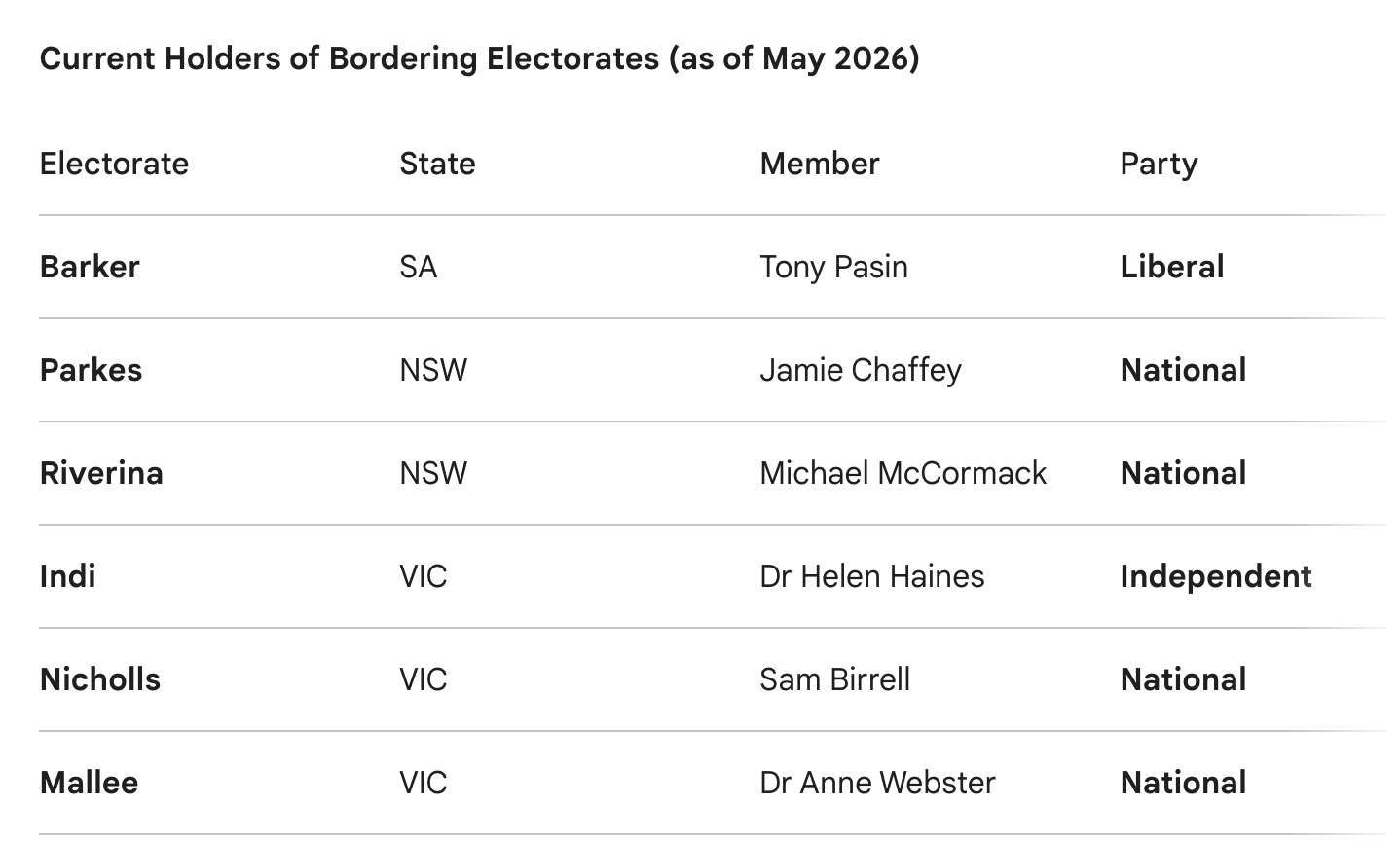
If I were one of those members, then I’d be having some very serious discussions with my political advisors at my Monday morning staff meeting. Even though a federal election is still some time away, it’s important that they start to prepare a response now.
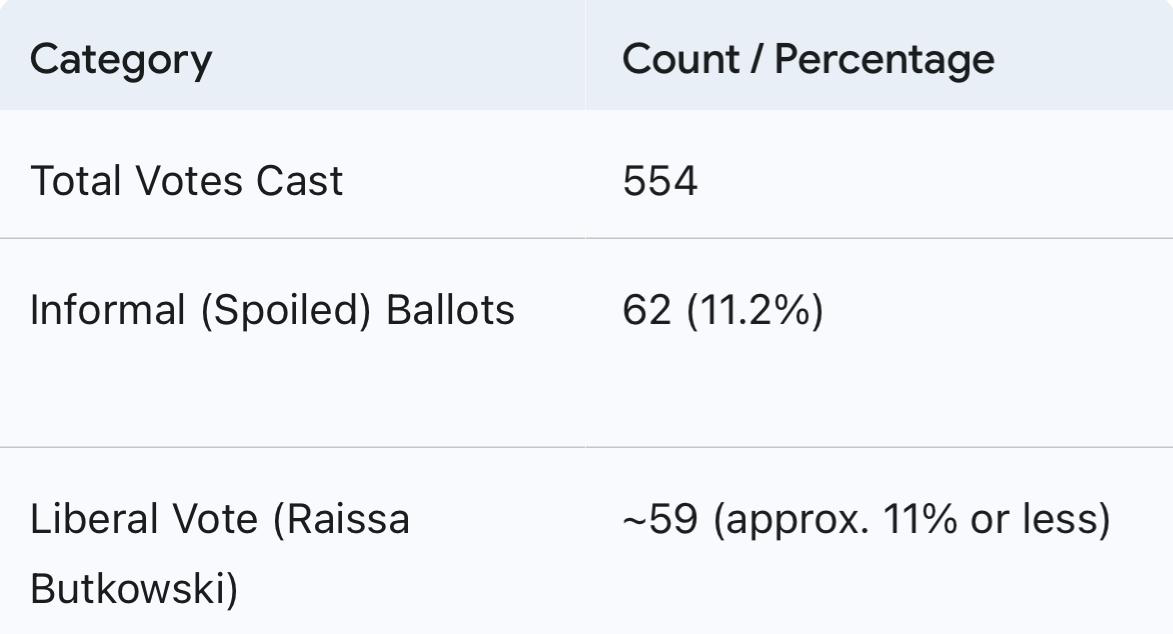
4. The Liberal vote was even beaten by spoiled ballots in some booths
In an historic humiliation, the AEC’s preliminary booth data shows that in certain small rural polling centres, the number of informal votes (ballots filled out incorrectly or left blank) actually exceeded the total number of primary votes cast for the Liberal candidate. This highlights a profound level of voter apathy or protest against the major party. For instance, below are the statistics for the booth in Balranald:
5. Farrer used to be the safest seat in Coalition history
While ‘safest seat in history’ is obviously a strong rhetorical claim, Farrer has been a fortress for the Coalition since its creation in 1949. Before Saturday’s debacle, the Liberal Party had held the seat continuously from 1949 to 2026. The only anomaly to Liberal dominance being the National’s Tim Fischer who held the seat from 1984-2001 before that.
To put this in an even wider perspective, in several elections (e.g. 2016 and 2019), the Liberal primary vote sat on or above 70 per cent, making it one of the most secure conservative strongholds in the country.
6. The Labor Party didn’t field a candidate!
The Australian Labor Party (ALP) made the strategic decision to not contest the Farrer by-election. This means the Liberal party didn’t need to contest the by-election against another major party, yet it still only received 12 per cent of the total vote. What’s more, one has to also recognise that the 31.03 per cent swing away from the Libs is the largest ever of any major party’s primary vote in a contested federal seat since the formation of the Liberal Party in 1944.
This wasn’t then just a case of the Liberal Party needing to ‘take its medicine’ as Angus Taylor tried to spin it on election night, but of the party Sir Robert Menzies formed over 80 ago being effectively euthanased. Maybe that’s also why the party room on Saturday night looked and felt like people were at a wake.
7. The Total Coalition Vote Combined Could Only Achieve Third Place
In an ‘existential crisis’ result for conservative politics, the Liberal Party (12.4 per cent) and the National Party (9.7 per cent) primary votes combined reached only 22.1 per cent. This was significantly lower than the 28.4 per cent achieved by Independent Michelle Milthorpe (who came in second) and the 39.4 per cent won by One Nation’s David Farley (who won the seat).
While outside the purview of this particular article, the Reform Party in the UK won a similar landslide victory at the same time. Whatever you think about the result, there are tectonic shifts occurring in politics around the Western world. The Farrer by-election then was not a one off but the proverbial canary in the coal mine.
8. The electorate of Farrer is overnight a safe One Nation seat
With David Farley securing over 57 per cent of the two-candidate-preferred (TCP) vote, Farrer has transitioned from a Liberal stronghold to a Safe One Nation seat. Under standard Australian political definitions, any seat held with a margin of over 6 per cent is considered ‘safe’, and Farley’s nearly 15-point lead over the Independent runner-up places it firmly in that category.
9. The Liberal Party was formed in Farrer
The Liberal Party of Australia has deep roots in the region. Following the initial 1944 Canberra conference, Sir Robert Menzies held the pivotal Albury Conference in December 1944 specifically in the electorate of Farrer. Hence, it was here that the party’s organisational and constitutional framework was officially drafted. Albury is often cited as the spiritual home or birthplace of the Liberal Party’s structure much like Jerusalem is for Jews, the Vatican is for Roman Catholics, or the city of Mecca for Muslims. It’s ironically fitting then that the place where it all began is also where it should come to an end.
10. The Liberals still could not announce a unique policy in response
Following the defeat, Opposition Leader Angus Taylor admitted the party faced ‘hard lessons’ but rightly faced criticism from news outlets like The Guardian and The Australian for failing to provide a concrete policy shift. While One Nation campaigned heavily on energy and water rights, the Liberal response focused on internal leadership ‘spills’ rather than addressing the specific regional grievances that led to the wipeout.
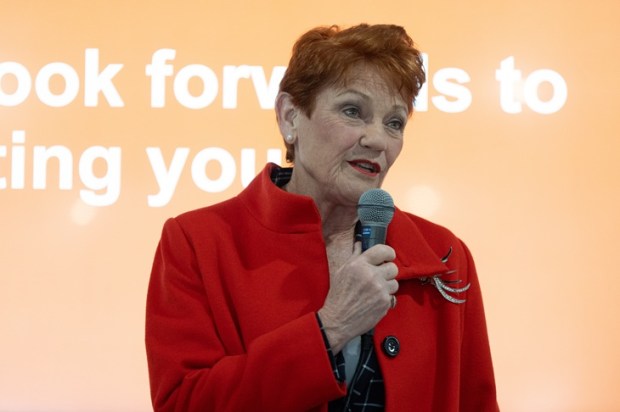
In comparison, Pauline Hanson announced one of the most significant political policies of her career. And rather than being involved with cultural war issues of immigration or climate change, it centred on a plan which is almost guaranteed to unite both sides of politics. While hardly anyone in the media is currently talking about it, Hanson’s gas policy is not only common sense but a potential game-changer in addressing the problem of an ever burgeoning national debt.
The Perennial Problem with Watered-Down Beer…
As if all of those reasons were not bad enough, the Libs are continuing on their strategy of only offering watered down policies of their opponent. All they seem prepared to do is add lemonade to any drink being offered too men for fear of their position being too strong. For instance, when Taylor said that it was time to reject Net Zero it was too little, too late. After all, as Energy Minister in 2021, Taylor was involved in the Coalition government’s pledge to adopt Net Zero by 2050.
Last weekend’s was a watershed moment in Australian politics. A time when the electorate proves that the Liberal Party has is beyond recovery. People might be talking of the Coalition inviting One Nation (ON) to formally join them, but as you can see from above, there is no reason for ON to accept.