When I was growing up, a clear distinction was always made between right and wrong. It wasn’t as if my parents were particularly religious, but their view was that codes of conduct were vital.
A trivial example of this was the requirement to stick with an agreed acceptance. Daggy boy asks you to a school dance; you accept. Handsome boy from the cool gang then asks you to the same dance: you refuse, reluctantly and politely. There were no exceptions. It was a living example of ‘my word is my bond’.
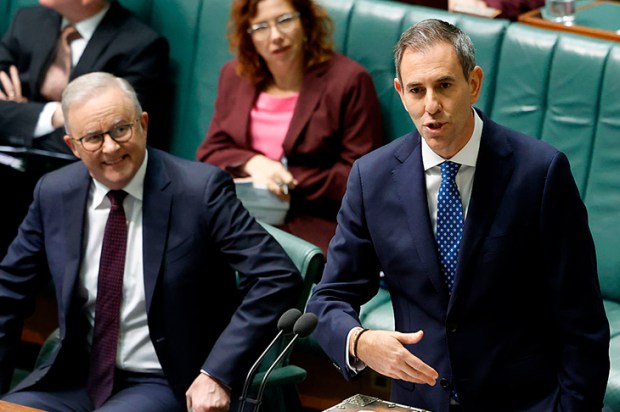
So, what is the lesson for the young’uns of the complete volte-face of our prime minister and treasurer? Having explicitly ruled out any changes to negative gearing and the capital gains tax – 50 times, indeed – it turned out that circumstances had changed, that a new position had been found. On this basis, I could have gone to the dance with the cool kid after all.
But apart from this omnibus porky by Albo and Jimbo, the stream of lies and deceptions just keep coming, starting on the day of the budget.
What about this one from Jimbo? ‘This budget is all about housing.’ Run that past us, again. If this were the case, why would the CGT changes apply to all asset classes, if it’s just about housing.
And if it’s all about housing, how come there are expected to be 30,000 fewer homes over a decade because of the budget measures? And just check out this other unimpressive projection – 75,000 additional homeowners over ten years. That would be only 7,500 more each year. With a population close to 28 million, that number is not enough to notice.
And here’s another porky uttered by both Albo and Jimbo – that the change to the collection of the CGT introduced in 1999 by Peter Costello, which was a vast simplification of the system it replaced, led to an explosion in investment in rental housing investment. That’s right, the 50-per-cent ‘discount’ was entirely to blame.
A cursory look at the data in chart form tells you otherwise. The surge in rental housing investment predates 1999 by nearly a decade with the sequential deregulation of the financial sector the main determinant. Over that time, the capital that banks were required to put aside to provide rental housing loans was reduced under the Basel minimum capital requirements.
To be sure, the CGT ‘discount’ favours high-growth assets held for a relatively short time. But is this a bad thing? Andrew Charlton, assistant minister for bibs and bobs, points out that the proportion of investment directed to shares began to decline after 1999.
But bear in mind, this was also the period during which the system of compulsory superannuation was really being cranked up. Many people would have rationally taken the view that they were fully invested in shares through their superannuation accounts and there was a case for diversification of other investments.
Jimbo’s argument that the CGT must apply to all assets, including businesses, involves a very large dollop of deception. There is a made-up case of existing property investors establishing companies to maintain their investments with the previous benefits. But here’s the thing: the government can always crack down on these cases, including by using the broad anti-avoidance clauses in the tax code
The reality is that Jimbo was never going to be happy simply imposing new CGT rules on investment in residential real estate only because the ‘it’s all about housing’ description of the budget was always just a ruse. He needs more revenue and he needs it badly.
The budget papers made this clear by combining the revenue from changes to negative gearing with the revenue from CGT changes. Seasoned commentators, including grumpy ones like me, immediately smelt a rat. All the money is in the widely applying new CGT rules, not in the change to negative gearing. And the government didn’t want us to know that.
Talking about an outright porky, Albo is simply wrong when he tells us that what is being done in the capital gains space is a return to Keating’s method. This is simply not true. Under the Keating rules, there was no 30-per-cent minimum tax as is now being proposed.
Moreover, investors could bring their capital gains to the tax book over five years. This sort of average markedly reduces the overall amount of tax that is paid.
Apart from the government’s desperate need for more revenue – and let’s not forget the billions that are being lost because of the botched excise hike on tobacco products and many other failed, expensive programs – it’s not clear why Jimbo would wade into the treacherous territory of trusts.
But in cartoon fashion, a picture had emerged in the minds of naive and inexperienced Treasury officials of nepo kids being lavished with tax-free income that they had not worked for. ‘That’s not fair!’ would have been the reaction from the bunker in Parkes. At a minimum, Labor needs to impose a 30-per-cent tax on all trust distributions.
This view was shared by plenty of Labor politicians, including the ever-ineffective Andrew Leigh, who is assistant minister for who knows what. Perhaps the only useful person would have been Andrew Charlton, but he is clearly keeping his powder dry, with the ultimate aim being to secure the top job. No need to tell the Treasurer that he doesn’t have a clue and this will all blow up in his face.
Here’s the thing: most trusts are required to distribute all their income each year, and the beneficiaries then pay income tax at their respective marginal rates. Those nepo kids won’t be affected by a 30-per-cent minimum tax because they already earn over $200,000, the income level where the average rate of income tax is 30 per cent.
For the owners of small businesses which are set up as trusts – and that is the most common structure – it’s another matter altogether. They will be hit very hard by the 30-per-cent minimum tax. And gratuitous advice that they should simply restructure and set up a company is disingenuous and unworkable in most cases.
Such a restructure would almost certainly trigger the payment of stamp duty levied by state governments – this seemed to be news to Treasury officials – and would make any restructure prohibitive in many cases. Albo’s excuse that stamp duties are state taxes was just gobsmacking.
The most astonishing proposal is the inclusion of discretionary testamentary trusts within the purview of the new tax arrangements. These were specifically excluded in the Shorten package of changes taken to the 2019 election.
These trusts are designed to give flexibility to the trustee to offer support to beneficiaries, known and unknown. (In 2015, I didn’t know I would have seven grandchildren – I think that’s a wrap, but who knows?) Trusts are often used to cater for beneficiaries with special needs. They are not a form of tax minimisation.
Reading from the talking notes provided to him, Albo waxed on about setting up a tax-exempt fixed trust without understanding the implications of that. Hardly anyone sets up a fixed testamentary trust and for good reason.
Both Albo and Jimbo are way out of their depth when it comes to trust talk. It’s not surprising that the can has been kicked down the road on this one. Be ready for some major concessions.
If you’re wondering how I got on with the daggy boy and did it end in true love and happiness ever after – well, no. But at least I did the right thing – no lies or deception.
Got something to add? Join the discussion and comment below.
You might disagree with half of it, but you’ll enjoy reading all of it. Try your first month for free, then just $2 a week for the remainder of your first year.