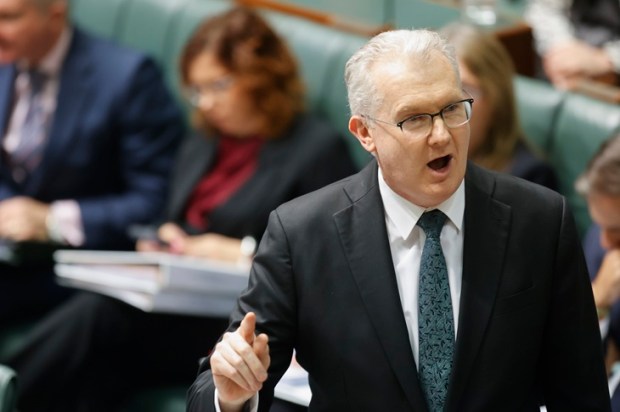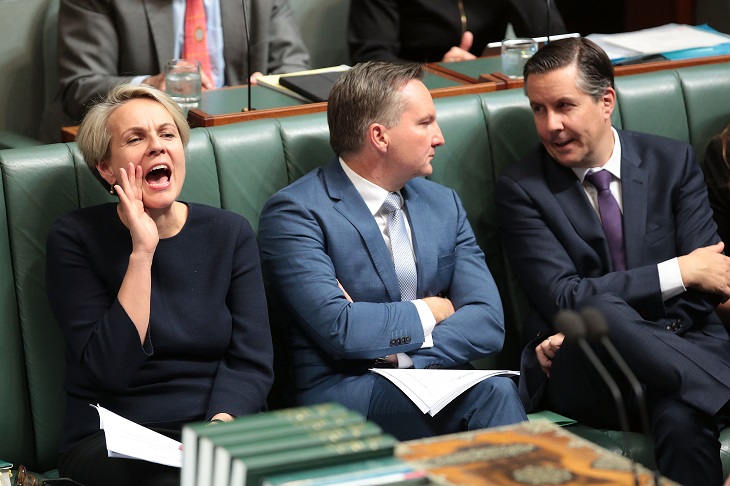
In early August, the Minister for Social Services, Tanya Plibersek, provided a history lesson for ungrateful young Australians.
‘There’s never been a better time to be a first-time buyer,’ she said.
‘Not in my lifetime has there been a better time to be a first homebuyer in Australia… I think there’s a generation of young Australians who are feeling this enormous sense of relief because they thought they were going to be renting forever. They’re feeling like it’s possible for them now to afford a home of their own. I think that is really important, not just for those individuals, but for our cohesion as a nation. Like, we made a promise to Australians that if they work hard and they save, they’ll be able to afford a home of their own. We’re keeping that promise.’
Plibersek was spruiking the Albanese government’s 5 per cent deposit scheme, and the recent declines in property prices following the 2026-27 Budget (those factors, taken together, mean that many young people who took up that scheme now have negative equity).
But her analysis is, in my view, completely incorrect, and just another example of how out of touch the political class has become. It is this sneering attitude, telling young Australians that they’ve never had it so good, which is driving many young people away from the major parties and into the hands of the Greens and One Nation.
So, let’s establish some facts.
Plibersek was born in 1969, a year in which more than half of 25-29-year-old Australians were homeowners. The year she turned seven, the homeownership rate among 25-29-year-olds peaked at 54 per cent.
In 2021, the homeownership rate among 25-29-year-olds was 36 per cent, the lowest level Australia has recorded since 1933. The entire post-war homeownership boom brought about by Robert Menzies and like-minded state premiers has been entirely undone for young Australians.
As late as 1988 (that is, within Plibersek’s lifetime), almost half of the bottom 20 per cent of income earners aged 25-44 (the prime home-purchasing and family-formation years) had bought a home. By 2016, that had fallen to just 34 per cent.
In 2021, just under 25 per cent of the bottom 20 per cent of income earners aged 25-34 were homeowners, down from 45 per cent in 1981. Homeownership has fallen for all younger people over these 40 years, but it is falling at an alarming rate among lower-income households.
In the 1970s, an ordinary home cost somewhere around three-to-four times average income. Today, it’s ten times or more.
Unsurprisingly, the time that it takes an average worker to save a house deposit has increased from around six years in the 1990s to over twelve years today. And what that deposit gets them has dwindled away; in the 90s Australians were buying 3-4-bedroom houses with a front yard and a backyard, with room to have and raise a family. Today, it’s more likely to be a 2-bedroom apartment, or a small townhouse with a bit of astroturf for the dog, should you be so lucky.
Many people like Plibersek argue that young people have never had it so good – they have access to cheap technology and tools of convenience that are beyond the wildest imaginings of the youth of even a few decades ago. That is true. It is also true that international travel is far more accessible, and that many young people lack the virtues of frugality, hard work, and commitment which saw their parents and grandparents through tough times in their own lives. And it is likewise true that many young people have chosen a different lifestyle; they want to have avocado on toast every weekend and visit their friends in Europe each year, and see saving for a wedding and having children as unnecessary burdens.
But these kinds of generational claims are always going to be fraught, and they usually focus on strictly material measures.
The excellent Johann Kurtz wrote about this issue recently, pointing out that while on many material measures ‘it does seem as if the young are fine’, they are also a generation that is ‘not marrying, not buying homes, not having children, and seem pretty miserable’. I have quoted from him at length because he has done a fantastic job of summarising this argument many of us have made, but which is often hard to hear:
My argument is that previous generations received an enormous stock of social capital: trusted neighbours, functional public schools, a productive courtship culture, predictable career arcs, and a public square in which children could roam and adults could be relied upon. That stock, once given for free, has now been substantially liquidated.
Instead, the young must now buy back, item by item and at retail prices, what their grandparents received as a bounty of prior civilisational investments. The young must do so out of incomes that rose modestly while the prices of the essential elements of life rose radically. Price indexes measure the individual cost of discrete goods, but they are not intended to convey the total cost of personally repurchasing a destroyed commons.
This type of failure is well understood as a threat in economics. The old joke is that when a man marries his cleaner, the GDP of both households collapses even while the actual labour being done remains the same and everyone is better off. In our case, we’re seeing the opposite: a thousand small divorces and social fragmentations which boost the appearance of GDP but leave everyone poorer in reality…
What actually got cheaper over the past fifty years? Electronics, entertainment, fast fashion, processed food, toys, screens of every kind. And what got more expensive, usually by many multiples? Housing, education, childcare, healthcare, insurance.
Absurdly, both of these movements register in the statistics as progress: one shows up as asset appreciation and the other as consumer surplus. But the lived reality for families feels like a pincer.
Yes, young people have phones, cheaper travel, and convenience and comfort unimaginable 50 years ago. Yes, some of them are lazy and entitled. But many of them have tormented souls, stripped of all the social and cultural infrastructure which was there for their parents and grandparents.
Plibersek is right that homeownership is important for our cohesion as a nation; ownership is vital for stable democracies.
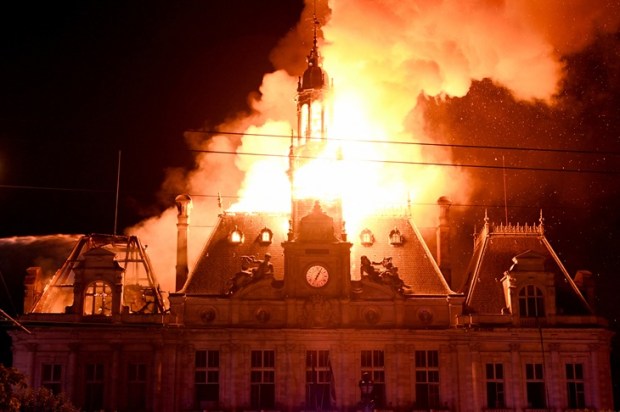
But there has been a better time to be a first-time home buyer in Australia; three years ago was much better than today, and five years before that was even better. In fact, the further back you go into Plibersek’s life, the better it generally was. The added bonus is that she grew up in a time before the social and cultural infrastructure we all need was burned to the ground.
This article was first published on Substack: No Permanent Solutions