Nobel Prize-winning economist, Friederich Hayek, argued the price system and market competition are the only effective ways to organise a complex society and to coordinate human action.
Labor MPs, along with their cronies in the Department of Treasury, disagree. They know better than the free market which daily processes the decisions of millions of households who use price signals to decide which goods and services to buy. This in turn determines how capital and scarce resources are most efficiently and equitably allocated.
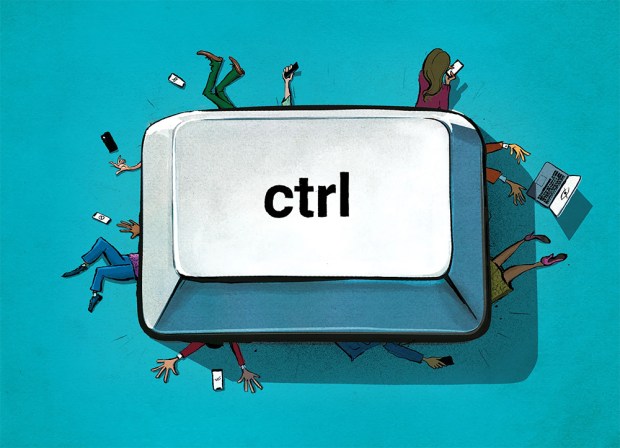
For the political class, acknowledging the democracy and efficiency implicit in free markets would mean surrendering authority. It would require a conceited Treasurer, Jim Chalmers, and his fellow travellers of privileged elites conceding they are not best placed to decide how the rest must live.
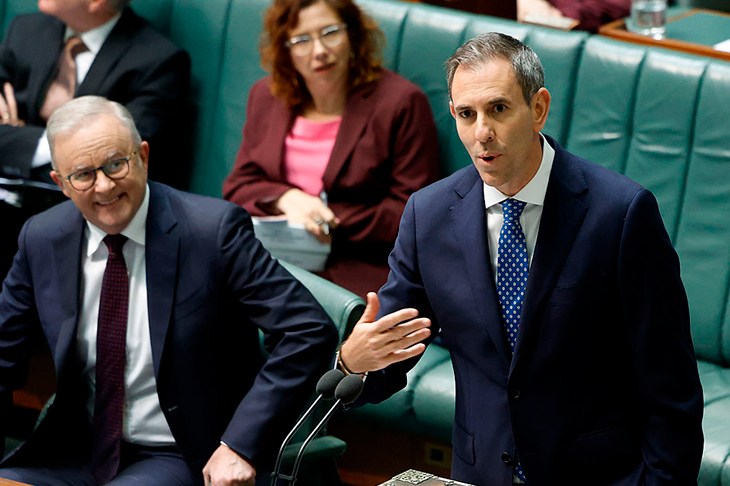
In his Monthly essay, Dr Chalmers hubristically advocates ‘humanising capital’ by ‘transforming the welfare state into a managerial utopia with the government, in collaboration with (industry) superannuation funds, acting as benevolent resource allocators through which autocratic technocratic elites will manage all aspects of society’.
Perhaps this mindset explains the rapid growth in the non-military public service. Since the Albanese government was elected in 2022, it has exploded to a record 217,000, an increase of 44,000 or, 25 per cent. During that time, government departmental expenses have leapt 42 per cent to $114.6 billion, equal to more than $8,200 per taxpayer.
Dr Chalmers’ kumbaya economics ignores the reality that predecessor governments on both sides of politics have, for decades, been ‘humanising capital’ by expanding government’s role in pursuit of wealth equality and social harmony. However, in the last 20 years, the share of national wealth held by the bottom 40 per cent of the population has shrunk by 30 per cent. Predictably, Australia’s longest-running annual survey on social cohesion records a downward trend in nearly every component.
Dr Chalmers was federal treasurer for five of those years and oversaw record migration, a fall in productivity and the highest inflation rate of any advanced economy, save for Iceland. On his watch, households have suffered a five-per-cent cut in real wages and the highest cash rates in 15 years which have pushed up their mortgage repayments and rents.
Meanwhile, notwithstanding a 31 per cent increase in taxation revenue, Australia’s gross federal debt grew by $107 billion. By 2030, combined state and federal debt is likely to exceed two trillion dollars.
Interest payments, at $30 billion a year, are, next to social security, projected to be Canberra’s fastest-growing major expense.
Former Reserve Bank governor Philip Lowe rightly bemoaned, ‘Australia is running sizeable budget deficits at a time where we’re at full employment and commodity prices are very high. We should be running sizeable surpluses’.
But not only have taxes increased and been punitively applied in areas not previously subjected to tax, it appears some ministers view personal superannuation as a government asset to be invested where national interest, not risk-adjusted returns, dictates.
One of the twentieth century’s most influential economists, Milton Friedman, recommended keeping an eye on ‘one thing, and one thing only. How much government is spending? That’s the true tax he said. There is no such thing as an unbalanced federal budget. Every budget is balanced. If you’re not paying for it in the form of explicit taxes, you’re paying for it indirectly in the form of inflation or in the form of borrowing’.
Finance Minister Katy Gallagher will have none of it. She protests that record government spending is not inflationary and that the war in the Middle East is responsible. She also boasts that with Canberra’s leadership in renewable energy adoption, ‘Australia can significantly impact climate change.’ This when every twelve days China alone emits more carbon dioxide than Australia does in a whole year.
Regardless, Ms Gallagher and her Labor colleagues insist their mandates materially influence world weather.
Nevertheless, the Minister refuses to release the costings of Labor’s multi-billion dollar ideological frolic. She keeps the real cost of the Capacity Investment Scheme intended to underwrite future investments in non-viable, large-scale renewable energy projects along with other renewable energy subsidies secret. This may mask the immediate financial cost, but what cannot be hidden is the deepening structural damage which is hollowing out economic activity and setting the country up for sustained hardship.
Already, Australians are paying more for electricity than the OECD average, and their American and Japanese counterparts. Indeed, households are so stretched that firms are having to absorb costs, rather than increase prices. With rapidly shrinking profit margins, executives are looking to aggressive head count cuts. The number of businesses collapsing into insolvency surged 66 per cent to a record high in August.
All the while, world debt has hit an ominous $520 trillion, equivalent to 310 per cent of global GDP. It means refinancing risks today are far more acute than prior to the Global Financial Crisis, when world debt was less than 270 per cent of global GDP.
Nobel Laureate in Economics Paul Krugman recently declared France is on a ‘fiscally unsustainable path’ and may have become ‘too big to save’.
Last year, Australia’s total debt to GDP stood at a better-by-comparison 268.5 per cent. However, last year the nation recorded a $27.1-billion trade deficit, the first since 2017. This means greater reliance on foreign funding at a time when global interest rates are jumping and activity is falling.
Since coming to office, Labor has imposed even more institutional rigidities on an economy still struggling with the distortions of previous governments. Combined, these interventions have seriously undermined confidence and have limited the economy’s capacity to respond, thereby prolonging and amplifying any decline in activity, and leaving future generations of Australians poorer and more exposed to domestic and external shocks.
Hayek believed if socialists understood economics they wouldn’t be socialists. Naively he missed that socialists really do understand economics and use it to further increase their control over other people’s lives.
Got something to add? Join the discussion and comment below.
You might disagree with half of it, but you’ll enjoy reading all of it. Try your first month for free, then just $2 a week for the remainder of your first year.