The picture from New York last week tells you most of what you need to know about Australian foreign policy.
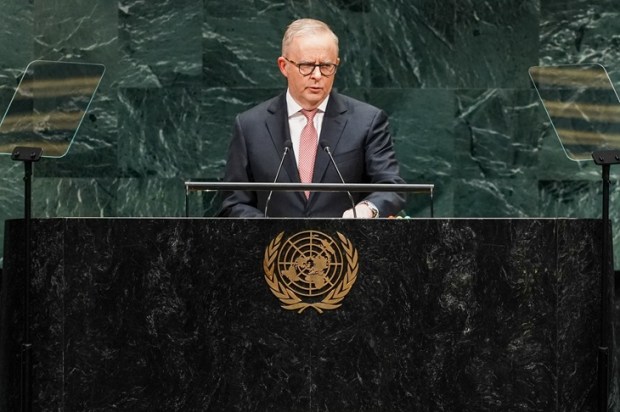
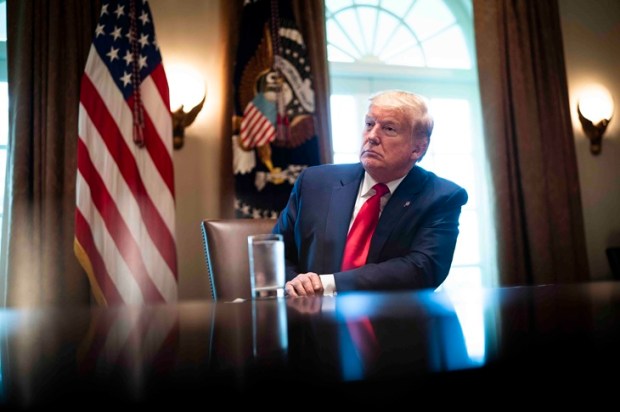
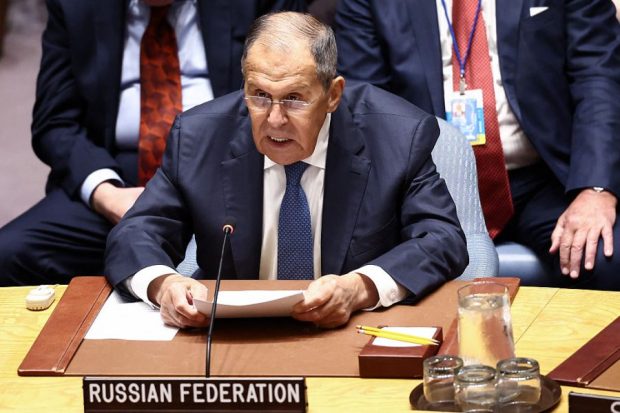
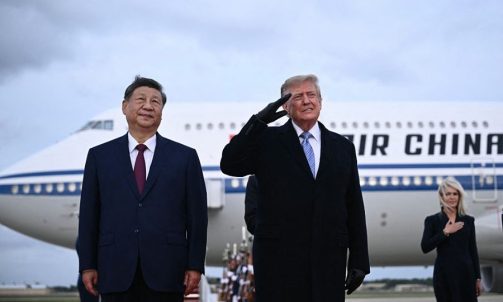
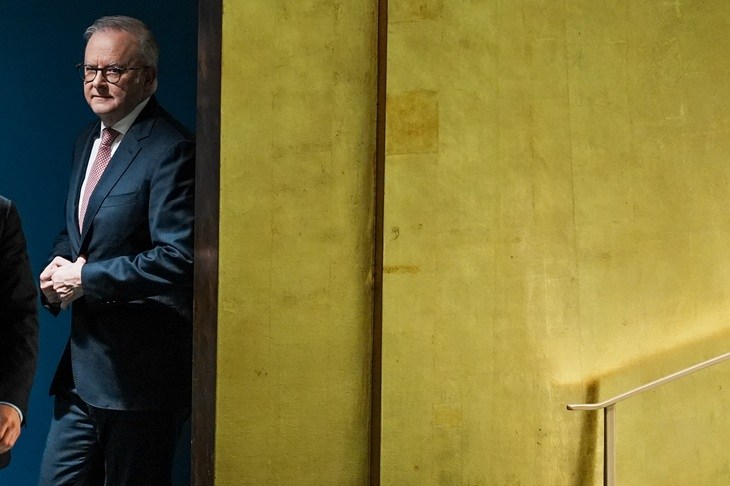
When Anthony Albanese took the rostrum at the General Assembly, roughly two in every three seats in the hall sat empty. While he spoke, Donald Trump was in Washington, entertaining Xi Jinping at a White House state dinner.
There it is: our largest customer and our great protector, seated at the same table, passing each other the bread rolls. Australia, meanwhile, is some 330 kilometres away, explaining the rules-based order to the empty chairs.
The speech itself was earnest. The Prime Minister mourned the fraying of international rules and put climate change and AI at the top of the world’s worry list. Two days earlier, from the same rostrum, Trump had dismissed both as a ‘hoax’. Anyone searching the text for a new policy came away empty-handed. What it did contain was a pitch for a temporary seat on the Security Council. That was the point of the trip.
The only race in town
Consider the contest. There are two vacancies up for grabs, and exactly one other country, Finland, has put its hand up. Two seats, two candidates. Canberra has entered a race in which the runner-up also wins, and the Prime Minister declared Australia was in a ‘pretty strong position’.
To be fair, there is a catch. Nobody is elected by default. When members cast their secret ballots in mid-2028, Australia must win the backing of two-thirds of the Assembly. Which brings us back to the chamber. A third of the room turned up to hear the pitch. We need two thirds of it to vote for us. The campaign’s job, over the next twenty months or so, is to fill the empty seats in the hall so that we may fill an empty seat on the Council.
Launching the bid, the Prime Minister said Australia ‘punches above our weight’. This is true. We are, as of this week, the undisputed heavyweight champion of a division containing Finland.
Upfront, at last
Then came the line that ought to have got more attention. For years the official position has been that Aukus is aimed at nobody in particular. This week the Prime Minister edged nearer than ever to naming the obvious: ‘We’re upfront (with China) about what we’re doing with Aukus.’
This is a remarkable diplomatic posture. We tell the customer, frankly and in advance, what a submarine program costing up to $368 billion is for. We then continue selling the customer the iron ore. The customer takes around four-fifths of it, a degree of dependence that would have the competition regulator holding an inquiry if a supermarket had it on a single supplier. When a nation has it, we call it a trading relationship and hold a dinner. We are candid with our dominant buyer about arming against it. Few relationships survive that level of honesty. Ours survives it because both parties know exactly who needs whom.
The week as a straddle
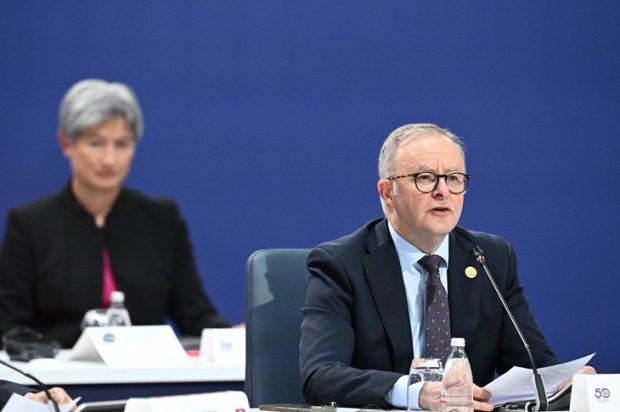
Look at the itinerary as a trading book. A ten-year security pact signed with Volodymyr Zelenskyy, backed by $60 million for Ukraine’s defence against Russia. A trade deal with Brussels, finally agreed if not yet signed. A seat among the founders of a new ‘Partners for Multilateralism’ grouping, alongside the EU, Barbados, Brazil, Canada, India, and Kenya. A reminder to Washington and Beijing that our region is not their chessboard. And a declaration that the post-1945 world order ‘is no longer fit for purpose’.
That last one deserves a moment. In the same week, Australia announced that the 1945 order is broken and launched a campaign to join the most exclusive club the 1945 order ever built. It is like declaring the Melbourne Cricket Club hopelessly outdated while sitting on its waiting list.
Canberra believes this portfolio, and above all its China-and-America core, is a long straddle: whichever way the world moves, we have a position that pays. It is nothing of the sort. We are short the straddle. We collect premium every quarter, export receipts from one superpower and cheap security from the other, and we keep collecting it only so long as the two giants keep sharing dinner. Short volatility is the most comfortable trade in finance until the day it is the most expensive.
The veto across the table
The week also showed what happens when a middle power’s priorities meet a superpower’s. Australia launched its bid on Sunday with the regulation of AI near the top of the agenda. On Tuesday, Trump used the rostrum to swat away a campaign by Australia and other middle powers for international rules that would keep humans in charge of AI, and made clear America would not be restraining the technology. Canberra pressed on regardless. Taming AI remains a headline promise of the bid.
So the plan is this. Washington has said no to AI rules in the General Assembly. Australia’s answer is to seek a seat on the Security Council, where Washington holds a veto. Win, and Australia gets a vote and a place at the table for the big negotiations. What it does not get is the veto, which stays with the permanent five. It is the right, but not the obligation, to be overruled by someone else’s single hand.
There was domestic business too, conducted abroad. In New York the Prime Minister chose to fill in the timeline of an AI intrusion into a federal statistics website. Canberra had been told of it on 10 September; the public heard ten days later, a gap the Opposition wants explained. Australian news, it seems, is now announced at the United Nations. Perhaps that is prudent. It is where the fewest people are listening.
The tail
None of this matters in normal weather. The trouble with a fat-tailed world is that the weather is only normal until it is not. The scenario a Security Council seat would actually test is a crisis over Taiwan: the night our customer and our protector stop sharing dinner. In that tail, both legs of the Australian position move against us at once. Their correlation, which looks comfortably low on an average day, goes to one. The expected shortfall is not a figure anyone in the delegation was asked to state from the rostrum, and none of them volunteered it.
Donald Horne called us the lucky country in 1964 and did not mean it kindly. This week the luck was on full display: an uncontested race, a sympathetic Assembly, and a Prime Minister collecting a Global Citizen Award on the same stage as the President of Finland, whose country is his only rival for the seat. But luck is not a strategy, and a hedge that pays only in fair weather is just luck with paperwork.
In New York, two-thirds of the chamber never came. In Washington, the dinner needed no introductions. Nobody at that table was looking for a seat.