One of the many adverse consequences of the relentless growth of government in Australia is the ever-diminishing pool of people left in the private sector. These are the people who produce the income and wealth that keeps the whole show on the road.
They are also the people who, in the eyes of those who work for and around government, never seem to pay enough tax, and whose wealth must be continually confiscated to finance the delusional plans of those who have never built, grown or run anything other than a campaign, a committee or a grievance.
The arithmetic is not complicated. As the private sector pool shrinks, so too does the gene pool of people with real world experience who can sit in Australian parliaments. The parliamentary benches instead fill with former staffers, union officials, activists and career public servants. These are people for whom a business is a tax-generation machine and a payroll is something that arrives rather than something that must be met.
It should thus be no wonder that laws and policies bearing no relationship to real world conditions arrive with increasing frequency.
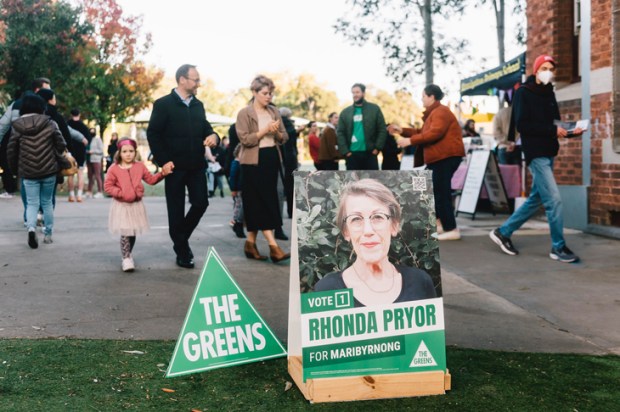
Enter the Victorian Greens. With a state election due on 28 November 2026, the party launched its campaign with a promise to build ten state-owned supermarkets, five in Melbourne and five in regional Victoria. These stores, they promised, will sell essentials such as bread, milk and fresh produce at 30 per cent below the prices of the major chains, and everything else at 20 per cent below. For good measure, the Essential Services Commission will be empowered to set price ceilings on key goods across the market. The cost is estimated at $350 million over four years.
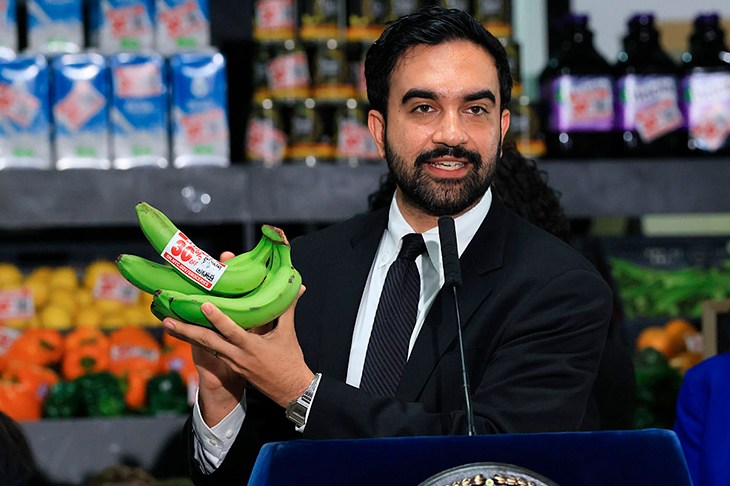
The inspiration for this act of genius, according to Victorian Greens leader Ellen Sandell, is New York mayor Zohran Mamdani, who has pledged US$70 million to build five city-owned supermarkets by 2030.
Sandell is a fitting champion for this idea. She was elected environment officer of the University of Melbourne Student Union in 2007, spent two years as a policy adviser in the Victorian Department of Premier and Cabinet, ran a youth climate lobby group, managed an unsuccessful Greens Senate campaign and, in 2014, entered parliament, where she has remained ever since. At no point does the record disclose a litre of milk produced, a shelf stocked, a supplier paid, or a Business Activity Statement completed by Sandell.
Then there are the numbers, which is where the rubber hits the road. The gross margin of the major chains, the gap between what they pay their suppliers and what they charge at the checkout, is less than 30 per cent. Out of that gap must come wages, rent, freight, refrigeration, electricity and theft. A store selling at 30 per cent below Coles is selling for what the goods cost to buy, before it has paid a single worker or switched on a single fridge.
But after meeting their operating costs, Coles and Woolworths each earned a margin of less than 6 per cent. Thus, for every $100 that passes through the checkout, the supposedly rapacious duopoly keeps less than $6. And this is before tax, which clips 30 per cent of what is left.
Abolish every cent of that profit and the shopper is perhaps 6 per cent better off. The Greens have promised 30 per cent.
Where the other 24 percentage points come from is a mystery that only people untroubled by real world experience could solve with such confidence. The Greens point to savings on advertising, executive salaries, and dividends. The party’s ‘think’ tank, the Green Institute, goes further and proposes cutting store expenses by a quarter, in part by removing security guards and CCTV.
A supermarket in Melbourne, in 2026, with nobody watching the door. For some, the discount will not be 30 per cent but 100 per cent.
A state-owned supermarket that earns no profit also pays no company tax, tax which helps to fund schools, hospitals, and roads, not to mention the generous salaries of parliamentarians.
There is an alternative policy available to the Greens. If grocery retailing is the river of profit gold the Greens believe it to be, nothing prevents Greens members and donors from pooling their own money tomorrow and opening a not-for-profit grocer. No legislation is required. That the party prefers to conduct the experiment with other people’s money says everything about its confidence in the result.
Milton Friedman famously said that if the US federal government were put in charge of the Sahara Desert, within five years there would be a shortage of sand. By this same logic, put the Victorian government in charge of food retailing and within five months there will be a shortage of food. Precedents exist.
When the Soviet Union collectivised its farms at the end of the 1920s, it did not take long to produce a famine that killed millions across Ukraine, Kazakhstan, and southern Russia. When China launched the Great Leap Forward in 1958 and herded its peasants into communes, it took even less time to starve tens of millions. More recently, Venezuela combined state-run grocery stores with price controls and delivered empty shelves to a country sitting on some of the largest oil reserves on earth.
In each case there was hunger for everyone but the nomenklatura. The planners, the party officials and their families shopped at special stores that were always, miraculously, well stocked.
Ten shops in Victoria are not the collectivisation of agriculture, but the conceit is identical. It is the belief that people with no knowledge of how food is grown, moved, priced, or sold can outperform, by decree, the farmers, truck drivers, grocers, wholesalers and supermarket operators who have their own money at stake.
None of this will trouble the authors of the policy. Should it ever be implemented, the losses will be socialised, the failures will be blamed on corporate sabotage, and a further round of confiscation will be demanded to fix the problem that the last round created.
The Victorian taxpayer, already carrying the heaviest state debt in the nation, will pick up the tab. And when the Victorian economy buckles under that debt, as it is well on track to, taxpayers in the rest of Australia will be handed the bill.
But fret not. The nomenklatura will be fine. They always are and always will be fine.
Got something to add? Join the discussion and comment below.
You might disagree with half of it, but you’ll enjoy reading all of it. Try your first month for free, then just $2 a week for the remainder of your first year.