Not one of the many theories concerning the impact of man-made carbon dioxide emissions on the climate has been proven. Not one.
Global warmists once conceded this. Paraphrasing Paul Keating, every pet shop parrot in the country seemed to be screeching repetitively the ‘precautionary principle’ – code to act as though global warming claims were true in case they were. But the subsequent expiration of a whole series of cataclysmic deadlines demonstrated that it would surely be foolish to commit national suicide just because celebrated truth-tellers, such as Mr Albanese and Mr Bowen, say so.
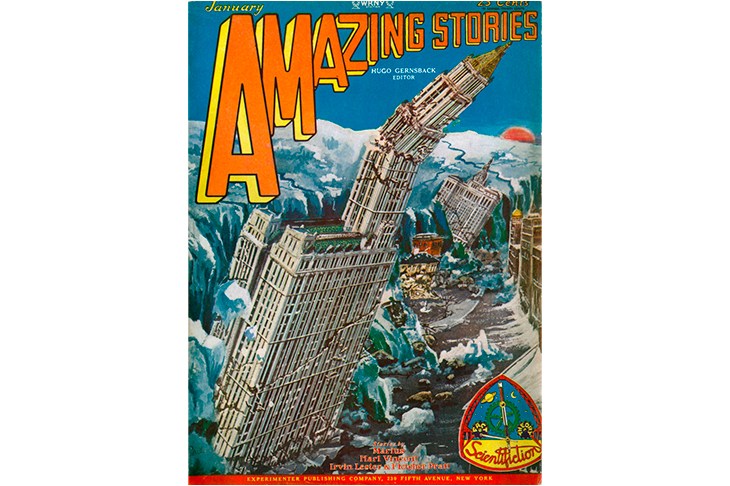
The fundamental point is that every one of these climate theories is demonstrably false. With his formidable international reputation, the nation’s foremost geologist, Professor Ian Plimer, has played what must surely be the ultimate, dare I say, trump card. This is that every one of the six great ice ages that have frozen this world started with more carbon dioxide in the atmosphere than now.
So Professor Plimer asks: if high atmospheric carbon dioxide drives global warming, how could each ice age have even occurred?
In my view, faith-like belief in this irrational dogma stems directly from the decline of religion. Alongside his ability to reason, man has always clearly had an innate need to believe. Without the benefit of our essentially Judeo-Christian religion, his faith is now squandered on fashionable and passing absurdities: that we can alter our sex at will, or indeed, that human emissions govern the Earth’s climate.
Notwithstanding a growing realisation that climate catastrophism is a fiction, it always seemed that the nation’s role as a major exporter was protected.
Statutory requirements to minimise emissions clearly applied only up to our borders; we cannot control sovereign nations.
But the self-evident truth that there is no proof that man-made carbon dioxide has any impact whatsoever on the climate, and that in any event Australia’s emissions are too small to have any effect, has not stopped the major political parties, in contrast with One Nation, from pouring vast sums into what has proved a folly and which, with Pauline Hanson’s royal commission into climate ‘corruption’, will prove an acute embarrassment.
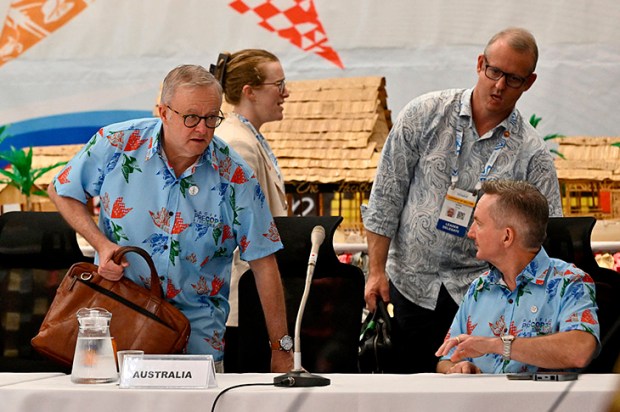
While squandering $20 million on a no-show Fiji climate junket is appalling, that pales in comparison with an estimated $1 trillion of your money down the drain on changing the grid. Meanwhile, because of New South Wales climate-virtuous legislation written by Labor and which they never expected to be taken seriously by courts – the very existence of the state’s mining industry is now under threat. (When the Berejiklian government attempted to repeal a similar clause, the usual activist tantrums within and without the party forced them to cave in.) Now a majority of senior judges have taken the politicians literally and given the law a maximum climate-catastrophist interpretation.
To suggest that a NSW planning body must police how power stations operate in Tokyo, Seoul or Taipei is not just bureaucratic absurdity; it is an ideological ambush. Coal remains the state’s single biggest export earner, underwriting the very royalties that build the state’s schools, hospitals and highways. Tying up the resource sector in activist-driven litigation doesn’t wipe out global emissions by one ounce. And if our Asian customers cannot buy clean, high-calorific Australian coal, they will buy dirtier Russian or Indonesian coal – leaving the atmosphere worse off, Australia impoverished, and the zealots triumphant.
But as young writer Will Jefferies points out, the tools to fix this madness are already on Premier Chris Minns’ desk. Instead of fighting the Albanese government’s out-of-control immigration, state Labor forces reluctant suburban councils to accommodate them by deploying state significant development and ministerial ‘call-in’ powers under the Environmental Planning and Assessment Act to fast-track inner-city towers over local objections. The Premier has the statutory power to cut red tape, call in these energy projects and sideline the Independent Planning Commission before another mine is paralysed. If Mr Minns can ride roughshod over suburban councils just to pack Sydney with migrants rather than standing up to Mr Albanese, he has zero excuse for letting activist lawfare dictate regional industrial policy in the Hunter Valley.
Instead, this orchestrated national suicide note reflects a hard-left bent on destruction. Figures from Mr Albanese down would be quite content to see Australia transformed into a far-left state where the majority are utterly dependent on a massively over-centralised government. So long as elite living standards remain elevated, they care nothing for the declining prosperity of ordinary families, the breakdown in law and order, or the catastrophic slide in educational standards. The overriding objective is an obedient populace within a neo-communist framework.
There was no legal necessity for the High Court majority to arrive at this ruinous conclusion. They could easily have interpreted the statutory words as obviously intended – as both Labor’s old right wing and the Coalition understood them. Yet only Pauline Hanson’s One Nation possesses the insight, courage and fundamental honesty to call out the entire charade for the nonsense it is and declare that Australia must pull out of the Paris Accord altogether.
All this fuels a radical political realignment across the Commonwealth, with the One Nation surge locking in. As analyst and former Labor senator, John Black, notes from recent Redbridge polling, a budget punishing small business and investors has cracked the major party duopoly wide open.
What seems likely – despite a leakage of affluent liberals recoiling at the thought of Pauline Hanson in the Lodge – is that a disciplined preferential exchange will finally muster enough momentum to evict the disastrous Labor-Greens-Teals anti-traditional-Australia axis from running this country.
The electorate’s shift in priorities could not be starker. According to Redbridge, One Nation is now seen as the preferred manager across four of the top five voter concerns: the crushing cost of living, rampant immigration, housing affordability, and rising crime. The Coalition is clinging to credibility primarily on broader economic management.
When the working public trusts One Nation over the legacy parties on the daily essentials of food, shelter, safety and borders, the political class has received its final warning. If the Coalition cannot rediscover its spine, abandon net zero shibboleths and dismantle these legislative suicide traps, the electorate will find someone who will.
Got something to add? Join the discussion and comment below.
You might disagree with half of it, but you’ll enjoy reading all of it. Try your first month for free, then just $2 a week for the remainder of your first year.