The decision by any school to refuse to teach The Diary of Anne Frank should concern every Australian who values education, democracy, and social cohesion.
This is not simply a debate about a book. It is a debate about whether schools have a responsibility to teach young people the consequences of hatred, prejudice, and the dehumanisation of others.
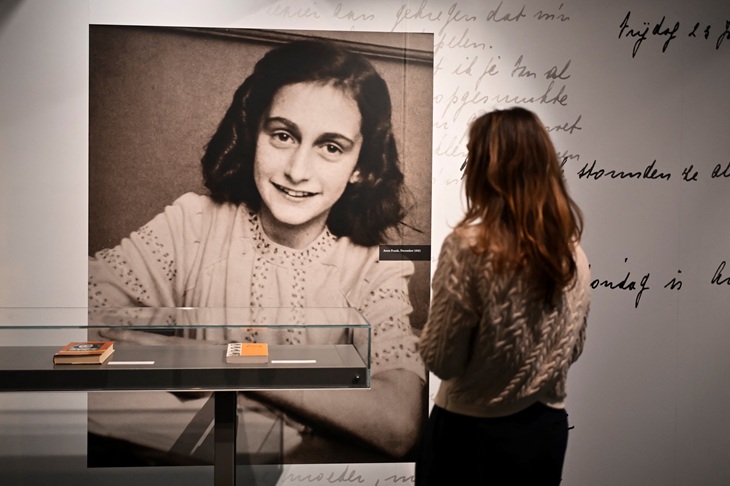
Anne Frank was not a historian, politician, or military leader. She was a child.
That is precisely why her diary matters.
Through Anne’s words, students encounter history not as a collection of dates and statistics, but as the lived experience of a young girl whose hopes, fears, ambitions, and frustrations are instantly recognisable to teenagers today. Her diary transforms the Holocaust from an abstract event involving six million murdered Jews into a deeply personal story about a family trying to survive in a world consumed by hatred.
The Holocaust remains one of humanity’s darkest chapters. Nazi Germany systematically murdered six million Jews and millions of others, including Roma, people with disabilities, political dissidents, homosexuals, and prisoners of war. Yet the Holocaust did not begin with gas chambers. It began with words. It began with conspiracy theories. It began with discrimination, scapegoating, and the gradual acceptance of the idea that some people were less worthy than others. Sound familiar?
That lesson is as relevant today as it was in the 1930s.
Sadly, some Western governments, in appeasing the rise in hatred and self-loathing, are ignoring these lessons. Those who forget or distort the past are doomed to repeat it. History is repeating right in front of our eyes.
Around the world, antisemitism is rising. Racism, religious intolerance, and extremist ideologies are spreading through social media with unprecedented speed. Young people are exposed daily to misinformation, hate speech, and attempts to divide communities along ethnic, religious, and cultural lines.
In such an environment, Anne Frank’s diary serves as a warning.
It reminds students that democratic societies are not immune from intolerance. Germany in the early 20th Century was one of the most educated and culturally advanced nations in the world. Yet fear, propaganda, and political extremism eroded democratic institutions and convinced ordinary citizens to tolerate the persecution of their neighbours.
The diary teaches that indifference can be as dangerous as hatred itself.
Students who read Anne Frank learn empathy. They learn to see the world through the eyes of someone who was targeted not because of anything she had done, but because of who she was. In an increasingly diverse Australia, this ability to understand the experiences of others is not merely desirable; it is essential.
Some may argue that the Holocaust is distant history or that schools should avoid controversial subjects. Is Israel’s defence against barbarism so controversial? But education is not meant to shield students from difficult truths. It is meant to equip them to understand them.
If schools stop teaching books because they make people uncomfortable, they abandon one of their most important responsibilities. The purpose of studying history is not to celebrate the past. It is to learn from it.
Indeed, Holocaust education has broader relevance than the Jewish experience alone. It teaches universal lessons about human rights, the rule of law, civic responsibility, and the dangers of authoritarianism. It asks students to consider what they would do when confronted with injustice. Would they speak up? Would they remain silent? Would they defend those being targeted?
These are questions every generation must answer for itself.
Australia is a nation built on democratic values, multiculturalism, and respect for human dignity. Those values did not emerge by accident. They must be taught, defended, and renewed. Anne Frank’s diary is one of the most powerful educational tools available for that purpose.
Perhaps the most remarkable aspect of Anne Frank’s diary is that despite everything she endured, she retained hope. Even while hiding from a regime dedicated to her destruction, she wrote of her dreams, her future, and her belief in the goodness of people.
That hope is not a reason to forget history. It is a reason to remember it, confront it honestly, and learn from it.
Is Israel’s defence against barbarism really so controversial? Perhaps it is to those who support Iran and its proxies. Yet that only underscores why Holocaust education remains essential. It equips new generations to recognise and resist the propaganda, demonisation, and moral distortions that are once again taking hold today.
The lessons of the Holocaust are not merely about protecting Jews; they are about defending Western Civilisation from the return of barbarism. Those seeking to diminish, distort, or silence those lessons are precisely why the story of Anne Frank remains compulsory learning for every generation.