It is my view that the Labor Party did not accidentally mislead Australians on electricity prices.
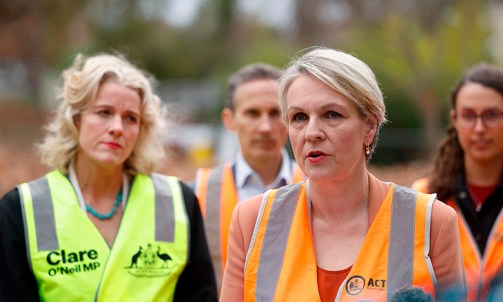
Labor promised power bills would fall by $275. The figure was repeated endlessly throughout the federal election campaign – not as a vague aspiration but as a direct financial benefit Australians could expect under a Labor government.
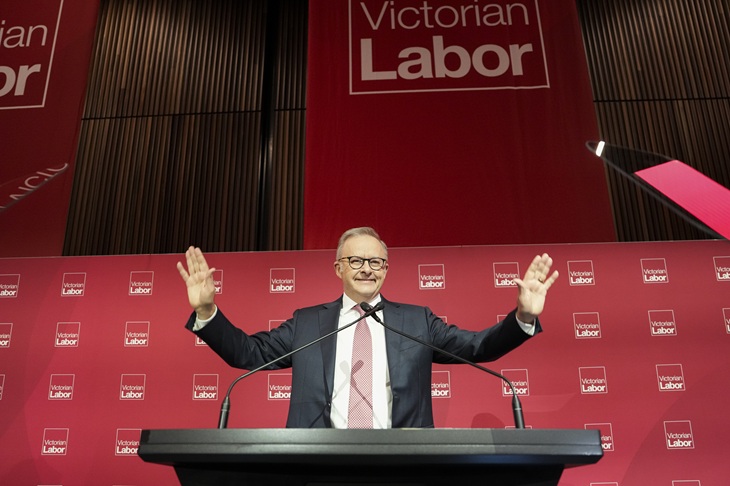
Nor was there ambiguity around capital gains tax and negative gearing. Asked directly whether Labor would touch them, Albanese replied: ‘Yes. How hard is it? For the 50th time.’
Australians have now watched those assurances collapse almost immediately after the election.
Over many decades, election campaigns have taken policy backflips to a level Australians should not normalise. This is not a single broken promise or one policy overtaken by events. It is a pattern of categorical assurances given before votes were cast, then abandoned after power was secured. When the list becomes too long to recite, the issue is no longer incompetence or changed circumstances. It is character. Yet the political and media class still insists this is merely ‘politics’.
If a company director secured investment through assurances he knew were unreliable, regulators would investigate him. If a financial adviser induced clients into decisions through knowingly misleading statements, he could lose his licence or face prosecution. If an ordinary citizen lied to Centrelink for financial gain, the state would pursue them aggressively. But politicians may secure control of an entire country through false assurances and suffer virtually no consequence at all. This double standard has become one of the great corruptions of modern democracy.
Australia is not entirely without precedent. South Australia already prohibits materially misleading political advertising, and the ACT introduced similar legislation in 2021. Overseas, Wales has openly examined mechanisms to sanction politicians who deliberately deceive voters, while Ireland has moved toward electoral misinformation legislation. Canada already criminalises certain knowingly false statements during election campaigns where they materially mislead voters. The democratic world is slowly arriving at a conclusion ordinary citizens reached years ago: political dishonesty is not harmless theatre. It corrodes democratic legitimacy itself, and Australia remains dangerously behind.
In this country, election campaigns increasingly resemble corporate marketing exercises where slogans are tested, language focus-grouped and promises crafted for emotional effect rather than truthfulness. Once elected, governments simply reverse positions and expect the public to absorb the betrayal quietly. Then comes the inevitable lecture from political insiders and media commentators. Circumstances changed. The budget situation worsened. Global conditions evolved. Governments must adapt.
Sometimes that is true. But there is an enormous moral difference between changing policy because events genuinely forced your hand and securing office through repeated categorical assurances abandoned after an election. If a political party repeatedly assures voters that taxes will not rise, that a policy will not be touched, or that households will receive specific financial relief, then reverses those positions almost immediately after an election, voters are entitled to conclude they were potentially misled.
It is my view that in more serious examples, consequences should follow. Not symbolic consequences, not a rough news cycle and not a few hostile editorials. Real consequences. Because once politicians understand that deliberate electoral deception could end careers, destroy reputations, trigger financial ruin, or even lead to custodial penalties, behaviour will change very quickly.
Politicians are not uniquely incapable of honesty. They simply operate within one of the only professions where dishonesty carries almost no meaningful personal risk. Corporate executives, financial advisers and ordinary citizens all behave differently when serious penalties apply. Politics should not be uniquely exempt. The moment politicians face genuine personal consequences, campaign promises will become dramatically more careful and far more honest. And perhaps most importantly, public confidence in democracy itself would begin to recover.
At present, millions of Australians believe elections are little more than sophisticated marketing exercises where promises exist purely to survive until polling day. That cynicism is poisoning democratic trust throughout the Western world. People no longer believe what politicians say because experience has taught them not to. A functioning democracy cannot survive indefinitely once truth becomes optional during election campaigns.
Australia should therefore establish a National Electoral Integrity Commission with powers comparable to a standing anti-corruption body. But unlike most modern ‘independent reviews’, it would need to be genuinely independent, not another bureaucratic theatre production controlled by the political class itself. It should be judicially led, protected from government interference, funded independently, and empowered to compel evidence. Governments themselves must have absolutely no role in deciding whether prosecutions proceed. Politicians cannot be trusted to police political deception any more than company directors can be trusted to investigate insider trading within their own firms.
Complaints could be brought by citizens, journalists, whistleblowers, electoral authorities, or opposition parties. The Commission would investigate whether statements were explicit, materially important, repeatedly communicated to voters, and knowingly false or recklessly deceptive. Not every failed promise would qualify. Circumstances can genuinely change. But repeated categorical assurances used to obtain power should not simply become disposable once the votes are counted.
Where serious breaches are identified, the Commission should refer matters to an entirely independent Special Electoral Prosecutor operating separately from government and separately from the Attorney-General of the day. That separation is critical. The Attorney-General should have no authority whatsoever over whether charges proceed against ministers sitting around the same Cabinet table. That would amount to governments granting themselves immunity from electoral dishonesty.
Initially, penalties should include mandatory public correction orders, substantial personal financial penalties, and disqualification from ministerial office. But where deliberate and repeated deception materially alters the outcome of national elections, custodial penalties should no longer be considered extreme.
That idea will horrify the political class. Good.
Why should a banker who deceives investors face prison while a politician who deceives millions of voters into handing over national power faces nothing? Why should white-collar fraud attract jail time while electoral fraud affecting an entire country is dismissed as ‘campaign rhetoric’? The answer is uncomfortable but obvious. Modern political systems have quietly normalised dishonesty at levels that would destroy careers in almost every other profession.
Citizens are expected to tolerate it. Accept the reversals and accept the excuses, then return to the ballot box three years later and pretend democratic legitimacy remains untouched. But democracies cannot survive indefinitely once truth becomes optional inside electoral politics. Elections are not sporting contests or marketing campaigns. They are the mechanism through which citizens consent to be governed. If that consent is obtained through deception, then electoral dishonesty is not merely bad behaviour. It is the ruin of the democratic process itself.
And we wonder why public trust in democracy is collapsing.