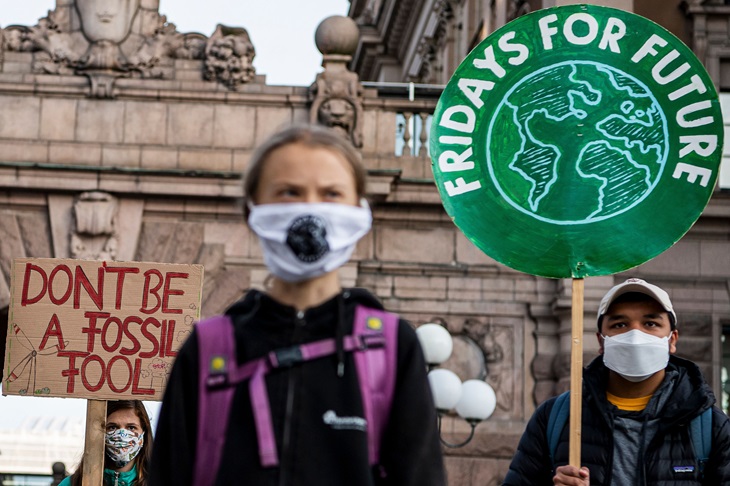
Climate catastrophism rests on a moral inversion. It looks at the human activity that has made the world habitable and regards it as a source of contamination to be contained. It should come as no surprise that, once this premise is accepted, every expression of human prosperity begins to look like environmental misconduct.
Since 1900, the planet has warmed by about 1.3 degrees Celsius. During that time, the world’s population increased five-fold, life expectancy rose dramatically, the global economy expanded enormously, and deaths from extreme weather fell by about 95 per cent.
Any civilisation that still believed in itself would recognise this as an extraordinary human achievement. Climate catastrophists survey the same history and pronounce it a disaster.
Their scientific case is also far less apocalyptic than their political rhetoric. Climate models used in international assessments have produced estimates of carbon dioxide sensitivity ranging from roughly 1.8 to 5.6 degrees. That is an enormous range of uncertainty. If a weather forecast predicted somewhere between 18 and 56 degrees next Tuesday, nobody would reorganise the national economy around it.
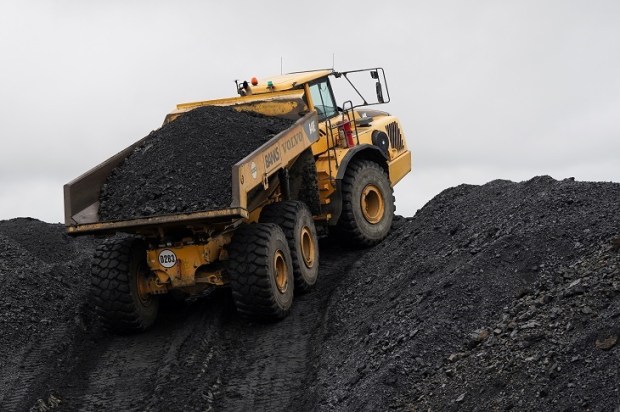
Many of the darkest projections have relied on RCP8.5, an extreme scenario that assumed global coal consumption would increase roughly five-fold by the end of the century. It was never a prophecy, yet politicians, activists and journalists repeatedly presented research based on it as the likely result of ‘business as usual’.
An implausible assumption enters a model, produces a catastrophe, and is then used to persuade Australians to accept higher electricity prices, weakened industry, and a less reliable energy system.
Australia has consequently been lectured to regard energy abundance, industrial capacity, and material prosperity as excesses requiring atonement. According to the climate moralists, we have consumed too much. We travel too much, build too much, and have apparently prospered a little too much. Now we must dial it back. Lower expectations, restricted energy use, and managed decline are presented as signs of national responsibility. Prosperity itself attracts suspicion, and Australians are expected to feel guilty for having enjoyed it.
This message also shapes how people imagine the future. Climate alarmism cannot credibly be presented as the primary cause of falling birth rates, but it has materially contributed to the culture of demographic pessimism in which they are occurring.
Tell young people that humanity is exhausting the planet, that children enlarge their carbon footprint and that the future will be defined by fires, floods, and ecological collapse, and some will naturally wonder whether bringing new life into the world is responsible. The same culture then praises them for deciding against it. Refusing the demanding responsibility of creating, providing for, and caring for a family can be advertised as evidence of environmental conscience. The abdication of responsibility becomes a means of signalling virtue. An empty cradle, after all, has an impeccable emissions profile.
Our government now puts this philosophy into practice through policies that count every fraction of a degree while discounting what human advancement has achieved: longer lives, safer communities, technological progress and confidence in our capacity to overcome hardship.
Suspicion of human flourishing is built into this attitude at its core. Calling it anti-humanism may sound impolite, so let us simply say that Canberra has developed an increasingly complicated relationship with the existence of Australians.