I’m not normally much of a sports fan. I used to follow Aussie Rules – barracking for Carlton is in my DNA – but a decades-long slump by my team dampened my enthusiasm. Coupled with the hassle and expense of going to a match or alternatively staying up late to watch the end of a match – what’s the point, otherwise? – I decided to give the whole thing a miss.
So, here’s the puzzle: I have become an enthusiastic follower of the World Cup. It has nothing to do with Australia’s short-lived stint in the competition. Let’s face it, our team just doesn’t rank with the top ones.
It’s about the skills, the slow build up, the tactics, the stadiums, the crowds, the managers. I’m also an early riser, so the timing of the matches suits me.
I now realise that a low-scoring game is in fact more exciting than one in which teams score every few minutes. The sense of achievement and elation from a goal being scored is hard to match in a high-scoring game. There’s also the exquisite excitement of a penalty shoot-out.
Don’t you just love those huge stadiums at which the games have been played – in the US, Canada and Mexico? All of them existing stadiums, nothing specially built. Gosh, the stadium in Mexico had been used for the 1968 Olympics, although I guess there has been a bit of refurbishment in the meantime.
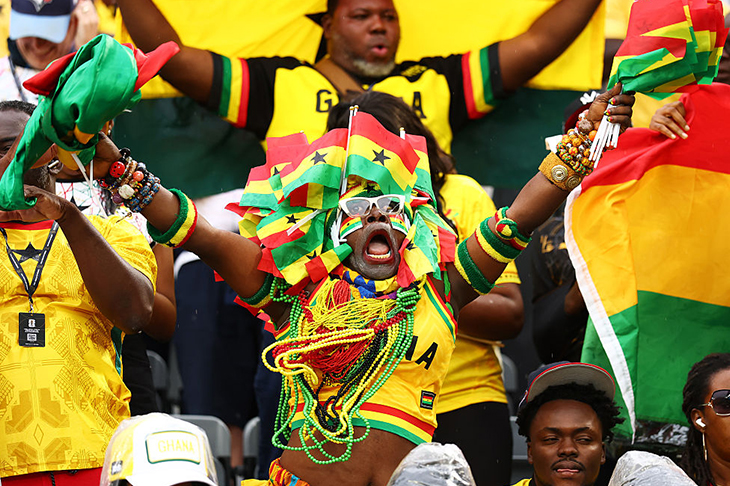
And the crowds. Did you ever see so many faces just over the moon to be at the game? (Given the price of admission – at least $US1000 – you would want to be overjoyed about being there.) Most of them wear the strip of their preferred team and yell until they are completely hoarse.
Who can forget the Norwegian fans ‘rowing’ in their seats to mimic the adventures of their Viking forefathers? Norway’s top team member, Erling Haaland, looks like one of those Viking leaders from the ninth century. It’s quite a sight to see him banging a large drum as his band of loyal disciples row along to the same beat.
What’s with those managers? We call them coaches, but most of them look like low-level insurance salesmen. Notwithstanding very high temperatures, most of them come dressed for a day in the office. One of them was wearing a three-piece suit! Is there some sort of obligatory dress code? I’ve now developed a personal game of ranking the attire of the managers.
But just in case you think I have entered an early phase of senility, let me get to my point. World rankings are important in the world of economics and Australia now barely gets into the final 32, let alone the final 16. Our recent performance on so many measures – inflation, productivity, real wage growth – has been abysmal. We are simply going backwards.
Take inflation, for instance. According to a recent comparison, Australia has the highest headline inflation of all advanced economies. We failed to get inflation under control when we could – in 2023 and 2024 – and we are paying a high price for that inaction.
Central banks around the world were cranking up their cash rates to dampen the inflation cycle and weren’t prepared to ease off until it was clear that the inflation genie was back in the bottle.
Not here. The kids down at the Reserve Bank of Australia didn’t want to lift the cash rate too much – its peak was much lower than overseas – because they were worried about unemployment. There was nary an acknowledgement that employment in this country has been massively propped up by government spending, otherwise known as the care economy, and so unemployment was never likely to be a problem, at least in the short term.
Last week, the Organisation for Economic Cooperation and Development released its annual Employment Outlook report. It compares the performance of its 38 member countries. (The countries are supposed to be advanced and democratic, but fudging these descriptors gets you to 38 and they all pay their dues.)
Here’s the drum roll story from Australia’s point of view. Since the pandemic, Australia’s real (after inflation) wages have fallen by 5 per cent. Across the OECD members, real wages on average have increased by 5 per cent. That’s one hell of a gap.
Also last week, Deloitte Access Economics released its outlook for the Australian economy. Now normally you would expect a consulting outfit like that to paint as rosy a picture as possible lest commissioned government projects dry up. And let’s not forget here that this outfit in the past has praised the energy transition as a boon to the economy.
But Deloitte Access Economics decided to tell it as it is. This financial year, the economy is expected to grow by between 1.3 and 1.5 per cent, with headline inflation staying above 4 per cent and unemployment heading towards 5 per cent. ‘Deloitte Access Economics has rarely adopted such a downbeat assessment of the short-term outlook,’ according to partner Stephen Smith.
And here’s the kicker quote: ‘Australia is now set for the longest stretch of sub-par growth in more than 35 years.’
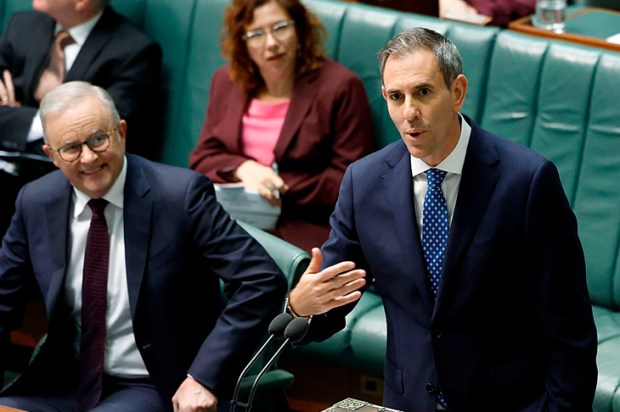
Of course, our Treasurer, Jim Chalmers, wasn’t having a bar of it. ‘We have a lot coming at us from around the world but a lot going for us here at home,’ he declared. (He sounded like the manager of a third division football team, when you think about it.)
‘Under Labor, Australia has the lowest average unemployment of any government in half a century, smaller deficits and less debt than the Coalition left us, booming business investment, with tax cuts and higher wages that the right-wing parties oppose.’ Give me a break, Jimbo, your team is not winning, just look at the scoreboard.
Making dodgy comparisons with the Coalition that last held office over four years ago is becoming very tedious. Read my lips, Jimbo, the debt is not lower than under the Coalition. Look at the figures. In 2022-23, gross government debt was $907 billion; in 2025-26, it was $982 billion, an increase of $75 billion. In 2026-27, the debt is expected to exceed one trillion dollars. That’s a lot of large ones.
Quoting figures from an obscure pre-election fiscal outlook released in 2022 is irrelevant; nay, insulting to voters.
The truth is that Jimbo has had potentially the easiest ride of any treasurer in Australian history. The combination of high commodity prices and surging income tax revenue has led to a windfall gain of around $400 billion. Apart from around $40 billion, the rest has essentially been pissed up against a wall.
That’s all you need to know. The umpire’s whistle has sounded.
Got something to add? Join the discussion and comment below.
You might disagree with half of it, but you’ll enjoy reading all of it. Try your first month for free, then just $2 a week for the remainder of your first year.