One Nation’s climate and energy policy is central to the savings they expect to make if they win the next Commonwealth election.
They have indicated (but not specified) $30 billion in available savings by abolishing measures and subsidies required to pursue the ‘climate change hoax’.
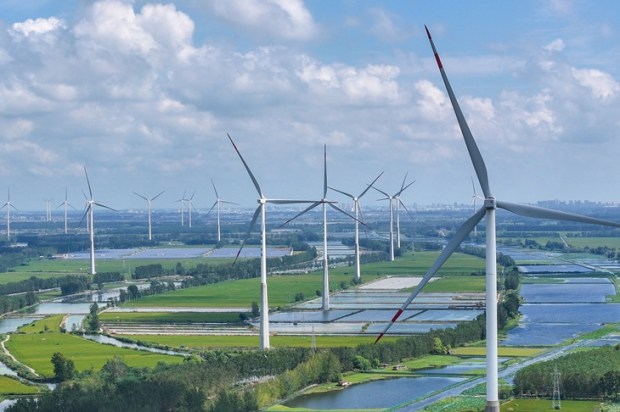
As some $17 billion is readily identifiable in annualised subsidies to renewable industries, something close to $30 billion is achievable, though much of the cost comprises regulatory-induced charges and over-priced contracts for renewables that are off-budget.
And dissolving some contractual commitments might involve compensation.
Thus, the Trump Administration has bought offshore wind leases for $2.5 billion to forestall their development with the condition that the recipients invest in gas, coal, and nuclear. The Americans have seen this approach as preferable to involving themselves in lengthy and uncertain court challenges.
Over the past 25 years, no government has publicly revealed its own estimated costs of these policies.
The Coalition are said to be inching towards programs that, by the time of the next election, will be little different from those of One Nation. However, if this is the case, their progress remains agonisingly slow. Indeed, they still name the Shadow Portfolio ‘Energy and Emission Reductions’ (Victoria’s Shadow Ministry has the same appellation, while that of NSW is called ‘Energy and Climate Change’).
Also, localised concerns may prove insurmountable. This is especially the case with state governments. The NSW and Victorian Oppositions are led by parties that remain wedded to the notion that catastrophic climate change is real, and we need to combat it with a policy of decarbonisation.
The NSW Coalition’s plan for ‘more affordable, reliable and resilient energy’ tells us we have to abandon the over-budget New England Renewable Energy Zone (REZ) and adopt city-based, renewable-energy-fuelled zones closer to where people work and live. Compounding this absurdity (akin to supplying lamb by having sheep graze on rooftop gardens), it also then announces a priority for a Far West Outback REZ, which it thinks will unlock substantial new energy generation.
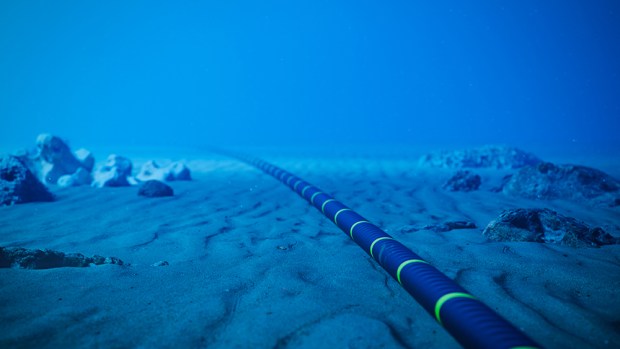
Somebody should have told the Coalition about the farcical $20 billion now-collapsed proposal to deliver Northern Territory sun-powered electricity to Singapore.
Moreover, while the Coalition (and Labor) are seeking to get more gas into the Australian energy supply, when push comes to shove, key individual proposals fall foul of confected NIMBY opposition. Thus, some energetic locals have noisily opposed PEP 11, a prospective gas area in the Sydney Basin located 50km from the Sydney-Wollongong-Newcastle greater metropolitan area.
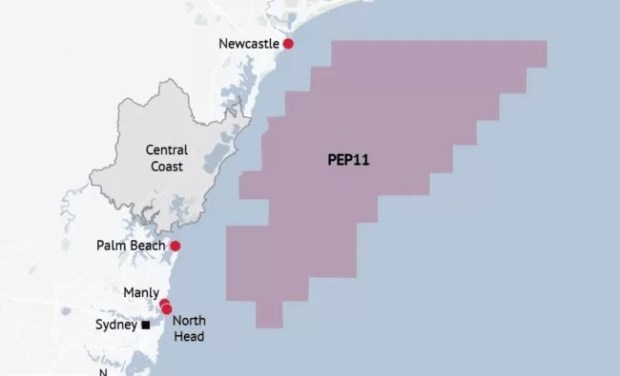
Opposition to this proposal (even the periphery of which would be visible only from a 200-metre-high building) has come from NSW Liberal leaders Kellie Sloane and Mark Speakman as well as prominent Commonwealth Liberal MPs like Dave Sharma and Andrew Bragg.
The ALP and the Coalition federal leaderships support gas, especially in Labor’s case, as a ‘transition’ fuel. To this end, they are planning for 15-25 per cent domestic gas set-asides. This means lower profits and will make some prospects sub-economic (and, if retrospective, is confiscatory – something government used to be worried might harm their constituents).
One Nation is promoting a Norwegian-style sovereign wealth approach which would involve the government taking an equity stake (with associated exploration and development costs). Though this has paid off for Norway, which feared a conventional approach would bring exchange rate revaluations and economic disruption, it is not an axiomatic success formula. The alternative of lowering investment taxes could generally be more successful (though not if, as in the UK and Australia, governments spend the largesse on election-supportive handouts). Moreover, expectations may not be realised – Australian business winner-picking has been an unmitigated disaster. Even in gas and oil, success is uncertain – those sectors do not enjoy particularly high profit returns and this can require decades; thus, from the early 1950s, Chevron spent tens of billions of dollars in exploration in Western Australia with little revenue until 2015 when Gorgon/Wheatstone came on stream.
The abysmal performance of nations that have prioritised energy developments by forcing the closure of fossil fuel plants and replacing them with subsidised renewables is clear. Not only are the renewables intrinsically more expensive but they require expanded transmission and lack features (inertia, voltage and frequency) that are automatically present with coal, gas, hydro, and nuclear.
With 200 years’ supply at present usage levels of coal, the cheapest source of electricity, massive untapped gas and unlimited uranium, Australia’s recent lamentable economic performance, driven by high energy prices, is a monument to the incompetence of our elected politicians.
Will we do better in the future? One Nation’s setting of the agenda in the key area of energy and environment at least gives us a chance.