The great New Zealand rugby sides have long lived by a simple mantra: ‘Sweep the sheds.’
The phrase refers to the All Blacks cleaning their own dressing room after a match. It is a symbolic act, but a powerful one. No player, regardless of reputation or achievement, is above doing the small things properly. The philosophy is straightforward: if you consistently get the little things right, the big things tend to look after themselves.
It is a lesson that extends far beyond rugby.
Military organisations across the world understand this instinctively. Sailors, soldiers, and airmen spend countless hours rehearsing basic drills. They march. They clean weapons. They practise procedures repeatedly until they become second nature. To the outsider it can appear monotonous, even archaic. Yet militaries know that in moments of crisis people rarely rise to the occasion; instead, they fall back on the level of their training. Master the basics and you stand a chance when the pressure arrives.
Sport offers countless examples. Before she became one of Australia’s greatest sporting icons, Evonne Goolagong Cawley honed her extraordinary talents by repeatedly striking an old, furry tennis ball against a rusted water tank. There were no grand facilities, no elite academies, and no sponsorship deals. There was simply repetition, discipline, and an unwavering commitment to improving the fundamentals.
The common thread running through these examples is obvious. Excellence is rarely built upon spectacular moments. It is built upon ordinary habits performed consistently over time.
Politics is no different.
Yet politics may be the profession most susceptible to forgetting this truth.
Modern politicians are often seduced by the theatre of public life. They become consumed by grand speeches, media appearances, carefully crafted slogans, and social media performance. The danger is that they begin to mistake publicity for achievement and rhetoric for results.
Former Queensland Premier Campbell Newman provides an instructive example. Rising from Lord Mayor of Brisbane to Premier of Queensland was a remarkable political ascent. Yet the very momentum that propelled him to office eventually contributed to his downfall. Governments can become so focused on large reforms and headline-grabbing announcements that they lose touch with the day-to-day retail politics that put them there in the first place.
Politics remains, at its core, a people business.
A politician who ceases listening, who spends too much time surrounded by advisers and too little time among ordinary voters, invariably begins to drift. Staff can curate meetings. They can screen audiences. They can ensure difficult questions are avoided. But eventually reality intrudes.
When politicians begin believing their own media releases, it may be time to read a newspaper that does not support their worldview. Better still, they should spend ten minutes talking with a group of Australians who have not been pre-selected by an office staffer.
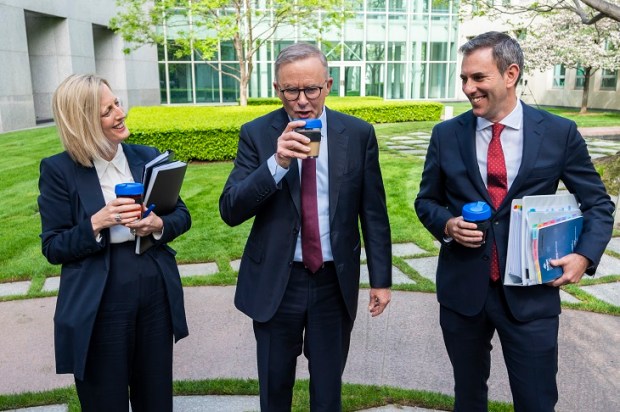
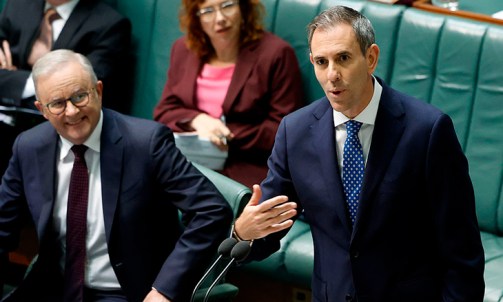
The Treasurer, Dr Jim Chalmers, offers a contemporary example. After several years of presenting himself as a steady and largely uncontroversial economic manager, he has increasingly sought to occupy a larger political space. Yet for much of the electorate, Dr Chalmers remains something of an unknown quantity. Many Australians would struggle to identify him in the local supermarket.
That is not necessarily a criticism of the man himself. Rather, it reflects a broader problem within modern politics: too many politicians neglect the daily task of telling their story directly to voters. They fail to do the basics.
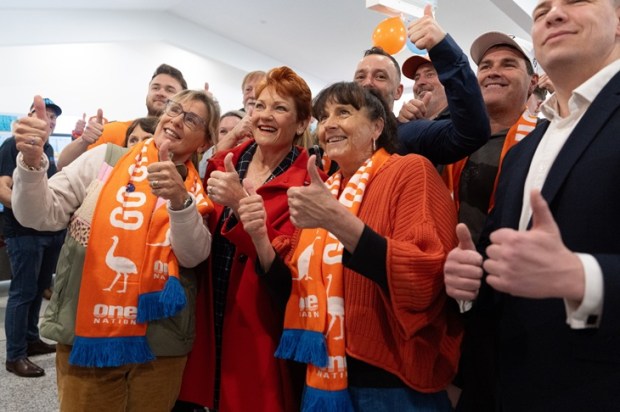
When public support softens, political allies often search for convenient villains. Increasingly, many on the Left blame Pauline Hanson and One Nation for their electoral discomfort. But blaming Senator Hanson misses an important point.
Pauline Hanson succeeds because she relentlessly practises the basics.
Love her or loathe her, Hanson speaks directly to her audience. She communicates in plain language. She remains visible. She understands that politics is not conducted solely in Canberra, but in shopping centres, country pubs, agricultural shows, and community halls. Every now and then she receives what cricket commentators would describe as a full toss and, politically speaking, she dispatches it into the grandstand.
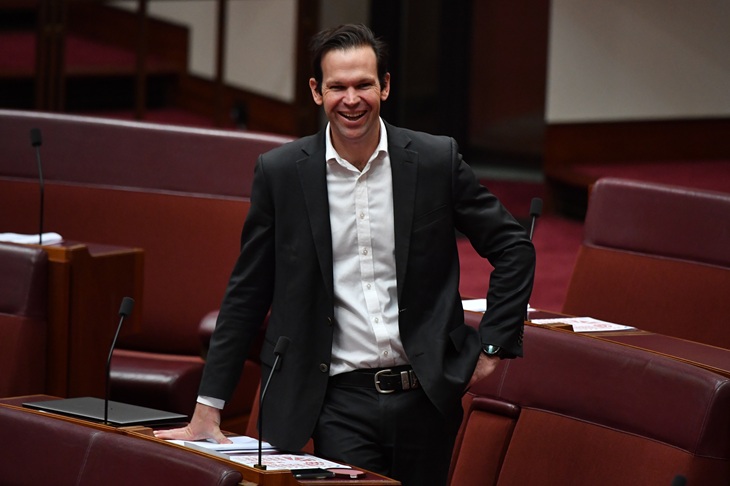
Another politician who appears to understand the importance of fundamentals is Senator Matt Canavan.
Ordinarily, I am sceptical of political careers that begin entirely within the machinery of Parliament House. Too often staffers emerge from Canberra possessing impressive résumés but little understanding of life beyond the parliamentary triangle.
Canavan, however, appears cut from different cloth.
Each day he quietly goes about the basics. He speaks consistently to regional Australians. He focuses on issues affecting his constituency rather than simply chasing the headline of the day. While many politicians pursue the media agenda with the enthusiasm of a three-legged dog chasing a passing car, Canavan tends to set his own agenda.
That matters.
Politics is not Twenty20 cricket. It is Test cricket.
In Twenty20, crowd-pleasing shots and immediate excitement are rewarded. In Test cricket, endurance, discipline and sound technique prevail. You accumulate runs when opportunities present themselves, defend your wicket and remain at the crease long enough to influence the contest.
Much of contemporary politics resembles the Big Bash League. The incentives reward outrage, spectacle and viral moments. Prime Minister Anthony Albanese, Pauline Hanson and many others frequently operate within this environment. The media cycle demands instant reaction, and politicians oblige.
Yet governments are not sustained by applause alone.
Eventually, every politician must deliver.
This is where the Nationals face both opportunity and challenge.
For many years, the party drifted from the retail politics that once defined it. During the height of Barnaby Joyce’s leadership, the Nationals benefited enormously from his energy, charisma, and instinctive political talents. Joyce possessed an unrivalled ability to connect with regional voters. He could dominate a news cycle and inject passion into debates that otherwise would have remained obscure.
But even the most dynamic political style eventually loses effectiveness if it becomes predictable.
A player can grow tired. More importantly, the play itself can grow tired.
Australians came to expect a spectacular intervention every time Barnaby Joyce appeared on television. Spectacle became routine, and routine eventually loses its impact.
Leadership, however, is about more than personality.
It is about execution.
Much of politics’ real work occurs far from cameras. It is found in briefing papers, negotiations, stakeholder meetings and endless hours spent developing policy. Members of Parliament may feature in photographs beside newly opened bridges, roads or dams, but rarely are they alone in delivering those outcomes. Behind every successful project stands a team of staff, departmental officials, local advocates and community leaders.
Canavan understands this reality because he has lived it.
As a former chief of staff, he knows that ideas alone are insufficient. Somebody must execute them. Somebody must ensure the machinery of government actually produces results.
The same can be said for Angus Taylor. Whatever one’s political persuasion, both Taylor and Canavan possess tangible achievements and substantial policy experience. They have occupied senior roles, shaped major initiatives and demonstrated an ability to convert ideas into outcomes.
Too many politicians never make that transition.
Indeed, one could argue that a substantial proportion of Australia’s political class spends more time discussing problems than solving them.
Canavan’s strength lies in recognising that leadership extends beyond the parliamentary party room. For regional parties in particular, the team is much larger. It includes every farmer, miner, small business owner, and family living in rural and remote Australia, regardless of how they voted.
Those Australians are not interested in political theatre for its own sake. They expect competence, consistency and delivery.
They expect politicians to sweep the sheds.
The Nationals may at times have forgotten this lesson, but there are signs they are rediscovering it. A new generation of MPs appears increasingly focused on listening, learning, and rebuilding trust with regional communities.
The fundamentals matter again.
And that is encouraging, because politics, like rugby, military service and Test cricket, ultimately rewards those who remain disciplined enough to practise the basics long after the crowd has stopped cheering.
Matt Canavan will win some contests and lose others. He will hit some balls for six and occasionally edge one behind. Every political leader does.
But if he continues returning to the fundamentals; listening, communicating, delivering, and remaining grounded; he will give himself every opportunity to succeed.
Because in politics, as in life, the big moments are usually won long before they arrive.
They are won while nobody is watching, broom in hand, quietly sweeping the sheds.