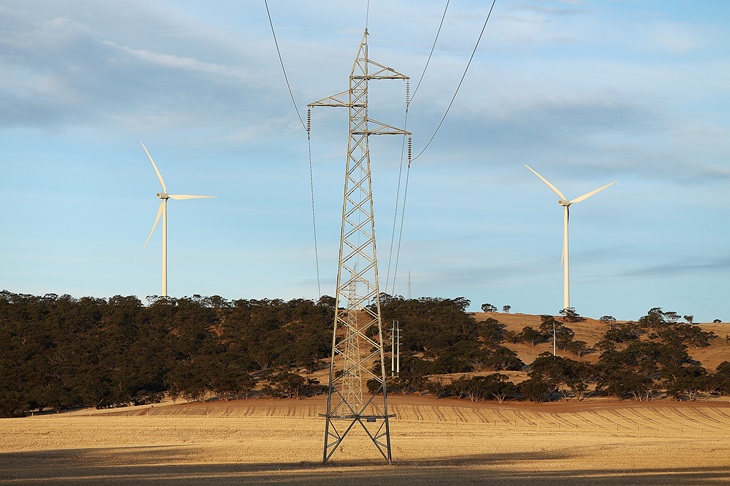
Australia is one of the most energy-rich countries in the world, yet remains exposed in the very systems those resources should secure.
This is not a geological problem. It is a strategic one.
Australia holds one of the largest uranium endowments in the world, accounting for roughly a quarter of known global resources. In most historical contexts, such a position would confer not just commercial advantage, but strategic influence. Countries that control critical resources tend, over time, to shape the systems built upon them.
The history of oil provides the clearest contrast. Major oil-producing nations did not confine themselves to extraction. Through coordination – most visibly via OPEC – they sought to influence supply, pricing, and ultimately the structure of the global energy system. They understood that control of a critical resource is not simply an opportunity to participate in a market, but to shape it.
Australia has taken a different path.
It exports uranium, as it exports gas and increasingly lithium, but it has not sought to anchor these resources within a broader system of domestic strategic advantage. It does not use uranium to underpin its own energy system. It does not convert resource position into system control. It supplies inputs, but does not shape outcomes.
For too long, Australia has treated energy primarily as a market question. In reality, it is a matter of statecraft.
A system that is efficient in normal conditions but fails under stress is not secure. Yet Australia has drifted into a position of strategic contradiction: rich in energy resources, but exposed to disruption; rich in sun, wind, gas, and uranium, yet dependent in critical areas on imported fuels, extended supply chains, and increasingly complex systems whose resilience under geopolitical pressure remains largely untested.
The central question is straightforward: Can the country continue to function if global systems are disrupted?
If the answer is uncertain, then the system is incomplete.
A sovereign energy framework begins from that premise. It requires not the abandonment of markets, but their integration into a broader structure that prioritises continuity under stress. It requires diversity of supply, domestic capability in critical segments, and infrastructure designed for resilience rather than optimisation alone.
This is not an argument against renewables, gas, or any single energy source. It is an argument against relying on any one of them in isolation. Systems that depend too heavily on a single pathway tend to perform well – until they do not.
Australia has the capacity to build a more robust system. It has the resources, the institutional strength, and the capital required to do so. The issue is not whether it can act, but whether it will do so with sufficient clarity and urgency.
The pattern is familiar. Australia often begins from positions of strength, but does not always press those advantages to their full conclusion.
The contrast with Australian sport is instructive.
An Australian batsman who reaches fifty is not judged to have completed his task. The expectation is that he converts it into a hundred. The early advantage is not the achievement; it is the platform.
To stop at fifty, when a hundred is within reach, is not prudence. It is underperformance.
In national policy, the same discipline is not consistently applied.
Australia has reached fifty repeatedly. The question is why it so rarely goes on to make a hundred.
Dr Thomas J. Ulahannan is a consultant endocrinologist based in Australia and the author of Britannia Unleashed (published under the name Dr Thomas John). He writes on national strategy, energy policy, and economic development.