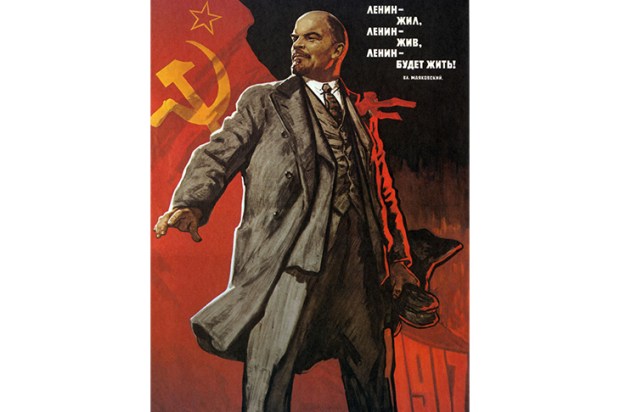
Karl Marx and Friedrich Engels opened their 1848 manifesto with the claim that ‘the history of all hitherto existing society is the history of class struggles’. The Albanese government appears to have taken this less as a polemic than as an instruction manual for Australian economic policy.
The operating logic is not difficult to identify. Divide society into oppressors and oppressed. Attach moral legitimacy to one side and moral guilt to the other. Then use the resulting conflict and asymmetry to transfer resources, authority and decision-making power not merely between groups, but toward the state.
An earlier attempt at this project was the 2019 election campaign.
The conflict then was the classical Marxian one: capital, as represented by ‘the big end of town’ versus labour, as represented, axiomatically, by the small end of town. Franking credits, negative gearing, the capital gains tax discount, trusts and superannuation concessions were all presented as structural privileges enjoyed by the wealthy at the expense of ordinary Australians. The bourgeoisie had prospered for too long. The proletariat, properly mobilised behind the Labor party, would rebalance the ledger.
The electorate declined the offer and the project briefly disappeared from view.
The government’s view is that the conflict remains fundamentally between capital and labour because that is the conflict the modern left most naturally understands. This time, however, the branding has changed with capital now represented by older Australians who have accumulated too much wealth and labour represented by younger Australians unable to buy housing.
This time, the struggle has been rebranded as ‘intergenerational equity’, which sounds considerably more compassionate than class warfare all while accomplishing much the same political task. But the rebrand contains a fundamental intellectual problem.
Capital is simply labour income deferred through time. People work, consume part of their income, save the remainder and invest it. Over time those savings compound into assets. Capital is not a mysterious substance arbitrarily bestowed upon one social class by fate. It is what labour income becomes when it is not immediately consumed.
It follows that, all else equal, a sixty-year-old will generally possess more capital than a twenty-five-year-old because the sixty-year-old has had decades longer to earn, save and compound returns. The alternative would be a society in which people accumulate wealth before they have spent much time earning it. No government has yet discovered how to arrange this, though several have tried. The wealth differences between generations are therefore largely life-cycle effects, not necessarily evidence of systemic injustice.
If the government genuinely believed the imbalance between the taxation of capital and labour was the root of the problem, the obvious response would be to reduce the tax rate on labour rather than increase the taxation of capital. But the Albanese government is instinctively drawn to raising rates irrespective of the consequences.
Australia already taxes additional effort at marginal rates approaching 47 per cent, among the highest and most economically damaging effective rates in the developed world. Lower and later marginal tax rates would encourage work, investment, entrepreneurship and productivity.
But such a solution would require a government interested in economic growth rather than economic planning. It would also imply a less interventionist government, and that is where the project runs into difficulty. A government committed to reorganising economic outcomes to achieve utopia would not easily relinquish administrative power.
There is also an awkward complication in the intergenerational-equity narrative. The younger Australians supposedly being rescued today are the same Australians whose retirement savings over coming decades will depend heavily upon the asset values the government’s policies are designed to suppress.
Then there is also the small matter of what the Prime Minister promised voters he would not do.
The 2019 election had already functioned partly as a referendum on these policies. Labor lost and the electorate spoke. Subsequently but before the 2025 election, Anthony Albanese was asked repeatedly whether he could rule out changes to negative gearing or the capital gains tax discount. He did so emphatically. Then after the election in his now-famous reply, he said: ‘How hard is it? For the fiftieth time,’ was delivered with the irritation of a man offended that anyone might continue doubting him.
Following the budget and pressed on the reversal, Treasurer Jim Chalmers offered a most revealing statement. Asked whether he would simply acknowledge the broken promises so discussion could move on to the rationale, Chalmers replied that the government had ‘come to a different view’. The candour was revealing precisely because no elaborate justification was even attempted.
In earlier political eras, reversals of such magnitude normally required some external cause: a recession, a war, a fiscal crisis unexpectedly discovered after taking office. Something that allowed governments to claim events had forced their hand. Here there was no such effort. The government reconsidered the matter and changed its mind. That alone was apparently deemed sufficient.
What this establishes as precedent is potentially more important than the policy itself. If a fundamental election commitment, repeated to exhaustion, can be discarded because the government has ‘come to a different view’, then every future commitment becomes conditional upon the mood of cabinet at a particular moment. Electoral promises cease to function as constraints and become merely talking points.
The deeper damage is institutional. In commercial life, firms can be prosecuted for misleading advertising and false representations. Political actors face no equivalent constraint. They may promise almost anything before an election and repudiate it afterward without legal or other consequence. The next election will reveal if there is political consequence.
The Albanese project has accelerated something corrosive in the effective collapse of electoral promises as binding commitments. And once voters conclude that campaign promises are merely tactical, elections will change character entirely. Campaigns already light on policy will shed what little substance remains, replaced by something rawer: a politics of protest and punishment, as electorates learn to vote not for programmes but against incumbents. This is certainly the recent UK experience.
Volatility becomes the only lever voters have left. Governments, for their part, will be quietly content with this arrangement. Administrations increasingly focused on the comfortable occupation of office and the collection of salaries and perquisites will have little reason to promise anything they might later be held to, or punished for violating.
Marx and Engels closed their manifesto with an exhortation that the workers of the world should unite. The Australian adaptation is more modest in scale but remarkably similar in method: find a grievance, name a villain, centralise the remedy.
Voters of Australia, divide. Your government has utopia to build, and you have to pay for it.
Got something to add? Join the discussion and comment below.
Dimitri Burshtein is at Eminence Advisory. Peter Swan AO is at the UNSW-Sydney Business School.
You might disagree with half of it, but you’ll enjoy reading all of it. Try your first month for free, then just $2 a week for the remainder of your first year.