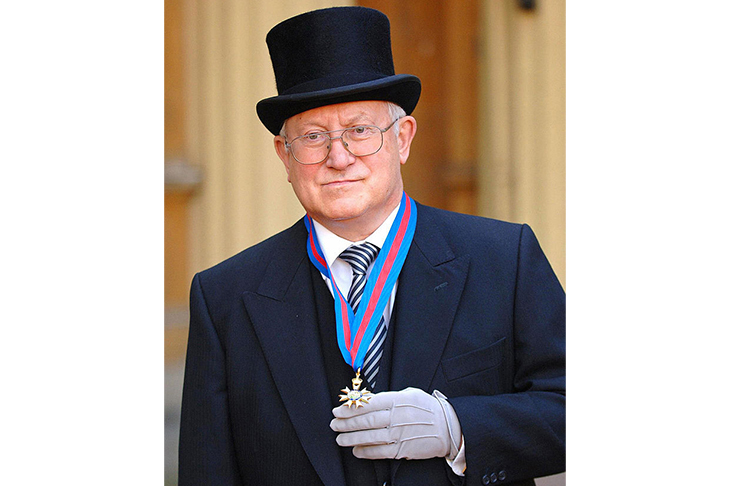
I don’t normally do obituaries except, as the politicians and lawyers say, ‘in exceptional circumstances’. And there could be no more exceptional circumstances than those in the case of the former Russian spy Oleg Gordievsky who became a British agent and who has died in London at the age of 86. Actually, he died on 4 March 2025, but it is only in the last week or so that the mainstream press has got around to noting his amazing achievements. In short, Gordievsky was a brave hero who took such exceptional risks and made such a momentous contribution to Western security that his death should be noted with sadness and his achievements recognised for what they were, momentous.
Oleg Gordievsky was a spy. But he was no ordinary spy. He was a senior apparatchik in the Russian secret service, the KGB, at the height of the Cold War, but one who saw the light and converted to democracy after the Russian invasion of Czechoslovakia and the continued abuse of human rights under the soul-destroying communist system. To put his conversion into practice, he became a spy for MI6, the British Secret Service, notably and courageously inside Russia itself and under the very noses of the KGB. As such, from 1974 to 1985 he was able to feed a stream of accurate, reliable and significant information from Russia to the West, particularly on the internal political machinations of the Soviet Union and its plans for nuclear war.
Just how dangerous this activity was at the time is seen from the fact that Gordievsky’s undercover work for the democracies took place against the backdrop of a series of defections from Western intelligence to Moscow and led by the evil Kim Philby, all of which sent the KGB into overdrive to detect defections from within its own ranks. Inevitably, the Russians came to suspect Gordievsky, but somehow or other he was able to get through the interrogation and torture they inflicted on him. In time, he was rehabilitated and given a desk job in Moscow and was amazingly able to continue his work for the West until he was extracted from Russia by MI6 on 19 July 1985 and whisked across the border into Finland and freedom. Thereafter, he was able to use his intimate knowledge of Soviet espionage in Western countries to expose the network of Western traitors that Russia had set up in the UK, Europe and the USA. For this enormous contribution that Gordievsky made to the democracies, the West should be eternally grateful.
Moreover, and as all spy stories have their own piquant features, Gordievsky’s escape to freedom was due in no small measure to the humble Mars bar and the deceptively olfactory nature of a baby’s soiled nappy. The plan was to have one of his MI6 handlers carry a Mars bar tucked into his pants to signify they were ready to activate the escape. Fortunately, Gordievsky’s eagle eye detected the delicacy. But then, the guard dogs at the Russian border were about to pounce when a brave female MI6 agent dropped a baby’s nappy that had been brought along for this purpose and which had such a smell that the dogs and the guards ran away in horror, clearing Gordievsky’s path to freedom.
Gordievsky’s long-tern spying for the West was a great success, but it raises the question whether excessively secret undercover activities by competing sides, domestic and international, and where nothing is revealed to the public, are really the best way to promote security and intelligence. Quite apart from their enormous cost, these activities frequently fail to prevent terrorist outrages from occurring. Indeed, some would-be terrorists probably think they are safe, simply because they see and hear nothing to deter them from committing their despicable crimes.
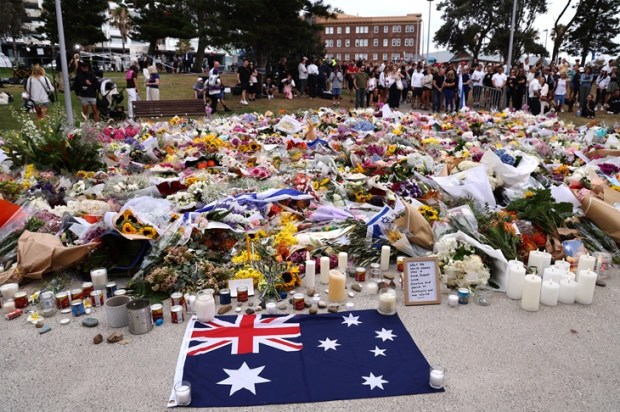
We see a very good example of this quandary between secrecy and exposure at the Royal Commission into the Bondi massacre, where exposure of what the security services knew and how they used that knowledge, may be of greater value in deterring future outrages like Bondi than keeping their operations a secret. In any event, surely the Jewish community is entitled to know what our security services knew and did to prevent this unspeakable tragedy and what those same services are doing to prevent a repetition, if they are doing anything. And the Jewish community – and the community as a whole – is entitled to have it all put before the public for an assessment of whether it was adequate, for there are already some startling indications that it was not adequate at all. Indeed, the security services seem hell-bent on keeping their activities a secret and the commission itself seems to be heading in the same direction. Five of the Commissioner’s interim recommendations are camouflaged under the anodyne statement that ‘(t)his recommendation is contained in the confidential Interim Report’. So, they will never be seen by the public and nor will the public be able to reach any conclusion on their adequacy. Our suspicions about what is going on in this investigation have been further heightened by the Commissioner having scheduled a series of secret hearings where we will not even know the subjects discussed, let alone the conclusions, and we will certainly not hear the evidence. Nor can we be satisfied by the evidence that has already been given, showing disturbing inter-service rivalries between security services and the State and Federal Police. Obviously, there should be no release of information that would jeopardise prosecutions; we want to convict terrorists, not set them free because of a mistrial. But the present state of secrecy surrounding the Commission is heading towards there being little if any public accountability at all.
And, who knows, exposure in the media might just deter the crazies from using violence to achieve their aims if they know they are being watched by an effective security service and not just one shrouded in mystery and protected by secrecy.
Such a commitment would be a fitting memorial to Oleg Gordievsky and his work.
Got something to add? Join the discussion and comment below.
You might disagree with half of it, but you’ll enjoy reading all of it. Try your first month for free, then just $2 a week for the remainder of your first year.