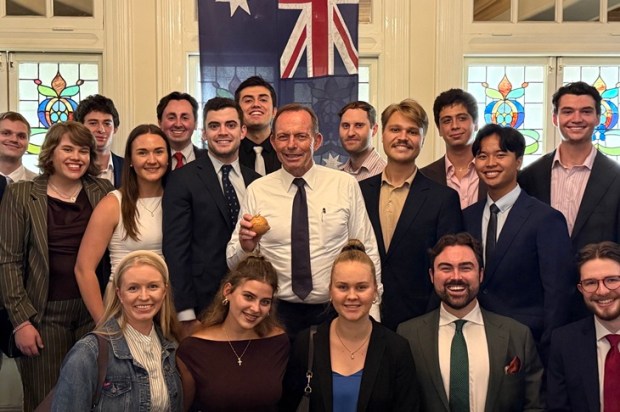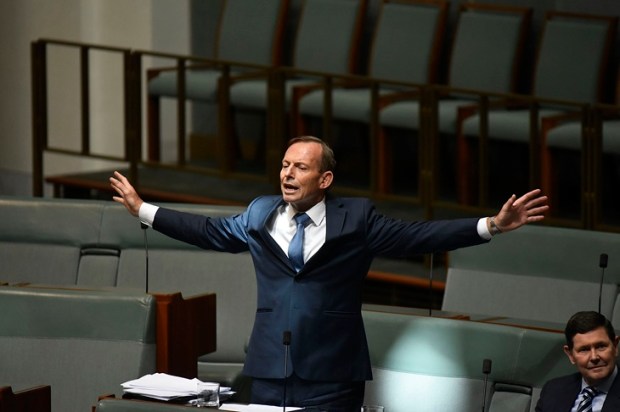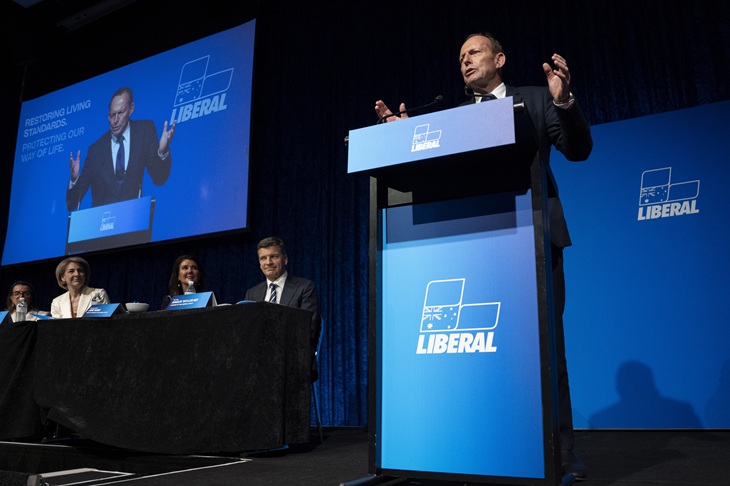
Last weekend was a watershed for the Liberal Party reform movement with the election of former Prime Minister Tony Abbott as the Federal Party President.
Someone with a philosophy of positive change now holds a position of genuine influence and power over a party trapped in stagnation.
With polls and election results indicating that Menzies’ ‘forgotten people’ are walking away to One Nation, it is obvious to everyone – especially voters – that the survival of the Liberal Party will come down to whose ideas prevail: conservative or moderate.
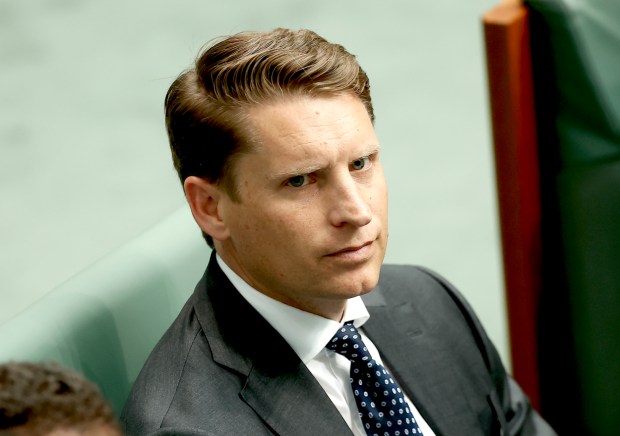
The philosophical divide is now between Tony Abbott or Queensland LNP Senator James McGrath.
Both represent the strongest position of their respective movements and both have been trying to define and ‘win over’ these long-lost forgotten people.
Abbott, who accepted his position unopposed, has called for the serious democratisation of rank-and-file party members and a rapid expansion of the membership from 50,000 (a generous guess) to over 200,000. He echoed calls from the Liberal Reform Association to discontinue the delegate system which has both outlived its purpose and turned into the sharpest weapon in factional warfare.
In the glory days of Menzies, the Liberal Party had 60,000 members. Abbott’s goal of once again attracting 1 per cent of the population should be achievable, especially as it is reported Advance – a conservative advisory group – has around 650,000 combined members and subscribers. There have even been rumoured internal party reviews, overseen by Senator McGrath, suggesting dropping state membership fees from somewhere around $100 to $10 (for a digital-only version). This may help, but only if members are given responsibilities.
Abbott may have stepped down from his advisory role at Advance, but he would be aware – as are we – that there is a healthy conservative and politically-interested audience. After all, Menzies always believed that the party must reflect the values of its members and to do that, you must first have members.
The moderate side of the party seems more interested in preserving the delegate structure and is less enthusiastic – perhaps even opposed – to opening the gates to mass membership.
Writing in The Australian, Senator McGrath declared of the LNP:
‘Our party exists for one reason – to fight and win elections, so that our values and beliefs can be actioned in government.’
This is tricky. Parties that align their beliefs to win, rather than represent, often fall into the moderate trap of adopting policies belonging to their opponents in the hope of luring people over. It doesn’t take long to forget what a party’s values are after they have been curated for victory.
It is politics done backwards. Voters move because of new, lucrative ideas. They do not chase watered-down pilfered policy.
Buying into left-wing Net Zero and climate hysteria (which shelters aggressive anti-Western, pro-socialist ideas) is the defining example for the Liberals which is guaranteeing their demise. In trying to appeal to the Teals, university students, or working-class migrant voters, the Liberal Party has risked becoming a political Chameleon rather than a comprehensive movement.
And as for open membership? The state constitutions tell the story. Restrictive, expensive, heavily-vetted … the rules surrounding membership are written more like a legal threat than an invitation…
Instead of increasing members, moderates would likely prefer to increase the delegate ranks.
Delegates are sometimes more loyal to the politics of the politician who helped them, rather than the party itself. When true, this is in defiance of how the delegate system was originally intended.
Designed in a long-forgotten era before digital systems, a delegate was meant to attend meetings and vote on behalf of other members. One hundred farmers would tell their delegate to go and vote down a beef taxation law – and that’s what they did. Now, delegates sometimes vote on behalf of their factional candidate with little (or no) interest in what those hundred farmers want. Menzies intended delegates to help represent members who could not attend voting, and it is unlikely he would advocate for their continued existence today. Frankly, he’d be rolling in his grave.
The delegate structure is holding the party back, and stopping it from embracing technology that would allow all members to vote without a partisan stand-in.
Without going into excruciating detail, all of the organisational positions (where each state has its own rules) were filled by the branch and electoral delegates voting for other delegates who would then vote for the state executive. The respective executives would then appoint more delegates to attend and vote for their federal president and their federal executive.
Even Tony Abbott was elected by delegates who are at least three-times removed from the members themselves. It was to his great fortune that he proceeded unopposed in his recent appointment, as it would have been a right old factional fight. Instead, it was more like a pre-war negotiation conducted in full knowledge that the party is in serious trouble.
Menzies was determined to hear the voices of his people, and Abbott has indicated he wants the same thing.
The Liberal Reform Association does not want Menzies revisited per se. We would prefer to create a modern iteration of his mainstream conservative political party vision run by members.
The benefit of having members and being able to hear them will serve the Liberals better than ‘focus groups’. Members who drifted away citing a lack of engagement have indicated they would consider coming back if their vote and their voice started to mean something again.
As it stands – and this is something Abbott will need to fix – the Liberals have a majority conservative-leaning membership and a majority moderate-leaning delegate structure. They are in opposition to each other, and guess who has all the voting power? This is how the Liberals ended up with progressive candidates in blue ribbon seats despite upsetting the electorate.
Abbott’s prime ministership suffered from this process. The loyalty of voters to the Liberal cause meant the guaranteed election of these moderate MPs placed in safe seats who were at odds with the leader who won the election. White-anting at its worst. The more popular Abbott was at the polls, the more moderates got themselves into power. It is a machine of self-sabotage that will restart on Taylor if the party structure is not changed.
And so the Liberal Reform debate now has two opposing advocates.
For those political leaders attempting to define the forgotten people (presumably so they can locate them), the lesson of Menzies is that he did not merely identify a voting block. He articulated and delivered a political philosophy grounded in civic responsibility, family, enterprise, restraint, home ownership, voluntary association, and the dignity of the middle class.
The forgotten people are not a campaign slogan.
They were – and still are – a constituency with moral and political agency.
Abbott has the right idea. He wishes to re-engage with them. In modern times, many of the forgotten people can be found in the Labor constituency. These people are culturally conservative but economic progressive workers with families.
They are the sort of people who want one flag – not three – and equality of citizenship as proven by the results of the Voice referendum. They want a functioning national defence, home ownership, and cultural coherency. They probably want low taxes and a fair go as well.
Even Senator McGrath detailed these points in his article, though it is my personal view that he does not properly understand them.
The difference falls between saying something and doing it.
If these forgotten people become Liberal members and vote as members, ordinary working people and business professionals will finally have a chance to rise up through the ranks of the Liberal Party and gain preselection. Something that is currently very hard in the delegate system.
The Liberal Reform Association is also developing a protocol for membership-based policy engagement.
Facing an existential crisis from the first real competition on the right in many decades, the Liberal Party don’t have long to fix this delegate problem.
Conservatives are mostly in favour of reform, but they remain a minority even though their faction holds the leadership and the position of party president. The vast majority of delegates fall under the purview of the moderates simply because they are excellent recruiters. Yes, they are better at bureaucracy than winning elections…
It is a real shame that we can’t run a democratic test of a new membership voting system in the Queensland LNP. Having recently brought their senate ticket selection forward by more than a year, the delegate system helped put James McGrath in the top spot and Nationals Leader Matt Canavan at number two. This is normal practice, but what would happen if the vote was re-run, this time for the membership? Who would get the safe and guaranteed spot? My money is on Canavan. He is the Leader of the Nationals, after all.
Leaving a Coalition leader dangling in a less secure spot in Pauline Hanson’s home state when many news headlines have mentioned a ‘Nationals wipe-out’ seems unwise.
We know a new generation of Liberal members are waiting.
They need hope, power, and a voice.
Abbott is offering that model. Moderates, wherever they may be, offer more of the same…
If you would like to learn more about Liberal Party reform, and the push for democratisation, follow the Liberal Reform Association.