The reluctance of Australia’s public broadcasters to adopt the International Holocaust Remembrance Alliance (IHRA) definition of antisemitism should not surprise anyone who understands the institutional culture of the Australian Broadcasting Corporation (ABC) and Special Broadcasting Service (SBS). The surprise would be if they embraced it enthusiastically.
For years, both broadcasters have positioned themselves not merely as neutral conveyors of information, but as custodians of a particular liberal-progressive worldview.
Within that worldview, it is my opinion that identity politics, post-colonial analysis, and activist-driven journalism has increasingly shaped editorial instincts.
The IHRA definition presents a challenge to that framework because it complicates one of its central moral binaries: oppressed versus oppressor.
The debate over Israel and antisemitism sits awkwardly inside modern progressive politics. Israel is frequently framed as a colonial or ‘settler’ state. The IHRA definition, particularly its illustrative examples relating to Israel, forces institutions to confront when anti-Zionist rhetoric crosses into antisemitism. That creates discomfort in organisations where criticism of Israel is often treated as politically straightforward rather than morally complex.
Yet one of the most persistent misconceptions about the IHRA definition is that it prohibits criticism of Israel or the Israeli government. It does not. The definition explicitly allows for legitimate criticism of Israel in the same way criticism is directed at any other country. Israel is a democracy. Like all democracies, its governments, leaders, military decisions, and public policies are open to scrutiny, criticism, and debate. Israelis themselves engage in fierce internal political argument every day.
The issue is not criticism. The issue is disproportionate and discriminatory criticism: when Israel alone is subjected to standards not applied to any other nation, when Jewish self-determination is uniquely delegitimised, or when rhetoric about Israel slips into conspiratorial, dehumanising, or collective accusations against Jews. That is precisely why the IHRA definition matters. It attempts to distinguish between legitimate political disagreement and rhetoric that crosses into antisemitism.
Public broadcasters have an obligation to preserve robust debate, particularly on matters of war, foreign policy, and human rights. But the refusal to adopt IHRA often goes beyond concerns about free speech. It reflects a deeper anxiety about who gets to define prejudice and which forms of discrimination receive institutional urgency.
The ABC and SBS have shown no hesitation in adopting expansive frameworks around racism, Islamophobia, gender identity, or Indigenous affairs. In those areas, staff are often encouraged to embrace evolving activist language and social theories as settled moral reference points. Yet when Jewish organisations point out that the IHRA definition has been adopted by around 47 governments and many more institutions worldwide, including the Australian government, the broadcasters remain hesitant, citing caution, nuance, and procedural complexity. That inconsistency is difficult to ignore.
Nor should Australians ignore the broader media ecosystem in which these institutions operate. The willingness of Western broadcasters to collaborate with or platform content from media platforms funded by the Qatari state (and others), raises legitimate questions about editorial judgment and ideological framing. Qatar has spent years cultivating influence across Western academic, political, and media institutions while simultaneously hosting Islamist figures and movements deeply hostile to Israel. Yet in much of the English-speaking media landscape, these foreign media platforms are treated with a level of credibility that is rarely interrogated.
That matters because narratives do not emerge in a vacuum. Repeated framing of Israel primarily through the lens of colonialism, oppression, and racial hierarchy inevitably shapes how antisemitism itself is understood or dismissed. Once that framework becomes embedded, definitions like IHRA are perceived not as safeguards against bigotry, but as obstacles to an ideological narrative.
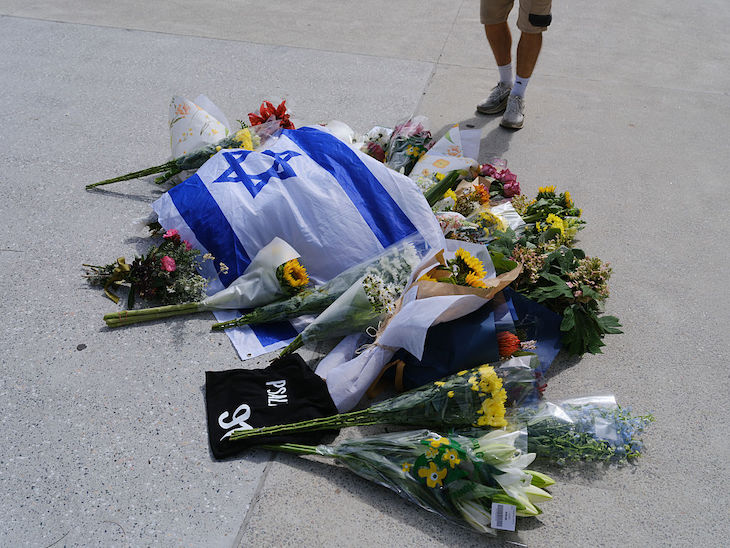
The institutional failure of the ABC and SBS has already been exposed in moments when moral clarity should have been simplest. It is my view that after Bondi, the ABC in particular appeared missing in action. At a time when Australia’s taxpayer-funded public broadcaster should have been covering what many regarded as one of the most significant terrorist attacks affecting the Jewish community in modern Australian history, an attack that shocked the entire nation, the response often felt muted, cautious, and emotionally detached.
Australians expect their public broadcasters to recognise when an attack on one community is an attack on the social fabric of the country itself. Yet too often, antisemitic violence is treated as politically inconvenient rather than morally urgent. There is a noticeable reluctance to frame hatred directed at Jews with the same immediacy and institutional seriousness routinely afforded to other forms of extremism.
The evidence presented before the Royal Commission into antisemitism and social cohesion has been shocking and harrowing: Jewish Australians describing intimidation, abuse, vandalism, fear in schools and universities, and an atmosphere in which many no longer feel safe expressing their identity publicly. These are not isolated incidents – they point to a broader deterioration in social cohesion.
Media institutions cannot absolve themselves of responsibility for the climate they help shape. When broadcasters repeatedly platform activist narratives, uncritically amplify casualty figures and claims originating from Hamas-controlled authorities in Gaza, or frame events through simplistic oppressor versus oppressed binaries, they shape public perceptions in ways that can inflame hostility toward Jews. Journalism requires scrutiny, scepticism, and context. Too often, those standards appear inconsistently applied.
Who can forget the explosion at the Al-Ahli Arab Hospital site in Gaza in October 2023, when early claims from Hamas officials alleged that an Israeli strike had killed 500 people. Major broadcasters around the world amplified the accusation before verification, fuelling global outrage and protest. Subsequent intelligence assessments and open-source analysis pointed instead to a failed rocket launched from Gaza by Palestinian Islamic Jihad, with the explosion occurring in a nearby car park rather than from a direct Israeli strike on the hospital itself. Yet by then the damage was done. The initial narrative had already circled the globe because it fitted a pre-existing moral storyline.
Sadly, it was not an isolated case. Again and again, claims emerging from Hamas-controlled institutions have been treated with a level of immediate credibility that would rarely be afforded to other wartime actors. Corrections, caveats, or later clarifications seldom receive comparable prominence to the original claims. The cumulative effect is not merely poor journalism; it contributes to a political atmosphere in which Jews and supporters of Israel increasingly become targets of suspicion and hostility.
The deeper issue is that parts of the contemporary activist left increasingly treat Jewish concerns differently from those of other minority communities. When a minority says certain rhetoric is racist or dehumanising, institutions are usually expected to listen. But when Jewish organisations argue that the demonisation of Israel, denial of Jewish self-determination, or application of double standards crosses into antisemitism, they are often accused of bad faith or censorship.
No other minority group is routinely told that its understanding of prejudice is politically illegitimate.
Part of the issue is that many journalists and editors instinctively view antisemitism through a historical lens tied almost exclusively to the far right: neo-Nazis, white supremacists, Holocaust denial. The modern reality is that antisemitism also emerges from parts of the radical left and from segments of Islamist politics. The IHRA definition explicitly acknowledges that complexity. For institutions more comfortable policing right-wing prejudice than left-wing excess, that creates an enduring blind spot.
There is also a bureaucratic instinct at work. Public broadcasters are highly sensitive to accusations of bias. Adopting IHRA would immediately trigger criticism from activist groups, academics, and elements of their own workforce who argue the definition constrains criticism of Israel. Avoiding formal adoption becomes the path of least resistance. In such environments, institutional caution often outweighs principled clarity.
Institutions develop ideological habits, and over time those habits shape what is treated as morally urgent and what is treated as politically inconvenient.
My suspicion is that adopting the IHRA definition would expose the degree to which certain antisemitic framings have been normalised, rather than adequately interrogated, within parts of the broadcasters’ output.
The IHRA debate reveals those instincts clearly.
This is not a debate about wording alone, but about moral authority in public discourse: who defines racism, whose fears are granted legitimacy, and whether antisemitism emerging from anti-Zionist activism is treated with the same seriousness as other forms of bigotry.
On that question, the ABC and SBS were always likely to hesitate.