A milestone was reached yesterday when a bill to repeal the 1986 prohibition on nuclear energy and uranium mining passed the New South Wales Upper House.
Libertarian MLC John Ruddick released a press statement:
The Hon John Ruddick MLC of the Libertarian Party has successfully had a bill passed in the New South Wales Upper House that will repeal the 1986 prohibition on nuclear energy and mining in our state.
The bill now goes down to the Lower House where it will require a vote to become law.
Thank you to Opposition Leader Kellie Sloane and the NSW Coalition plus our friends on the Upper House crossbench for supporting this commonsense proposal.
Lifting this ban has been part of Libertarian Party policy since our party’s inception in 2001.
Uranium has long been embraced with bipartisan support in South Australia where it creates high-paying jobs, a perfect safety record, and plenty of royalty revenue for the government.
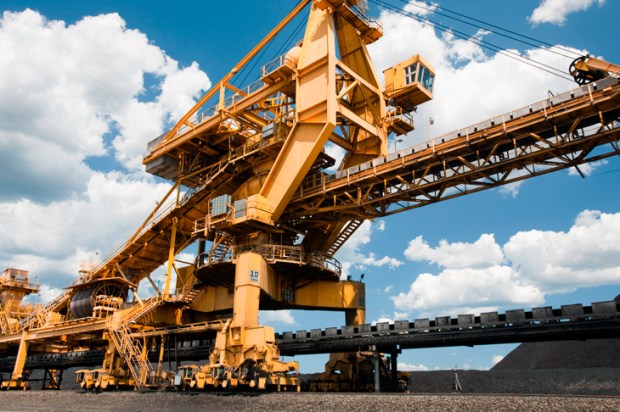
The time has come for New South Wales to embrace this multi-billion dollar untapped potential resting underground.
I call upon Premier Minns to get out of the way of our mining industry and let them explore, mine, and export uranium.
Nuclear for Australia, who have been campaigning for this change, expressed their support for the bill.
‘This is just the first step, with the next stage for the bill to go into the Legislative Assembly, the Lower House, to be debated. This is such huge news … for Australia’s nuclear power bans to finally be lifted.’
Australia's first pro-nuclear bill in years has just passed the Upper House of the NSW Parliament.
This is a major win for our movement. Next step is to keep up the pressure when the bill goes to the Lower House where NSW Labor has a majority.
Thank you for your support, the… pic.twitter.com/HiJqTfbYRT
— Nuclear for Australia (@nuclearforaus) May 6, 2026
That is not to say this was an easy process. Labor and the Greens predictably voted against lifting the ban despite it promising all the clean energy they insist they desperately want.
And even if NSW repeals the ban, they still have to contend with the federal regulations.
Libertarian John Ruddick called the case for nuclear energy and uranium mining ‘overwhelming’. He pointed out that Labor has no objection to uranium mining in South Australia and the benefit it brings to those local communities. Do we have uranium in New South Wales? Well, yes… Probably lots of it.
Dubbo, for instance, is known deposit. Potential mining of uranium was, at the time, called a potential ‘disaster’ by a member of the NSW Aboriginal Land Council. ‘We don’t like uranium and what it does. We would say no to any form of uranium mining … not only within the area, but everywhere.’
But should the decision be up to Aboriginal Australians, or all Australians? Uranium is a shared resource and the land is meant to belong to all Australian people.
While Ruddick admitted that this conversation is currently about uranium mining for New South Wales, rather than nuclear energy, he believes it is a sign that the debate is open.
?
This morning I was doubtful we would get to the Libertarian Party's pro-uranium mining bill … and even then we were only allocated 45 minutes for debate.
I assumed if we reached the debate then the government would filibuster that 45 mins … but I can only assume they… pic.twitter.com/VqjyfC8Zcd
— John Ruddick MLC – Libertarian (@JohnRuddick2) May 6, 2026
The Libertarians are right, this is an historic moment, even if the existence of the ban was created in a moment of hysteria following Chernobyl. The moral of that story should have been don’t let communist Russia build your nuclear plants. Today there are 408 operational nuclear plants in 31 countries. Added to this, 75 are under construction while 120 are planned. Many of them in China. Yes, the renewable energy showroom is powering itself with coal, oil, gas, and nuclear.
We have been here before.
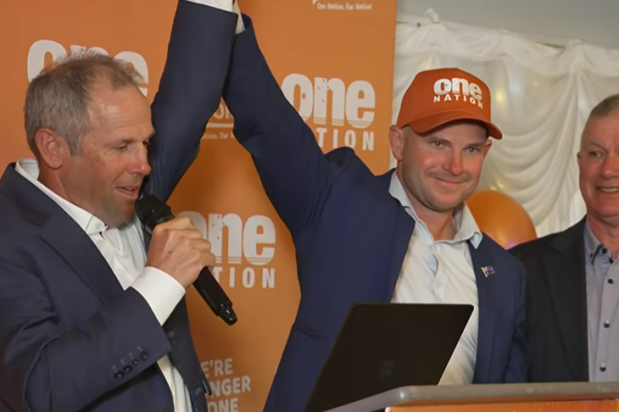
Repealing this ban was tried six years ago when the Berejiklian government, nudged along by the Nationals, had a little dig around. The Nationals firmly supported lifting the ban, but the soggy moderate faction in the Liberals derailed the venture. There was then a bit of a lean toward a One Nation proposition which focused on mining.
‘The position of the National Party is a policy position … we do support nuclear energy. We still need to fight that through Cabinet and see where the government lands next week,’ said Barilaro.
Six years is a long time in politics, and public opinion has moved significantly in favour of nuclear energy and all mining-related activities. The chance of lifting the federal constraints is also likely as the Aukus arrangement progresses.
The end of the nuclear ban in Australia might not happen with a dramatic election campaign, but rather a quiet series of small rollbacks until there is nothing left to stop Australia entering the modern energy game.