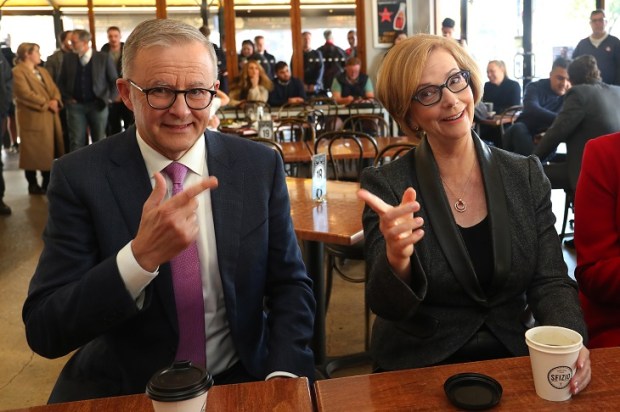
Our Prime Minister, in one of his frequently mundane press conferences, reminded us that ‘we can’t turn back the clock’ when it comes to issues like multiculturalism and economic reform.
Well, maybe the Prime Minister in his ‘DJ Albo’ guise had a couple of lines from his idol Taylor Swift’s Shake it Off in mind: ‘I never miss a beat, I’m lightnin’ on my feet, and that’s what they don’t see, mm-mm…’
At least he didn’t fall off the stage this time.
Many of us are old enough to remember when we had incredible music from the likes of The Beatles, Deep Purple, and the Rolling Stones. Or climb on board with Cher’s Turn Back Time to the Fabulous Fifties with Elvis, Gene Vincent, Chuck Berry, and their contemporaries who set the scene for even greater times to come.
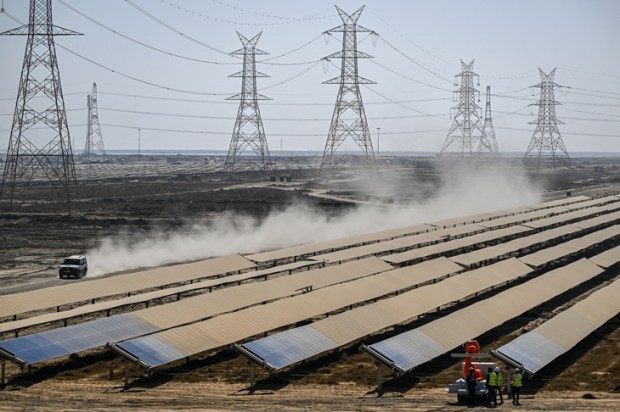
Music aside, before we embraced the concept of all-encompassing ‘climate change’, Australia produced and refined most of our own oil and fuel. Our energy bills were among the world’s cheapest thanks to an abundance of reliable coal-fired power stations. Our steel mills and aluminium smelters could run profitably without billions of dollars in government subsidies. Even up until recently, we manufactured our own urea to fertilise essential food crops. Oh, and we didn’t smother an area bigger than Tasmania with Chinese-sourced heavily-subsidised solar panels and wind turbines which are pushing power prices through the roof.
We also manufactured our own glass, plastics and paper, which are now also largely dependent on overseas imports. And we didn’t have rampant antisemitism or any other gaping racial divides creating traffic chaos in capital cities most weekends, nor did we see the slaughter of Jewish citizens on our beaches.
So sorry Albo, if we can’t turn back the clock by diverting billions in subsidised green dreams to fast-tracking domestic oil recovery and refining or by utilising known techniques for producing oil from coal such as South Africa does, or re-visiting the vast oil shale deposits near my old stamping grounds of Gladstone, we are all much worse off.
(This new deal to secure refined fuel from Singapore in exchange for LPG guarantees is a tenuous stop-gap measure at best, as Singapore is dependent on crude oil imports mostly from the Middle East.)
Add what about ending the irrational ban on reliable nuclear energy? Energy that is being increasingly adopted by other OECD nations… Add that to the list of fails!
The obsession Labor appears to have with staying on track to meet the fabled goal of ‘Net Zero’ was highlighted recently when the Prime Minister signed us up to the new Euro Free Trade Deal. This latches us onto obligations under the previously (mainly) aspirational Paris Accord.
This was highlighted by Sky News Australia’s commentator Peta Credlin the same day that Energy Minister Chris Bowen had adamantly denied in an earlier interview.
‘I pointed out that the EU trade deal could well be set up as a back-door way to enforce compliance with UN climate targets. By God, Chris Bowen is slippery, isn’t he?’ said Credlin.
‘If you look carefully at the DFAT website, the government’s own trade website, you will find this document titled Australia-European Union free trade agreement – benefits for trade, environment and climate. And off the top, it says this, “For the first time in a free trade agreement, Australia (and the EU) has made a binding commitment to implement obligations under the Paris Agreement on climate change.”’
Google’s AI is in agreement:
The concluded EU-Australia Free Trade Agreement (March 2026) includes legally binding commitments to implement the Paris Agreement on climate change. This makes climate obligations, along with labour rights, enforceable through the trade deal’s dispute settlement mechanism, representing a significant integration of environmental policy into trade law…
Essential Elements Status: The Agreement treats compliance with the Paris Agreement similarly to human rights obligations, incorporating them as ‘essential elements’ of the deal.
Green Trade Incentives: The pact immediately eliminates tariffs on environmental goods such as solar components…
Further to that, it’s also confirmed on the European Commission’s own website:
Boosting more sustainable trade through strong, enforceable provisions on Trade and Sustainable Development (TSD), including commitments to the Paris Climate Agreement, core labour standards, gender equality and environment.
The trade deal was also strongly criticised by several key agricultural leaders.
Google’s AI again:
Agricultural leaders in Australia have strongly criticised the newly announced free trade agreement (FTA) between Australia and the European Union (EU), signed in March 2026, labelling it a ‘subpar’ and ‘appalling’ deal that fails to deliver meaningful market access for local producers.
Following eight years of negotiations, peak industry bodies have argued that the deal severely disadvantages Australian red meat, sugar, and dairy farmers, with some leaders suggesting they would have been better off without it.
Key Reasons for Agricultural criticism:
- Subpar Access for Red Meat: Beef and lamb producers slammed the agreement for failing to meet industry demands, with access quotas falling nearly 40 per cent short of what was requested.
- Cattle Australia chair labelled the agreed export volumes ‘pathetic’, arguing that they ‘barely restore’ what existed before 2019.
- ‘One-Way’ Trade Deal: The National Farmers’ Federation (NFF) expressed concern that the deal offers little for Australian exports while opening the domestic market to heavily subsidised European meat, cheese, and dairy products.
- Failed Sugar Access: The sugar industry described the outcome as a ‘complete failure’, with access gains failing to match what competitors like Brazil secured in their EU deals.
- Geographical Indications Restrictions: Dairy producers are frustrated by having to phase out the use of common product names like Feta, Romano, and Gruyere, while losing protection against imported European products.
Given all the above, I was amazed to have Question Time playing on the TV while I went about other tasks when all this was brewing, and totally expected the Opposition would try to haul Albanese and Bowen over the coals for their duplicity. But no. Apart from Labor MPs Dorothy Dixers and the customary back-patting, all I heard over several days from the Conservatives were repetitive questions about how many servos had run out of fuel and how many fuel ships were on their way here.
Apologies if I dozed off from the monotony and missed anything, but I think it was more a case of ‘look the other way or we’ll be reminded of signing us up to the Paris Accord’.
After all this, my mind has taken another trip back to a tune that I doubt is on DJ Albo’s dodgy playlist but which the Opposition could learn from – Bob Hudson’s 1970’s hit, The Newcastle Song, and its chorus, ‘Don’t you ever let a chance go by, Oh Lord, Don’t you ever let a chance go by…’
John Mikkelsen is a former editor of three Queensland regional newspapers, columnist, freelance writer and author of the Amazon Books Memoir, Don’t Call Me Nev.