Is Australia a ‘decadent’ society?
The term ‘decadence’ implies promiscuity.
But, as American writer Ross Douthat explains, it’s a term rarely used precisely.
In The Decadent Society, Douthat channels Frenchman Jacques Barzun in that it ‘refers to economic stagnation, institutional decay, and cultural and intellectual exhaustion at a high level of material prosperity and technological development’.
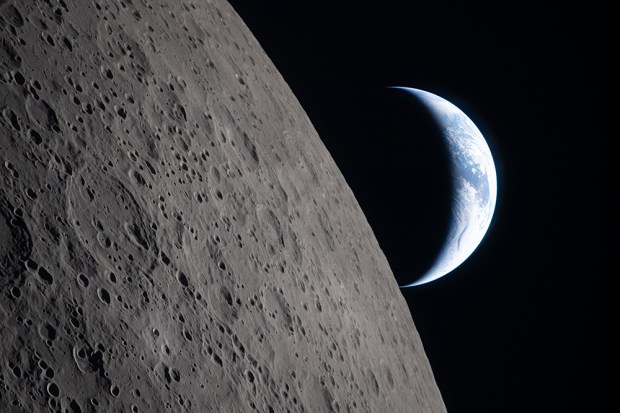
Douthat’s apt lens has understandably trained on the United States where, despite unparalleled progress, politics is addled by stalemate, institutions, and public life appear sclerotic, and new developments and exploratory leaps forward – the moon landing or blockbuster-type drug breakthroughs – consistently underdeliver.
In modern Australia, there’s similar evidence of exhaustion amid abundance.
Australians live longer than ever.
But we’re overweight and depressed.
Our economy grows.
But it’s not dynamic.
We’re not at war.
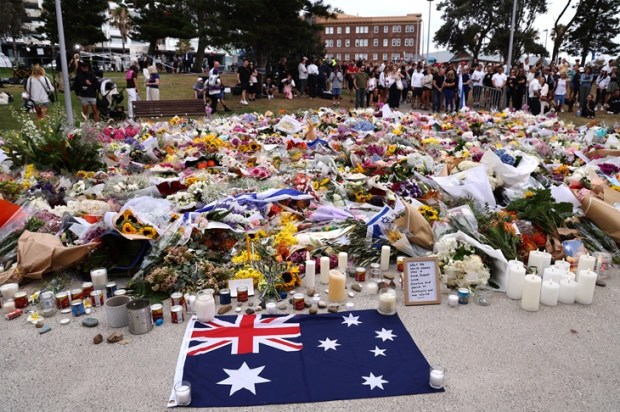
But self-starting radicals commit mass murder on our shores.
Certainly, we’ve never had it so good.
But Australia appears to be on the path of most Western democracies – a path not so much of decline, but stagnation.
Australia is deeply prosperous in terms of its economic fundamentals – the middle class enjoys material living standards unknown to previous generations, a booming welfare state looks after those most in need, and we’ve enjoyed unparalleled growth.
A ‘decadent economy is not an impoverished one,’ observes Douthat.
Yet Australia’s well-regarded fundamentals don’t map neatly onto current circumstances.
Australian entrepreneurship, at least measured by business formation, is dying.
‘While a record number of new businesses are being registered,’ notes one financial publication, ‘a corresponding record number are closing or stalling, with 88 businesses closing for every 100 that opened in 2024.’
Concentrated Baby Boomer home ownership – purchased at a time when incomes were within reach of the average house price – has caved to generational property resentment, an amassing renter class in all states and territories, and housing regulations that appear incapable of meeting demand.
Measured in terms of innovative breakthroughs, Australia has followed a Western trend in that we invent less, where ‘research effort is rising substantially, while research productivity is declining’, to quote a 2017 American Economic Review paper.
CSIRO outcomes are certainly fascinating.
But they’re entirely niche.
As Thomas Barlow recently observed, ‘Adjusted for inflation, Australian business spending on research and development reached a peak in 2008-09 that has never since been matched – not even in 2023-24, 15 years later.’
Few Australians today appreciate that Victoria – spurred on by the gold rush – was the wealthiest place on Earth in the 1880s. Australia shrugged off incrementalism, with a history of necessity-driven and world-beating innovation, from the stump-jump plough to the combine harvester.
Such frontierism – displayed by the squatters and other pioneers of the early 19th Century – remains in Australia’s DNA, yet is being eclipsed by a consumption business model that, to borrow from Chris Kohler’s How They Get You, blurs value for money, separates everyday Australians from cash, and depends increasingly on ‘consumer laziness’.
Stepping into this environment are the next generation. And we’ve never had as many university graduates entering the job market, at a time when the value of a $50,000 degree is increasingly precarious, especially when outside the areas of banking, commerce, engineering, medicine and teaching.
In terms of politics, stagnationists generally cite ‘technocratic management’.
And for good reason.
Australia is now arguably the most over-governed nation on earth, measured as a percentage of public servants per head of population.
While this arrangement may be tolerable in exchange for big outcomes – projects completed on time and under-budget – it’s not clear where the value multiplier lies amid sprawling technocracy.
Snowy Hydro 2.0 was meant to cost $2 billion. It’s now $20 billion.
The NDIS was supposed to cost $14 billion annually. This year it was $48.5 billion, and it’ll likely go to $63 billion per year in 2028-29.
And, as is a common but fair lament, we have the most abundant of resources but pay dearly for our electricity.
Australian decadence is like other Western decadence in that we can marinate in stagnation without repercussion.
At least for some time.
Many stoics argue that our lives don’t change for the better in flashes of brilliance but in slow steady steps.
The same, unfortunately, applies to the decline of nations and societies.
W.H. Auden, for example, wasn’t surprised the Roman Empire collapsed but that it actually ‘managed to last for four centuries without creativity, warmth or hope.’
In looking ahead, the obvious question prosperous democracies should ask is: How, despite such inertia, do we re-create our daring, hopeful and fruitful openness?
Auden’s framework is a principled place to invert from.
Creativity, for example, requires dynamism. An Australian policy remedy is not just an ‘investment in the arts’ but means genuinely unleashing supply side economics, eliminating regulatory costs to project completions in infrastructure and housing, and genuinely cracking down on waste.
Societal warmth equals stronger families and communities.
And hope is built by delivering a framework for genuine progress, whether it be medical inventions or more genuinely affordable homes, before our eyes.
These solutions may be far from a silver bullet.
And, as Douthat notes, ‘Complaining about decadence is a luxury good.’
But there are few endeavours more decent than placing us on an upright path.
Sean Jacobs is the author of A Complicated Inheritance: PNG at 50 (Connor Court, 2016) and writes at www.seanjacobs.com.au