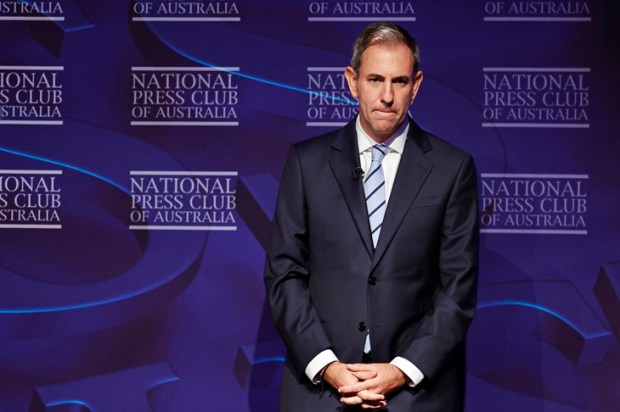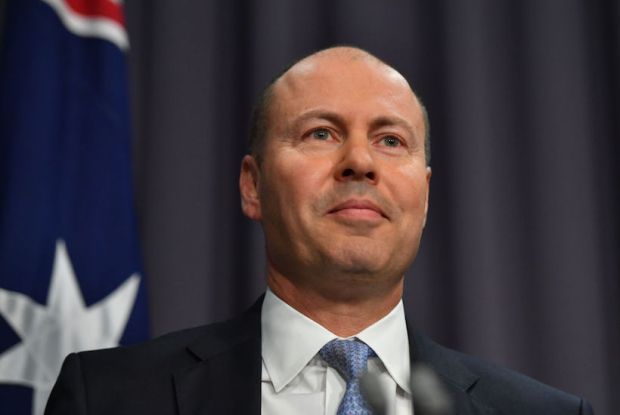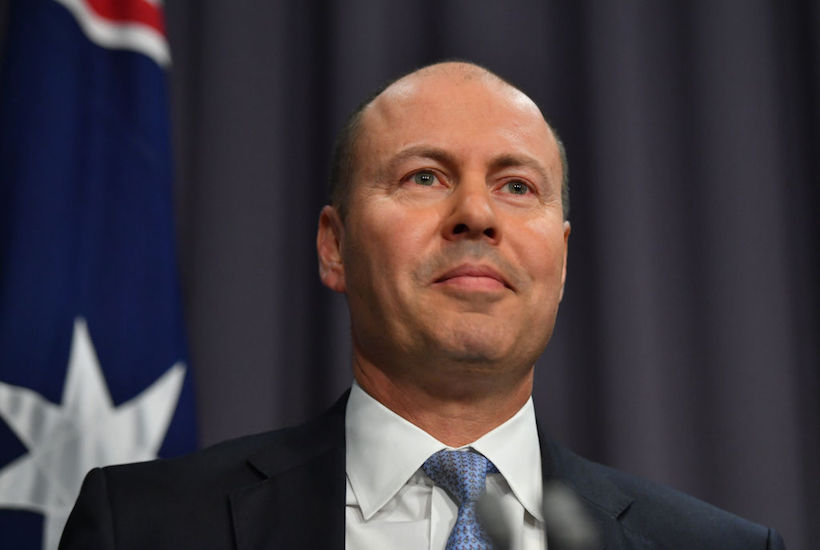
Am I alone among conservatives in thinking that the media hoopla surrounding Josh Frydenberg has become just a tad excessive?
First, a few words in his defence before I get stuck in.
I have known Josh for as long as I can remember. We are the same age, and he is friendly, hardworking and intellectually sharp. He was an outstanding tennis player in his youth and remains a devoted Carlton AFL supporter. That speaks well of his loyalty, if not necessarily his judgement: the Blues haven’t won a premiership in more than 30 years.
He is a warrior for Israel, an outstanding public speaker, and a former Treasurer with considerable ministerial experience. By all accounts, he was also a good boss who treated his staff with great respect – and that is worth emphasising.
Josh’s return to Parliament would undoubtedly be welcomed by many Liberals, not least those who have spent the past few years watching their party disintegrate with the horrified fascination of passengers aboard a sinking ship.
All true.
But is Josh really the man of the moment? Is he the great white hope of a party that is bleeding votes to Pauline Hanson’s One Nation?
At a time when Australians are increasingly disenchanted with political and media elites – a time, remember, when populist insurgencies are roiling centre-right movements across the West – is the answer really to wheel out one of the most recognisable figures of the Liberal establishment?
The wall-to-wall coverage has been extraordinary. There have been the admiring profiles and memoir extracts in The Australian and the wider News Corp stable; a prime-time interview with Tracy Grimshaw on Nine’s 60 Minutes; an extended appearance on News24 with Sharri Markson; Nine newspaper tributes; lovey-dovey segments on Seven’s Sunrise; and interviews on ABC Radio National Breakfast and 7.30, where Josh solemnly explained to a receptive Sarah Ferguson that the Liberal Party had lost its way.
For a politician who has been out of Parliament since 2022 and has yet to commit to returning, this is quite a media tour. No wonder some seasoned observers of Australian politics reckon Josh makes Kevin Rudd look positively restrained when it comes to relentless self-promotion. Having dealt with Rudd’s relentless self-promotion as opinion editor of The Australian in the 2000s, I can assure you that’s saying something!
Moreover, the familiar script is irresistible to the metropolitan commentariat. Here comes the great white hope, gallantly preparing to return from the political wilderness to restore the party’s true values.
But which values, exactly? Those of the metropolitan sophisticates who populate the party’s moderate wing, or those of the less fashionable Australians in the suburbs and regions who have been deserting the Liberals in droves?
This is where the Frydenberg phenomenon exposes a profound misunderstanding of the Liberal Party’s predicament.
Josh’s diagnosis is that the party has lost its way and must reclaim the political centre. He has also argued that it needs to win back metropolitan seats and appeal to a younger, more diverse electorate. These are not unreasonable ambitions. But there is a rather important question missing from the prescription: which voters, precisely, does he hope to win back?
The Liberals have two distinct problems. They have lost metropolitan seats to independents who appeal to left-liberal voters disenchanted with the major parties.
But they have also lost conservative voters who believe the Liberals have become too accommodating towards the prevailing orthodoxies on mass immigration, Net Zero, and cultural questions. Winning back the first group is not necessarily the same exercise as winning back the second.
For years, the Liberal Party’s moderate and progressive wing has treated its own instincts as synonymous with Liberal values. It has embraced Net Zero, presided over an extraordinary expansion of immigration and, in some quarters, supported the Voice to Parliament.
Malcolm Turnbull and Julie Bishop were among the prominent Liberals who supported the Voice in the 2023 referendum. In New South Wales, the then-Liberal opposition leader, Mark Speakman, also supported it just weeks out from the referendum.
This was an especially revealing moment. Much of the political, corporate, media and cultural establishment supported the proposal, often with an air of moral certainty that left little room for legitimate disagreement. (I know full well: at the time, I worked at the ABC!) Yet the referendum produced a decisive ‘No’ vote: nearly 61 per cent voted against the proposal nationally, with ‘No’ prevailing in every state.
For conservative Liberals, the spectacle of prominent figures from their own party campaigning for ‘Yes’ was particularly dispiriting. It reinforced the suspicion that the party’s metropolitan wing had become more comfortable with the priorities of the progressive establishment than with those of its own voters.
And where, during that debate, was Josh?
He was no longer in Parliament, having lost his posh Melbourne seat of Kooyong in 2022, but he remained a prominent former senior Liberal whose views attracted considerable attention. Unlike Peter Dutton, Jacinta Nampijinpa Price, and Barnaby Joyce, who publicly campaigned against the proposal, Josh did not emerge as a prominent voice for ‘No’. I have not found evidence that he publicly endorsed either side.
For someone now being presented as a potential restorer of Liberal values, what, precisely, does he believe those values should be? And how convincingly can he represent Australians who have grown impatient with a political establishment that often seems unable to understand their objections in the first place?
The same questions arise over immigration and energy. Australians have legitimate concerns about population growth, housing, infrastructure, and the cost of electricity. Yet Josh has not, to my knowledge, made a clear public case for substantially reducing immigration.
On energy, his record is more concrete. Remember that, as Energy Minister under Turnbull – who never reflected the thoughts and attitudes of the Liberal mainstream – he helped develop the National Energy Guarantee, which amounted to a rehashed combination of Labor’s unpopular carbon tax and emissions trading scheme, carrying little support among the Coalition faithful. The bitter internal struggle that followed exposed a deeper divide within the conservative movement over its identity and the voters it wished to represent.
Then there is Josh’s record as treasurer. Across five budgets, he presided over enormous deficits and a surge in public debt, justified at the time by the extraordinary circumstances of the Covid pandemic.
Yet emergency spending has a habit of becoming permanent, and governments and parties of virtually all persuasions have since struggled to champion fiscal discipline. The consequences, as I argued in The Australian last week, are felt in persistent inflation, pressure on interest rates, and the cost of living.
All this is in part Josh’s legacy. Why, then, would the party of Peter Costello seek to resurrect a bloke so closely associated with the abandonment of its traditional commitment to fiscal restraint?
You might say that Josh cannot be expected to disown every decision taken by a government in which he served. Perhaps.
But neither should he be exempt from scrutiny because the media have rediscovered his personal appeal. The Voice, immigration, and energy policy all illustrate why many conservative voters have become estranged from the Liberals.
Pauline Hanson did not invent these grievances. She has benefited from them. One Nation’s rise is not simply a protest against Labor or an expression of anger about immigration. It is also a revolt against a Liberal Party that many former supporters believe has abandoned them – and sometimes lectures them about their prejudices rather than addressing their concerns.
The question is not whether Josh has the talent or experience to return to politics. Clearly, he does. It is whether a figure so closely associated with the Liberal Party’s recent past can provide the answers to the problems that now threaten its future.
The Liberals do not need to become a carbon copy of One Nation. But they do need to understand why so many former supporters have concluded that the party no longer represents them.
That requires more than a change of leader, a new policy document, or a reassuring appearance on breakfast television. It requires a serious reckoning with the assumptions that have alienated traditional Liberal voters.
The danger is that, in celebrating Josh’s possible return, the party confuses the approval of the establishment with the confidence of the electorate.
The Liberal Party’s problem is not a shortage of talent. It is a shortage of trust.
And no amount of media hoopla can manufacture that.
Tom Switzer is presenter of the Switzerland YouTube program and a former editor of Spectator Australia. He writes at tomswitzer.substack.com