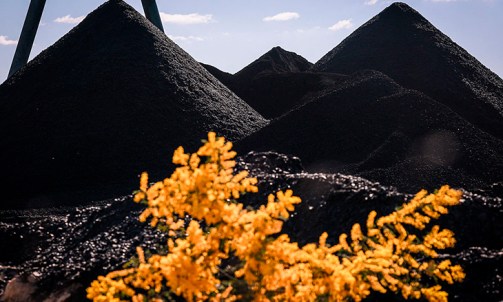
The High Court decision against Mach Energy’s Mt Pleasant coal mine, on the basis of its supposed climate impact, is just one among a number of Australian examples in which courts entertained the idea of using climate attribution studies as ‘scientific evidence’. Another recent attempt to use climate attribution to stop a project is the ongoing challenge against Woodside’s Browse Project, off the coast of Western Australia, by the Australian Conservation Foundation (ACF) and its legal representative, Environmental Justice Australia.
While the Mt Pleasant judgment was not swayed by attribution studies, it offers a taste of a new and dangerous phase of climate lawfare – one founded on a new and highly dubious practice that is commonly and misleadingly labelled as ‘science’.
Attribution studies pretend to link anthropogenic emissions or specific fossil fuel projects to specific environmental damage, extreme events, or environmental disasters. By doing so, they assist legal challenges to critical resource projects in a significant way. For example, the ACF presented the conclusion of a climate attribution study, which was initiated by its own lawyers, to forecast that Woodside’s Browse development could kill an additional 30 million corals during each future mass bleaching event in the Great Barrier Reef.
Elsewhere, attribution studies have also been used to calculate the number of extra deaths in heatwaves and the increased probability of extreme events.
Unlike any other field of scientific endeavour, climate attribution studies were started with the express intention for use in litigation.
In its common form, a climate attribution study starts with a natural disaster and links it to a local environmental dataset – perhaps temperature records over the course of a few decades. It then identifies a trend, over that short period, using models, often with circular logic, and then calculates how much worse that disaster would have been due to the fossil fuel emissions. The data are usually tortured, with the most egregious examples being attempts to extrapolate data to predict the frequency of extreme events.
Predicting a once-in-a-millennium event from datasets covering only a few decades is extremely difficult; so, speculative models are often similarly tortured to pretend to fill holes in the data. The aim is to make the supposed impact of warming trends as scary as possible.
World Weather Attribution, a prolific publisher of climate attribution studies, for example, claims that the gentle warming of the last century, made the Indian heatwaves of 2024 45 times more likely. Severe rainfall causing flooding in Nepal is supposedly more than twice more likely. And, for some reason, it fails to mention inconvenient facts like how deaths from cold weather are around ten times more common than deaths from hot weather – or that almost all crops grow faster in high carbon dioxide environments.
You will hear much more about climate attribution studies in the coming months as the ‘Super El Niño’ develops. A bushfire in Victoria, or a drought in India, will probably be instantly attributed to emissions from various resource projects. The fact that Indian droughts no longer cause major famines will be buried.
Englishmen Gibert Walker, working in India in the early 20th Century, first documented the Southern Oscillation and was motivated by the problem of famine in many El Niño years. Those famines no longer occur partly because fossil fuels have allowed food to be moved around from places benefiting from favourable seasons to places experiencing unfavourable seasons. The 19th Century British solved the transportation problem with steel ships driven by steam engines, which ran on fossil fuels.
The invention of nitrogenous fertiliser by German (and Jewish) chemist Fritz Haber also contributed to reducing deaths from hunger through considerably increasing crop yields over the last century. These fertilisers were also produced from fossil fuels.
So, after disparaging climate attribution studies, we are going to do a bit of attribution science ourselves. We largely attribute to fossil fuels the fact that there are roughly seven billion more people on earth today than when James Watt invented the coal-powered steam engine. As we are among those seven billion, perhaps we should have legal standing in the much-publicised federal court case of Woodside’s North West Shelf Project, which will be linked to the aforementioned Browse project and is currently also being challenged by the ACF.
In court, we should be able to argue that our children and grandchildren need fossil fuel energy more than ever. Perhaps everyone should consider applying to be amicus curiae, like the United Nations Special Rapporteur Astrid Puentes Riaño, who has been officially ‘helping’ the court in the Woodside case and contributing to efforts to destroy our future.
Dr Peter Ridd is an Adjunct Fellow at the Institute of Public Affairs
Dr Kevin You is a Senior Fellow at the Institute of Public Affairs