Britain’s economy has come out near top of the class in the latest report from the International Monetary Fund. Overnight from the IMF’s meeting in Bangkok, its World Economic Outlook was published, finding that Britain’s economy will grow faster this year than it had expected.
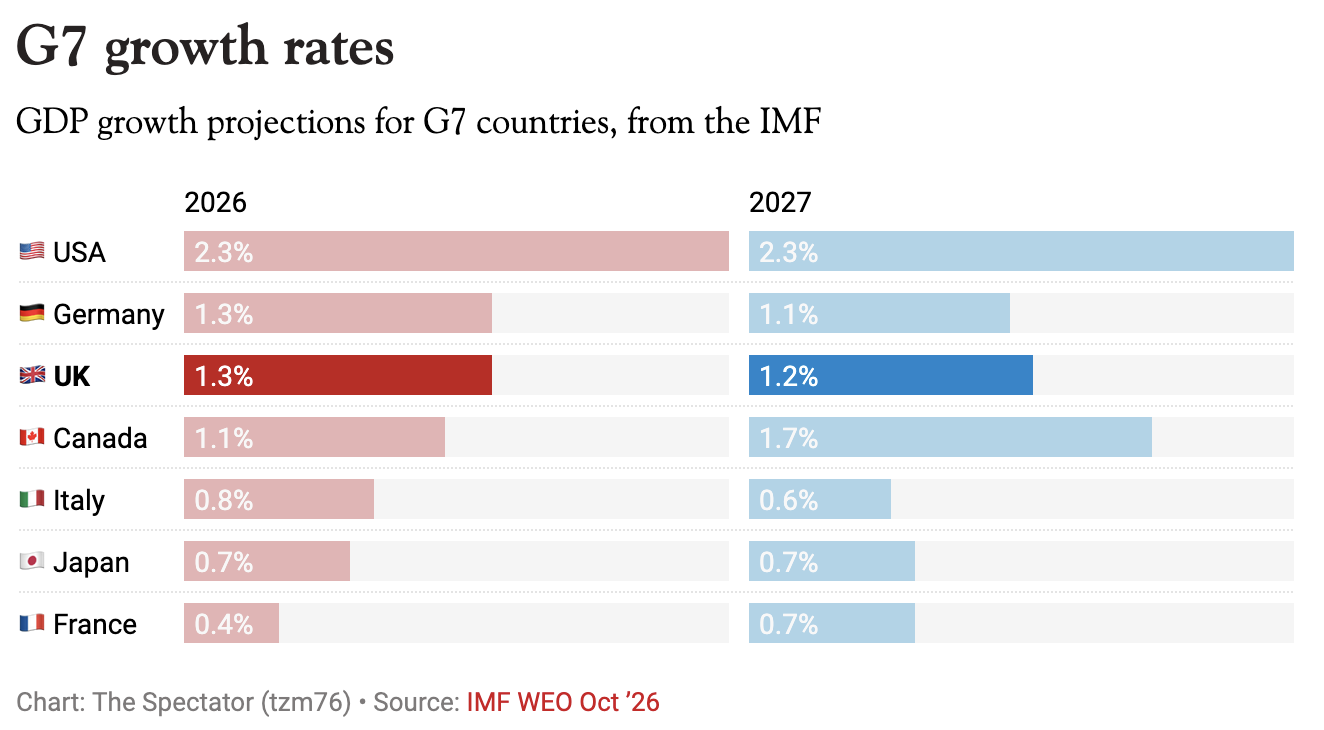
The new forecast put GDP growth this year at 1.3 per cent, up from the 1 per cent it had predicted in July. Next year it downgraded the pace of growth slightly from 1.3 per cent to 1.2 per cent. The new figures would make the UK the joint-second-fastest growing economy in the G7 after America.
The upgrade for this year was thanks to the UK and world economies faring better against the Hormuz oil shock and the latest problems caused by the Houthi branch of just stop oil. Spending on the hardware that powers AI helped keep the global economy afloat too.
Britain’s economy has come out near top of the class in the latest report from the International Monetary Fund
There was an economic pat on the back from the IMF, which said that Britain’s attempts to reduce our budget deficit and borrowing ‘stood out’. This was in contrast to the rest of the world, which needed to take ‘urgent’ action because their deficits are heading for their largest size since lockdowns. It was important, the fund said, that Britain ‘stay the course’.
Trouble for an otherwise ecstatic John Healey, though, is staying the course is likely to be very difficult. There are two reasons for this. First: over recent years British governments of all colours have found it harder and harder to resist the urge to bail their citizens out when the going gets tough. The pressure on the Chancellor and Andy Burnham from their own party, let alone the wider public, for unfunded bailouts to help ease the cost of living crisis is already immense and will only grow stronger if this winter proves to be a tough one. These bailouts are increasingly unsustainable, the fund said in a statement of the rather obvious. Last week Bank of England Governor Andrew Bailey issued a similar warning, thought to be referring to energy bailouts, which has irked No. 10. But Bailey and the IMF are both right.
These urges are going to prove even hard to resist. The IMF expects inflation to stay at 3.3 per cent this year before only falling to an average of 2.8 per cent next year. Higher interest rates and the Bank of England’s failure to control prices are problems that aren’t about to go away.
The second problem, though, is that the fund’s pat on the back is based on a myth: that Britain is about to seriously cut back on spending. While the IMF pointed out that the UK is one of the only economies on course to bring borrowing down (it forecast a reduction in annual borrowing of four percentage points of GDP between 2025 and 2031), this is based on a tax and spend envelope left by Rachel Reeves that surely no one believes. If Healey is to enact her plans, it would mean massive tax rises at the end of this parliament and spending cuts at the beginning of the new one.
So when Healey returns from Bangkok, he brings back an awkward reality. He’s been given good news because the IMF believes the plans on paper that his own party will surely reject when trouble hits. Those sums only add up if he is able to resist every instinct in his party and sticks to not just spending restraints but spending cuts in unprotected departments. For now he’s being congratulations for decisions he’s yet to take.<//>