One Nation’s Leader in New South Wales, Mike Newman, has challenged Labor to reveal the full cost of its Net Zero agenda before demanding that One Nation submit its own policies for costing.
Perhaps the following will help Labor gather its thoughts.
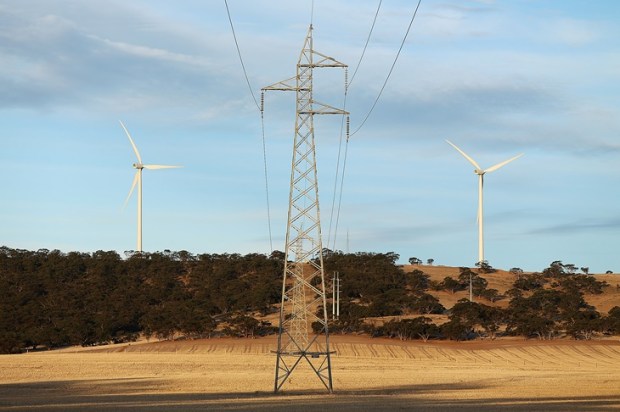
Based on current information, Australian governments’ annualised subsidy to renewables is $25 billion (equivalent to about 40 per cent of the Defence budget). This includes just under $7 billion in state government subsidies. It also includes Hydrogen Headstart, which is still seeking projects to support but which Energy Minister Bowen now says has been grossly overhyped. This is despite him declaring just three years ago:
‘Large-scale production of renewable hydrogen is critical to Australia reaching our potential as a renewable energy superpower, adding $50 billion to our GDP and creating over 16,000 jobs by 2050.’
The largest single subsidy item for renewable energy is the Capacity Investment Scheme (which does not support the generation that genuinely brings firm capacity: fossil fuels, or, of course, nuclear). Its costs are not divulged but can be estimated by examining the subsidy (which is revealed) entailed in the parallel UK scheme. The second largest item is Snowy2, again not publicly disclosed but estimated at about $42 billion, or an annualized cost of $2.8 billion. The annualized cost in subsidies and regulations of the dozens of different programs is some $25 billion. This includes some $7 billion a year in state schemes ($1.8 billion by NSW government programs).
This annualised cost does not include the subsidies (over $700 million per year) to aluminium and other energy-intensive operations, made uncompetitive by Net Zero policies; nor does it include the subsidies to EVs, which amount to about $1.4 billion annually. It also excludes the annual costs, first imposed by the Howard government 20 years ago, of meeting greenhouse gas emission targets by locking up land from development. Of Australia’s claimed total reduction in greenhouse gas emissions, 94 per cent have come from land-use restraints, which Barnaby Joyce claimed have cost landowners $100 billion.
With or without hydrogen, Australia has failed to achieve the energy superpower status that many politicians projected. In real terms, Australia’s electricity prices rose 50-80 per cent over the past 20 years. Countries with much less rigorous emission control policies saw only modest increases (the US), no increase (Vietnam), or lower prices (India). And far from becoming a magnet for industries seeking cheap power, the latest being AI, Australia has seen much of its manufacturing and refining capacity close down, with previously world-beating smelters now in government hospital care.
Renewable energy and batteries account for most of the subsidy spending, and this added to the private sector funding amounts to about $35 billion a year, up from $3 billion (in $2025) 20 years ago. Present spending is the equivalent of 8.3 per cent of private non-dwelling capital expenditure, compared with under one per cent in 2006.
Over the past 20 years, in $2025 terms, Australia has spent between $200 and 240 billion on renewable energy. Without subsidies, none of this would likely have happened. Misallocating what would otherwise be income-enhancing investment capital has contributed to lower investment levels in recent years, resulting in, at best, sluggish economic growth.
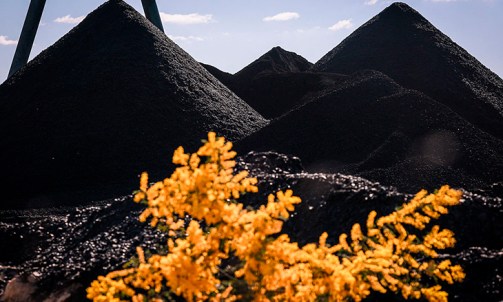
Had the money instead been spent on conventional, reliable power stations, it would have bought 40 2GW coal generators – actually twice the current national capacity – or 15 2GW nuclear generators. With coal, our lowest-in-the-world costs provides a comparative advantage. We have denied ourselves this bounty of nature, which could have truly delivered the energy superpower our politicians promised would come from the renewable energy ‘transition’.
Instead, we had the agitprop for wind and solar and other fantasies eagerly grasped by politicians, filled with ill-informed confidence, causing reliable low-cost energy to close down. And last week the High Court delivered a convoluted judgment on an extension of a MACH energy NSW coal mine that, at the very least, adds another dose of red tape to permitting processes for coal developments.
Per capita income is now declining and, as a nation, our living standards have slipped over the past decade from parity with the US average to levels 40 per cent lower.
Can we restore the prosperity we once had, and that seemed assured by our level of natural wealth? Yes, but it requires a sharp change in policy stance not only on energy but on other regulatory restraints and on government spending excesses that have co-signed our economic demise.