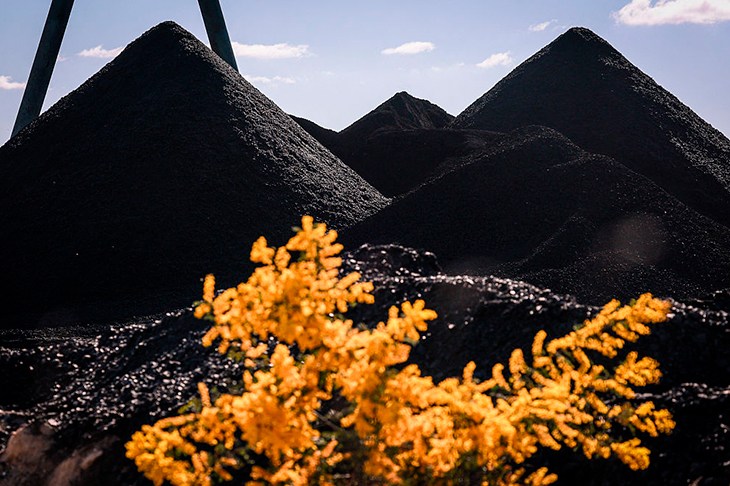
There’s now a coal boom in Asia that the ideology-driven, anti-coal Albanese Labor government doesn’t want to know about – let alone do anything to get a decent share of the action for Australia before the United States eats what should be our lunch. As the biggest coal exporter to these Asian consumers (who account for 83 per cent of global coal consumption) Australia should be enjoying the benefits of the positive revision of earlier warnings of decline as Asian demand pushes the International Energy Agency (IEA) world coal usage forecast for 2026 up to a record level of almost nine billion tonnes, a rise of 1.2 per cent. This is in the face of Europe quitting coal in an act of economic suicide on the altar of climate change. But Australian coal production, which should be rising to feed the boom, has, instead, been falling, hampered by hostile governmental policy, red and green tape, bureaucratic delays and environmental lawfare (generally funded by government handouts). From a peak of 505 million tonnes (mts) six years ago to last year’s 431 mts which is now officially forecast to drop a little lower this year before recovering 20 mts of its lost ground in 2027 – still well down on the peak.
Just how big is this Asian coal boom? China, whose coal demand is forecast to rise marginally this year to five billion tonnes and India, up 4.2 per cent to 1,355 mts, are the standouts, but the whole region is in on the act. The IEA’s mid-year 2026 review lists the strong performance of these two as the reason global coal production in 2025 remained so close to the all-time record (down only 0.7 per cent) by offsetting most of the continuing European-led environmental push against coal.
So China provides just over half the world’s total coal output, while also being the globe’s largest coal consumer, at almost one third of the world’s imports. ‘Both China and India see domestic coal production as central to their energy security strategies [resulting in] both countries sharply expanding their coal output to historically high levels,’ the IEA said, while also pointing to the United States as another positive producer, up three per cent following Trump’s policy changes (Dig ,Dig, Dig) favouring coal-fired generation – and coal exports, but no longer to China.
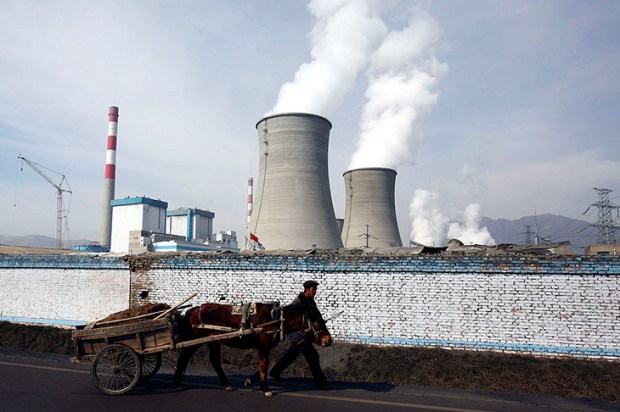
China’s heavy focus on beating the US on artificial intelligence, with the resulting huge demand for electricity, indicates a continuing surge in its power consumption, 54 per cent of which is supplied by coal; a policy of widespread construction of coal-fired power stations ensures coal’s continuing primacy in officially occupying an ‘underpinning and balancing role’ rather than just being replaced by the expansion of alternative sources – and the multi-billion-dollar committed pursuit of game-changing projects like nuclear fusion. Another boost in Chinese coal demand comes from its industry leadership in converting coal into natural gas liquids, petrochemical feedstocks and synthetic transportation fuels. It plans to triple its coal-to-gas industry to 28 billion cubic metres by 2030 and increase coal output by 25 per cent.
The IEA lists India, which generates 71 per cent of its energy from coal, as both the second-largest producer and consumer of coal in the world after China, mining 1.1 billion tonnes in 2025, with demand forecast to increase by 4.2 per cent to 1,353mts while its imports (15 per cent of global coal trade) account for only about a quarter of India’s coal consumption. India is looking to increase domestic coal production by nearly 10 per cent during 2026 to meet rapidly rising electricity demand.
Other major Asian coal consumers include significant buyers of Australian coal such as Japan, South Korea, Vietnam and Indonesia (which has also been the world’s largest exporter accounting for 30 per cent of the world’s total in 2025 until a recent governmental reservation policy change to ‘local use priority’).
There are major consequences for Australia’s struggling export-oriented aluminium and nickel industries as a result of Indonesia’s energy policy. By generating 61 per cent of its electricity from cheaply produced local coal, Indonesia has been able to power a massive surge in industrial smelting on top of the rapid rise in domestic consumption. Indonesia is expanding its highly energy-intensive bauxite to alumina to aluminium production, relying on its coal reserves, which it is now conserving under the new government policy, to power new smelters. The IEA reports that by the end of the decade, Indonesia wants to quadruple its alumina output to 32.5 mts and ramp up aluminium production from around one million tonnes in 2025 to 14.5 mts by 2030, with privately funded off-grid ‘captive’ coal plants supplying exclusive power. It will take more than multi-billion governmental handouts to make Australian aluminium competitive.
For Australian nickel, there is more bad news out of Indonesia as the 2020 to 2023 boom that lifted Indonesia’s share of world mined nickel output from 34 per cent to 52 per cent and refined output from 23 per cent to 37 per cent, has been pricked. A flood of Indonesian nickel had been the prime cause of a collapse in the price of the metal which is also used to make stainless steel. Under the heading ‘Indonesia’s new mining rules could spark a Chinese exodus’, Forbes magazine recently reported that ‘Indonesia’s nickel boom is fading but the Chinese technology which made it possible could soon start a similar surge of overproduction of the battery metal in Africa’.
But for Australian coal, Vietnam, already a customer, could be good news. The IEA describes Vietnam as a manufacturing powerhouse, driven by an electricity boom that has grown at more than seven per cent a year over the last decade, fuelled almost 50 per cent by coal.
If Australia isn’t ready or able to feed this Asian coal boom, the US is eager to do so. Coal is a major US export, even if a diminishing proportion of the domestic energy mix, with US coal exports having ranged around 110 mts (less than one-third of Australia’s coal exports), mainly into Australia’s Asian markets. India tops US coal’s export list with 25 mts.
China’s block on US coal temporarily knocked US Asian exports but sales to its other Asian customers are reportedly rising. In a recent submission to the Trump administration, the US National Coal Council noted, ‘Export prospects for both US thermal coal and metallurgical coal are vast and have improved considerably in recent years’. With the world’s largest coal reserves under-developed, supplying those prospects depends heavily on resolving infrastructure, policy (already much more favourable under Trump) and bureaucratic constraints.
At least NSW coal mines are having a crack at Asia’s coal boom, lifting exports in the 2025-26 financial year by 9 mts to 160 mts, an 80-per-cent improvement over the past two decades, with Taiwan up 4 mts to almost 20 mts and South Korea up 3 mts to 8 mts. And if the Albanese government doesn’t manage to block its necessary federal approvals, and environmental and land rights protesters don’t undertake their usual costly delaying lawfare campaign, the Hunter Valley Operation coal-mining extension that has been given the NSW state go-ahead (and the blessing of a supporting editorial by Spectator Australia’s editor-in-chief Rowan Dean in last week’s issue) could eventually be joining in the vital job of providing our Asian neighbours with the reliable and relatively cheap energy security that only coal can provide.
Got something to add? Join the discussion and comment below.
You might disagree with half of it, but you’ll enjoy reading all of it. Try your first month for free, then just $2 a week for the remainder of your first year.