Based on all available polling, it seems that if an election were held today, somewhere close to a quarter of Australians would give One Nation their first-preference vote – an unheard-of rise for any party, let alone one that until recently had never won a federal lower house seat.
Nearly a quarter of Australians didn’t just wake up one day and decide that One Nation was for them.
In interviewing 20 people, ten Liberal and ten Labor voters at the 2025 federal election who now intend to vote One Nation, it is clear that this is something that has been brewing for a while.
These aren’t the voters of the caricature of One Nation. Several of the former Labor voters I spoke to hold progressive views on some social issues. Several of the former Liberal voters are lifelong Liberal voters who never imagined voting for anyone else and reminisced on the Howard years with fondness. Yet both groups arrive at the same political destination from opposite directions, converging on a strikingly similar world view.
Across any characteristics within this group – be it past vote, gender, age, or metro versus regional – these voters describe, in near-identical language, immigration as driving the housing crisis, which is driving the cost-of-living crisis. It’s a chain of cause and effect they’ve worked out for themselves, and immigration now sits as a sort of load-bearing pillar in their view of what is going wrong in Australia.
With that said, it is also important to note that this is a group that is not anti-immigrant or even really anti-immigration on principle. Amongst both groups of voters, it was clear that despite some worry about the kinds of people coming into the country – particularly following the terrorist attack in Bondi in December 2025, immigration is felt predominantly as an economic issue and is heavily bound to the two other major concerns in the eyes of these voters: housing and cost of living.
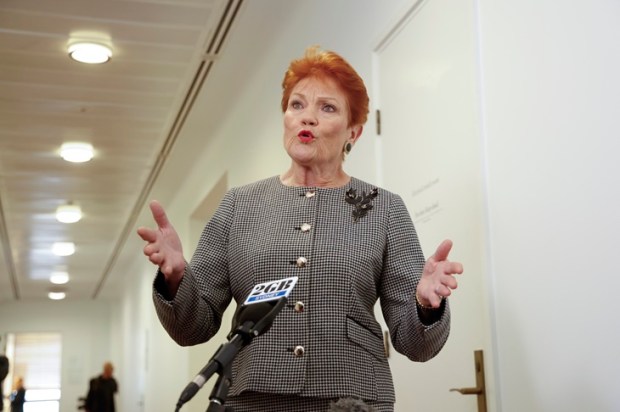
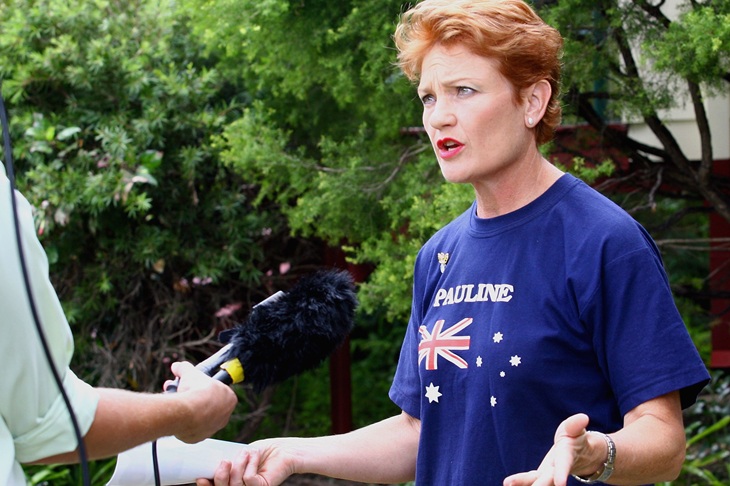
Pauline Hanson’s commitment to lowering immigration rates over a long period of time was seen as a strength and a sign, amongst the voters I spoke to, that she is genuine in a way that other political leaders are not. Her fish-and-chip-shop origin story, cited unprompted by mostly former Labor voters, reads to them as proof she has lived something like an ordinary Australian life. Her three-decade consistency on immigration, once treated as a liability, is increasingly read as vindication.
As one former Liberal voter in regional Queensland put it:
‘She’s always been big on immigration and now that we’re all complaining, there’s no housing available; she’s been right all along.’
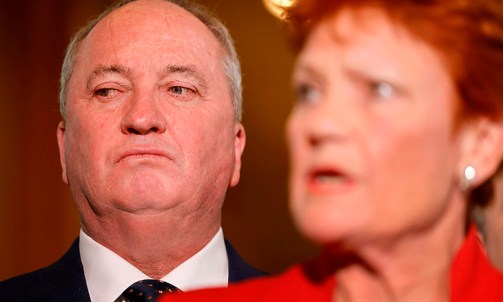
While One Nation and Pauline Hanson have clearly made ground with the Australian public on issues relating to immigration, some of the appeal of the party is still as a protest against the majors. Both former Liberal and Labor voters independently arrive at the same reservations: a policy platform they see as thin beyond immigration, real doubts about the party’s capacity to actually govern, and, particularly among former Labor voters, unease about the role Barnaby Joyce will play in the party.
Pauline Hanson’s relationship with Gina Rinehart split opinion: most former Liberals were unbothered by it, while opinion amongst former Labor voters was divided – some worried about the sort of influence Gina Rinehart would have on the party, while others reconciled it as both major parties having relationships with billionaires, seeing it as more about the playing field being evened than anything nefarious.
Similarly, former Labor voters were divided on the question of whether Pauline Hanson was for the worker – a question that prompted genuine reflection for many of them. Some were put off by some of her recent comments around wages and paid parental leave, but a larger group of these voters tended to reframe the question entirely and say that since Hanson was, in their eyes, the most ‘pro-Australia’ option, she was therefore pro-worker.
As it stands right now, you could not call many of the voters who are planning to abandon the major parties for One Nation ideological converts, but you could not completely consider it a protest movement either. No doubt they have common ground with Hanson on immigration and a genuine admiration for her story, even if they have some reservations about her as a political leader.
For now, the failures of the major parties outweigh the concerns they have about One Nation, and until the Liberal and Labor parties are able to give these voters a reason to come back, they won’t.
Sam Palmer is Director of Civic Vista, a public opinion research and public affairs consultancy.