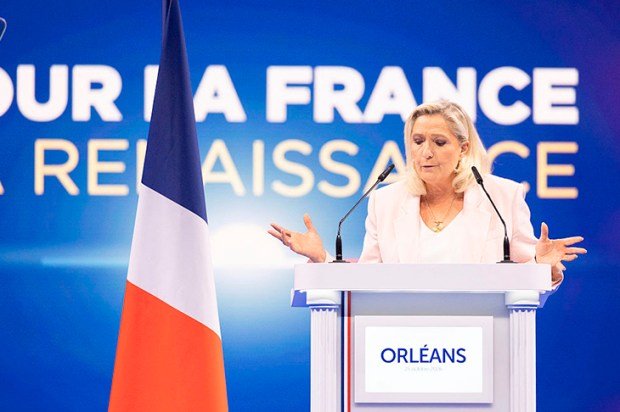
Jean-Luc Mélenchon, the leading figure of the far-left France Unbowed party, is polling well enough in his fourth presidential bid to make a run-off election against another four-time candidate, Marine Le Pen of the far-right National Rally who is the frontrunner to become the next head of state of indebted France.
The plan of Mélenchon if he wins the election in April to reduce France’s gross government debt from 118 per cent of GDP? To default. Mélenchon says he would take the bonds accumulated by the Banque de France during years of quantitative easing by the European Central Bank, and ‘throw them into the fire’. He claims this action would not be a default, an assertion rejected by central bankers, economists and, of consequence, bond investors.
Yields on Paris’s debt have surged to levels that are pushing the eurozone’s second-biggest economy towards a dangerous financial spiral – where rising repayments further burden a government with unsustainable debt dynamics – that could ignite another eurozone debt crisis.
France has crumbled to being the ‘new periphery’ due to the risk of a Mélenchon-detonated default, as shown by the jump in the price of credit-default swaps for France,and the widening in the premium of French over German government debt to its most since the eurozone crisis of 2009-12. The surge in French 10-year government bonds yields towards 5 per cent, the highest since 2002, means bond investors now place a higher premium on France than the Pigs (the acronym for Portugal, Ireland, and later Italy, Greece and Spain) when they threatened eurozone stability.
While the yields on similar indebted governments such as the UK and the US are higher, the jump in French yields poses an outsized danger for the world because it refocuses attention on the flawed nature of the euro. The eurozone’s weaknesses include that, while it is a banking and currency union, it lacks the fiscal (political) union that installs safeguards that dampen booms and busts across a currency union, and governments have no national currency to print to avoid default. Indebted eurozone members Belgium, Greece and Italy are seen as most vulnerable to contagion.
With France, investor angst is focussed on the political polarisation and paralysis that prevents Paris from reducing its fiscal deficit, which blew out to 5.4 per cent of GDP in fiscal 2026. The National Assembly has been especially dysfunctional since President Emmanuel Macron’s unexpected decision to call a snap election in 2024 backfired by delivering a hung parliament split between three ideological foes.
Investors worry France will host a run-off presidential election between two extremists who have little financial credibility and could worsen Paris’s finances, just as higher rates and greater uncertainty hound the country’s lacklustre economy.
Mélenchon is regarded as a firebrand and investors remember Le Pen’s radical past – she promised in her 2017 presidential campaign to yank France from the euro – and fear lingering euro-scepticism. While Le Pen pledges a referendum to authorise slashing Paris’s debt by about US$2 trillion to reduce the debt ratio to the eurozone’s supposed national limit of 60 per cent of GDP, she is still pushing policies that would increase spending, and such austerity would savage the French economy and enrage the public most hit by cuts.
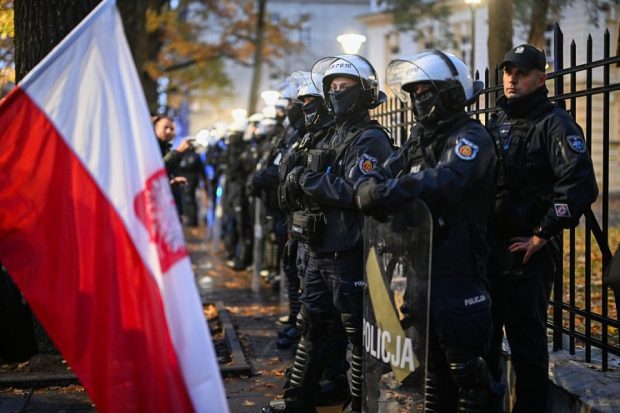
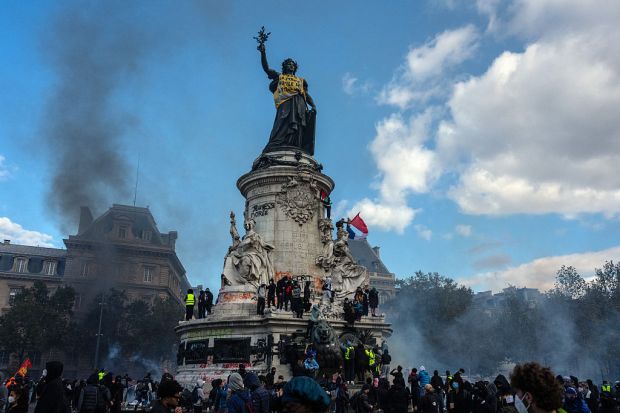
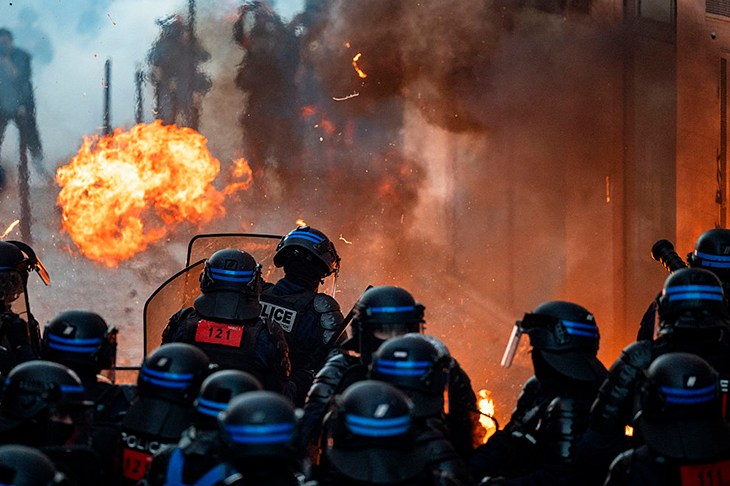
The countrywide protests by so-called ‘school pupils’ highlight the political opposition that can be marshalled in France against policies that would improve government finances damaged by lavish pension payments. The protests since mid-September that have merged with others over the cost of living are just the latest street rebellions of the protest-racked presidency of term-limited Macron that began in 2017. These protests, while a political boon for law-and-order Le Pen, prompted Macron to switch from pro-business reforms to spending splurges.
Macron’s seventh prime minister, Sébastien Lecornu, is trying to pass a budget but can’t because opposition parties are reluctant to be seen cooperating with Macron’s administration ahead of the presidential poll. Lecornu wants to reduce Paris’s deficit to 5 per cent of GDP in 2027 via spending cuts to cope with higher borrowing costs.
The failure to agree on a budget by year-end could force the government to rely on emergency legislation. The danger with resorting to Article 49.3 to bypass votes in the upper and lower houses is that it risks more of the no-confidence motions that sank Lecornu’s predecessor – Lecornu survived two early this year when he skirted parliament to pass a budget.
Investors expect France’s political uncertainty and financial position to worsen ahead of the presidential poll that usually takes two rounds. Talk the ECB might need to act to prevent contagion spreading across the eurozone is heightened enough for officials to deny that possibility. The ECB, most likely via its Tranmission Protection Instrument of 2022, could buy a country’s bonds to prevent the woes of that eurozone member metastasising across the eurozone. But France fails to meet the requirement that would allow the ECB to act, namely that a government is pursuing ‘sound and sustainable fiscal and macroeconomic policies’.
The euro’s flawed structure and the absence of national monetary policies and currencies mean structural adjustments must be through fiscal policy – essentially leaders must induce a recession that risks backfiring on debt ratios anyway.
Even if France enacted reforms, the ECB would be reluctant to buy its bonds because it’s effectively money printing that would fan eurozone inflation that is already over target at a three-year high of 3.8 per cent.
The ECB, however, has often bent requirements to calm a crisis and would no doubt consider France too big to let fail (though some say it’s too big to save). But creditor neighbours would oppose saving an unreformed France, as might the Pigs that suffered austerity to gain their bail-outs. Berlin’s opposition to rescues is hardening as the eurosceptic Alternative for Germany party grows in power and support.
Such disputes among euro users increase the chance that France’s woes will inflame a fresh eurozone debt crisis. A troubled country that is so big means any upheaval could be the watershed event that shatters the eurozone and triggers another global financial crisis.
For sure, concerns about contagion might be exaggerated. The crisis might convince the French public to accept austerity. Eurozone authorities are skilled at defusing crises and Berlin would surely sanction a French rescue to protect Germany’s public. But there are no guarantees of these scenarios.
A fiscal reckoning has arrived for France that risks spreading. Living standards are likely headed for the fire.
Got something to add? Join the discussion and comment below.
You might disagree with half of it, but you’ll enjoy reading all of it. Try your first month for free, then just $2 a week for the remainder of your first year.