Recently, I participated in the Robert Menzies Institute’s 2026 Policy Dialogue in my dual capacity as its General Manager and editor of the 2026 essay collection Immigration & Multiculturalism: The Past, The Present and the Future.
The Dialogue had 40 policymakers, intellectuals, and academics discuss the issue ‘Conditions for a Successful Immigration Policy’ and yet, the term ‘citizenship’ came up only a handful of times. Instead, much of the discussion focused on who enters Australia, in what numbers, and whether they become economically productive or culturally cohesive.
It is understandable given the recent pressures that uncontrolled migration has put our services under, and the shocking growth of antisemitism in Australia.
Yet, our democracy requires that we build a nation of citizens – not merely economically productive residents who largely get along.
As a first-generation migrant Australian, I want to share why we must demand that migrants participate fully in our democratic process, and in return, what must we offer them to facilitate that.
Much is made of the difficulties, discrimination, and unpleasantness that migrants face when they move to a new country.
Decades of investment in research, policy, education, activism, cultural festivals, department building, and personnel training have resulted in our society building a strong and emotive lexicon to describe the experiences of migrant communities in Australia and demand change.
In comparison, the study into what a migrant must do to become a contributing ‘citizen’ of Australia is studied considerably less so.
If it is studied at all, it is in economic terms – how quickly can we convert a migrant into a net contributor to the Australian economy – but seldom in terms of the values and habits of mind that citizenship in our particular liberal democracy demands.
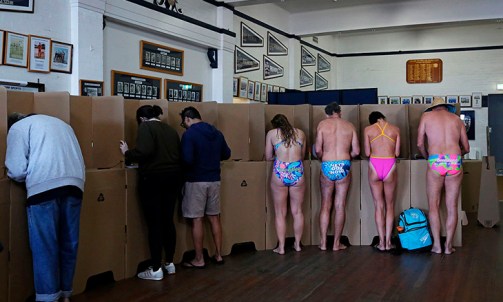
(In fact, so little is this aspect studied that it goes entirely unremarked that we allow migrants to enjoy the fruits of Australia’s freedoms and prosperity permanently, if they so choose to, without ever taking on the core responsibility of citizenship – namely, participating in the messy process of elections on which our freedom and prosperity fundamentally depend.)
As with everything, history helps us explain this anomaly.
Our current migration policy and programs emerged in the postwar era, when global connectivity through travel and instant telecommunications was comparatively scarce.
Until the advent of the internet, laws of physics ensured that migrating to Australia – a far-flung island on the bottom end of the planet – meant losing touch with the day-to-day minutiae of one’s home country’s political and cultural upheavals.
As traumatic as that might have been – and I don’t underestimate the sense of unfamiliarity and isolation that must have assailed migrants – it forced their attention to their immediate physical and social environment, and attention is the currency of citizenship.
The hyperconnectivity of the internet, and more significantly, the arrival of smart phones and social media have upturned these assumptions. Because now migrants can physically live in one place but remain seamlessly embedded in their social, cultural, and political lives of their home countries through their phones.
As an Indian migrant, I have encountered many fellow migrants who seem to know the results of every provincial election in India in real time but would not be able to name all the states and territories in Australia.
Moreover, globalisation encouraged us to live across countries – collecting passports, properties, and residencies as trophies rather than set down roots.
Unfortunately, the success of a democracy (as against other forms of government) requires that we pay attention to our local communities, neighbourhoods, cities, and states – if we don’t do that our local environment degrades, as we are witnessing with our own.
We must confront this problem by now investing in research, policy, education, cultural festivals, department building, and personnel training on what citizenship in Australia means, how our liberal democracy depends on the people self-governing, and what obligations come with such self-government – and by not flinching in addressing the conversation directly to migrants.
What once happened through osmosis must be made explicit.
(In fact, all Australians could benefit from such a conversation in a world where powerful social media are constantly drawing our attention away from what is playing out in our own backyard that we can actually control.)
However, lest we become too demanding of migrants, it would be worth asking ourselves why do migrants psychologically and attentively cling to their home country?
It is because human beings crave continuity, familiarity, and memory.
It may be all very good to ask migrants to give up the familiar and comfortable, but are we doing enough to connect them into the national memory of Australia? Because it is only when they plug into the national memory of this country that they will start decoupling from their countries of birth.
Most adult migrants plug into the national memory of their adopted country by looking around and absorbing the national symbols and traditions – the flag, the anthem, important national days, public statues and memorials, museums – they all hold clues as to what happened on this land before their arrival.
Yet, in recent times, it has become fashionable not just to question national symbols and traditions, but to actively scoff at them or vandalise them.
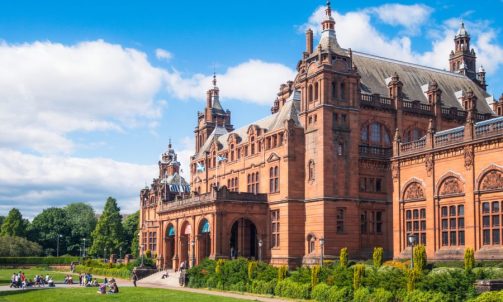
While low-grade activists quite literally hack off colonial public statues and memorials (something that has happened multiple times in Melbourne in the last few years), a more sophisticated vandalism is taking place in our national museums, which are steadily purging themselves of pre-federation heroes and stories lest they come across as celebrating colonisation, or because it is no longer fashionable to chronologically tell our national story.
The result is the same – new migrants lose avenues to connect with how the liberal democracy they have migrated to came about – the names, faces, events, and symbols that created the Australia they want to join.
Celebrating our Indigenous past is important and worthwhile but we must acknowledge the truth that most migrants do not come to Australia to pursue the Indigenous way of life.
I’ll end with a quote by Robert Menzies that has become the Institute’s talisman as it steadily encourages engagement with Australian national history:
‘It’s only when we realise that we are part of a great procession, that we’re not just here today and gone tomorrow, that we draw strength from the past and we may transmit some strength to the future.’
Migrants can’t strengthen Australia’s future if they are unable to understand and appreciate its past. So, let’s be gentle with our history, so we can pass it on to future citizens – whether they come from elsewhere like me or are born here.
Chetna Mahadik is General Manager at the Robert Menzies Institute located at the University of Melbourne, and contributor to a new Policy Paper, “Conditions for a Successful Immigration Policy”.