As I left for my truck run in Central NSW this morning, the Flanders poppies stood at attention along the tessellated path leading out of our Federation cottage. My Australian flag and personal banner (which reads the Artillery motto – Quo fas et gloria ducunt and ubique – along with the emblems of 105th and 101st Field Battery) waved in the damp air. A storm was approaching.
My mission was to finish delivering the daily bread and be back in Gunning in time for the Remembrance Day ceremony. This year, as the Gunning RSL rep, I couldn’t guarantee I’d be back in time, so others picked up my duties. All it takes is for a semi to beat me to a dock and the day runs late.
Towards Temora, the storm lights flickered. Sheet and fork lightning from electric howitzers on the western horizon. The wipers turned two kamikaze moths into sights on my windscreen. I lined up the oncoming low beams at the other end of the gun barrel highway.
Eight hours and 108 years earlier my great-grandfather waited for the silence on the Western Front. A few months before, he’d fixed bayonets and along with the rest of D Company of the 33rd Battalion AIF supported a British cavalry charge. Contrary to popular mythology, cavalry and lancers continued to contribute to their oeuvre in the late stages of the Great War.
He’d been wounded during the Messines Offensive in 1917. He fought in the First and Second Battles of Villers-Bretonneux. During April 1918, the Battalion suffered heavily from gas shelling. My great-grandfather was invalided to Oxford Hospital.
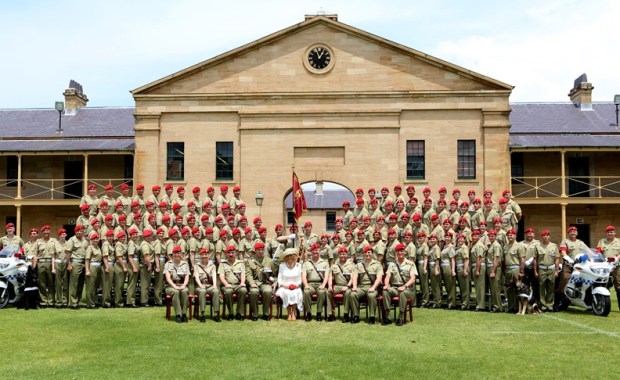
He signed up to wear our country’s uniform at Victoria Barracks in Sydney. So did my other great-grandfathers and grandfathers. They served in the 2/1st Medium Regiment (2AIF), 2/2nd Machine Gun Battalion (2AIF), 67th Australian Infantry Battalion (BCOF). My son and I both wore our country’s uniform. The Australian Army is part of my family’s DNA.
As I bounced about with a front row seat to the rain front in central NSW this morning, I reflected on my great-grandfather, Victoria Barracks in Sydney, and the state of Australia under the Albanese government. The decolonising objective of Labor and their Woke mates made my blood boil. I thought back to my great-grandfather and the bayonet charge and what he would have thought about our country today.
His commanding officer had written in the 33rd Battalion’s war diary in April 1918:
‘Again the cavalry saved the situation. In the morning they took up the front vacated by the Rifle Brigade and in the second attack restored our right flank. Seeing them gallop into action with swords and lances drawn, and moving quickly to where help was most needed enthused our men tremendously. It is an honour to fight alongside such gallant troops. Their dash, their gallantry and their discipline are of the highest order. They are true British soldiers.’
True British soldiers. My great-grandfather was an Anglican with a Salvation Army sergeant-major for a father. Like the Australian Army, the Salvation Army runs deep in my family. (I served as a local officer, Red Shield Appeal coordinator, deputy bandmaster, and songster leader after my time in the regular army.)
There was nothing to decolonise. He was Australian through and through and British to his bootstraps. Even my Kamilaroi great-grandmother was Australian. Like my grandfathers committed to the Australian Army, her grandmothers were committed to ensuring she was an Australian. Who needs identity politics when you know your true identity?
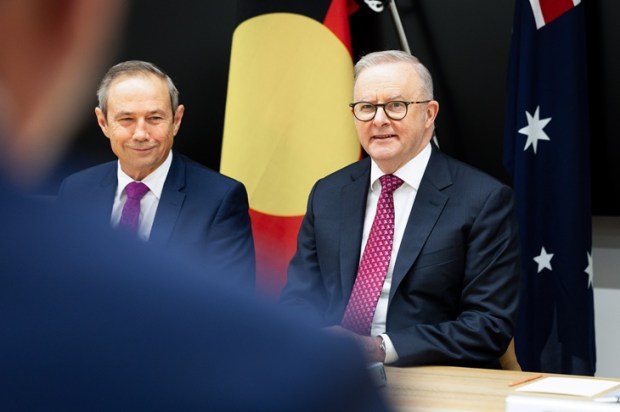
I shook my head at the thought of Defence Minister Richard Marles deciding not to sell Victoria Barracks while at the same time evicting the Australian Army. I can only imagine what my hard-as-nails grandfathers would have done.
I pushed on with my mission. Deliver the daily bread, safely, and make it back in time for the Remembrance Day service in Gunning. I almost had a dream run.
Some Canberran in an EV was ‘driving to the conditions’. Translation: ‘I can’t drive so I create a traffic hazard for everybody else while pretending I am a safe driver.’ Then a cockie in a huge Chrysler ute: ‘I’m a cockie and I do 80. In the 110 zone and the 40 zone, I do 80. I’m a boss cockie and I do what I like.’
Then a B-Double. Up the hill in the overtaking lane. I only get past him because he is quicker at slowing down up the hill than I am. Through the servo, into the depot, the truck sorted and I have 26 minutes to get to the service in Gunning. I am 24 minutes away.
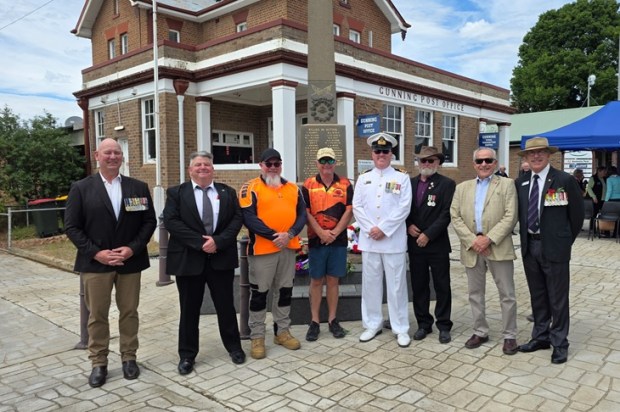
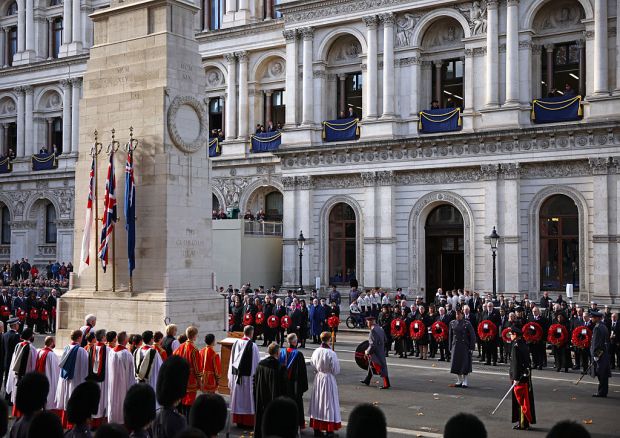
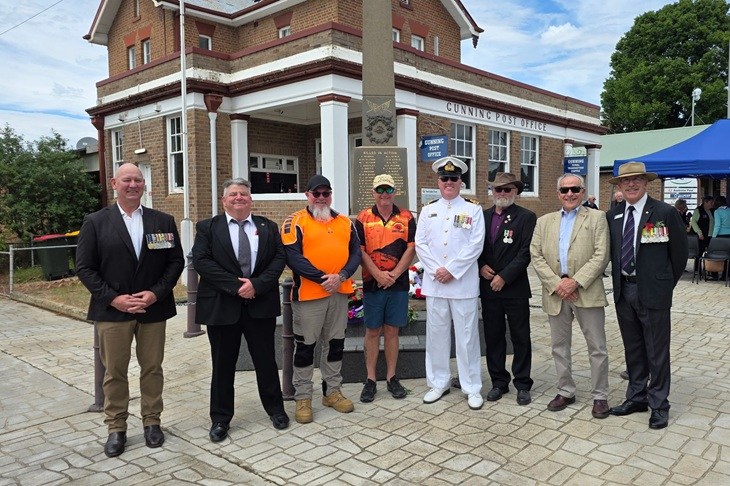
I rock up to Gunning in my high-vis gear. My mate in his Navy whites laughs at my lack of camouflage. Then he double-takes when he realises he is in his whites. One of our old mates has gout, the other a sore back. Our padre is there, the local councillors are there, council workers pause for two minutes’ silence, as do the primary school children and the scouts. They all lay wreaths.
Our local police officer has been called out, and I ask his son to lay the wreath on his behalf. He does well. A veteran mate’s son, an army cadet, acts as flag orderly.
Everything else was taken care of because I couldn’t guarantee I’d be back in time. I love this community. I cross myself during our padre’s prayers, just as I do before each truck run. I think about the Flanders poppies that now grow wild in our garden. I reflect on my grandfathers and their service. I feel an immense sense of pride, humility, and duty.
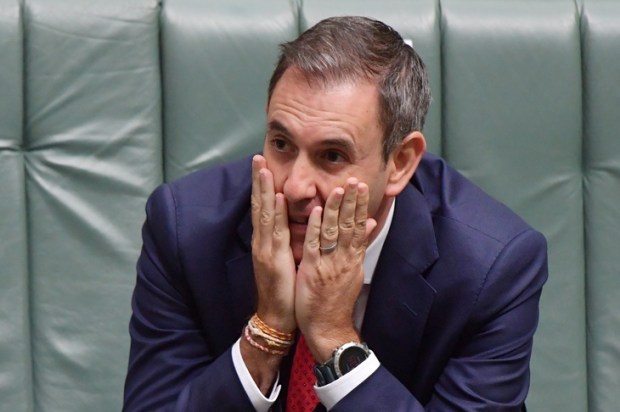
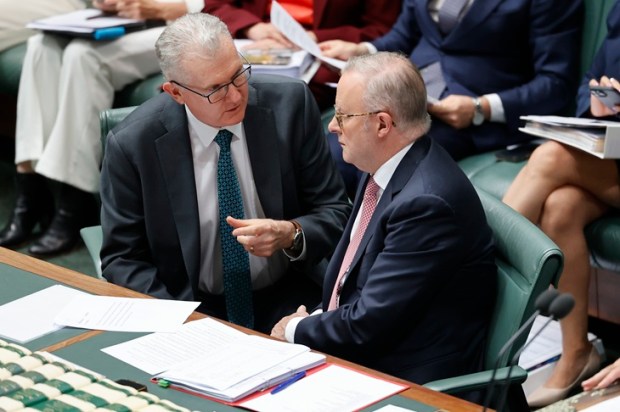
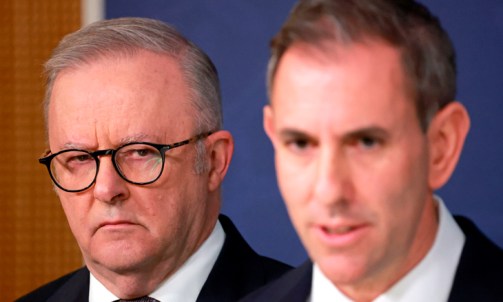
Then I think of life under this Labor government. A Prime Minister who has never done a hard day’s work in his life. Never worn our country’s uniform. Chucking a tantrum when things don’t go his way.
My mates agree that the Anzacs wouldn’t mind me being in high-vis. They were working men after all. The new postmistress and the retiring postmistress observe the proceedings from the verandah behind the lectern. We pack up and everybody disperses, going about their business.
This is the real Australia. These are the people who deserve to have spiritual homes for their ancestors who served this fine nation. These people are not leftie hacks who hate this country. They hate what this government is doing to them.
For me, it’s personal. Australian politicians are not our leaders. They are our representatives. But they refuse to represent us.
Labor would do well not to forget this Remembrance Day. In my opinion, it marks the beginning of the end for Albanese. He hasn’t just upset his political opponents. Now he has upset ordinary Australians at a spiritual level.
It’s been a long night. I can still smell the sourness of the grain terminals and meat works of Central NSW. It reminds me of driving my XB GS Fairmont past the sugar mills in Far North Queensland as a kid. We called it ‘the donk’ because it was all 351 Cleveland with the body rusting around it. It reminds me of why I love the road.
The sickly-sweet and sour smells of Australian agriculture send me back to the nights before Anzac Day. Brasso, black paint, starch, and boot polish. All against a backdrop of tobacco and Bundy Rum.
Resting on arms reversed, the flash suppressor of my SLR undoing the night’s spit polish in an instant. Silkwood, Babinda, and Innisfail. The communities turning out to honour those who served. Respectful.
The truck bounces as I wonder if I’ll make it in time. The new road’s bumps are just like the old one as if someone instructed the road crew to ‘make the road exactly the same as the old one, only darker’.
An ex-Navy mate laughs and tells me a story about a machinist who does that to a part, complete with the old part’s wear grooves.
It’s the ultimate in bureaucracy.
Lest we forget.
Dr Michael de Percy @FlaneurPolitiq is the Spectator Australia’s Canberra Press Gallery Correspondent. If you’d like to support his writing, please shout him a drink over at Donorbox.