When the Federal Budget was released last month, some prominent entrepreneurs and founders came out to lament the impact it would have on the Australian start-up scene. They warned that, because of these changes, investment will go overseas and entrepreneurs will look for opportunities to build their businesses outside of Australia.
To that one might ask, ‘Have you only just noticed?’
The truth is, Australia’s have-a-go spirit has been challenged for some time now, and there is a question as to if we are still a nation of risk takers and entrepreneurs.
This Budget is seriously flawed, and we should be honest about the reality of the situation: our economy has been distorted over decades to lock out aspiration and lock in dependence on big government.
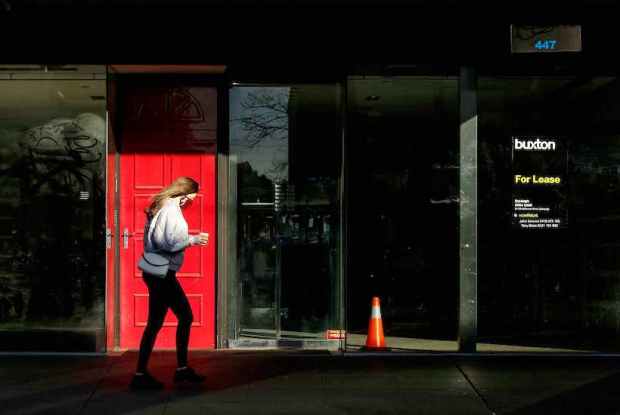
The Institute of Public Affairs has been tracking this issue for some time. Between June 2022 and June 2025, for example, there was a net loss of nearly 33,500 small employing businesses in Australia. There were three consecutive years of net closures of small businesses, an unprecedented occurrence in the available historical data.
This was the result of higher costs and regulation imposed on small businesses.
Every year, more red tape burdens are added to businesses without any consideration given to how these burdens will impact our economy. In the last four years the issue has come to a head, with a wave of insolvencies as thousands of small businesses go under, unable to cope with the rising costs of our sclerotic regulatory environment.
Political failure over generations has led us here. In 2020 the IPA highlighted that there were some 400,000 fewer businesses than there ought to have been, given the rising burdens of red tape and regulation over the preceding 15 years. Between 2004-05 and 2018-19, the volume of regulation increased by around 80 per cent.
Looking over a much broader time horizon, we can see profound shifts in our economy. In 1960, the share of national income accruing to family businesses and the self-employed was some 26 per cent. Today, it is around 7 per cent.
Both the number of small businesses and the share of self-employed Australians is in decline. They are being displaced by an ever-growing state. The ratio of public sector employees to private sector employees, for example, has increased from 14.2 per 100 in 2014 to around 22 per 100 today.
But direct employment in the public sector is only part of the problem. The Australian economy is increasingly shifting towards the non-market sector, industries such as healthcare and social assistance and education and training (in addition to the public sector itself), which are nominally counted within the private sector but which are funded almost entirely by taxpayers. Between 1984 and 2024, the number of non-market sector employees increased from 1.4 million to 4.5 million.
These economic shifts beget cultural shifts. As the government and broader public sector grows, it imposes ever-greater costs onto an ever-shrinking private economy.
But the cultural costs are just as, if not even more, profound.
The result is a society that no is at risk of losing the values self-reliance and independence, values which are replaced with an expectation that someone else will foot the bill. A new class of people who effectively ‘vote for a living’ are incentivised to encourage larger and more interventionist governments who will maintain or enhance their job security, or create new ‘opportunities’ for them in industries and areas where government did not previously act.
Ultimately, the economic realities of our situation will expose themselves; socialist systems have been completely discredited everywhere and every time they have been tried. But it might take a long time for this kind of economy to come unstuck, with plenty of needless suffering along the way.
The more profound battle, perhaps, is to undermine the ideology and values underpinning this economic and cultural shift. While socialism has been economically defeated, it has never been culturally defeated.
We can hope that by trashing the few founders and entrepreneurs we have left in Australia, the Budget has steeled these individuals of true agency for the kind of cultural fight needed.
Cian Hussey is a Research Fellow at the Institute of Public Affairs and writes No Permanent Solutions on Substack.