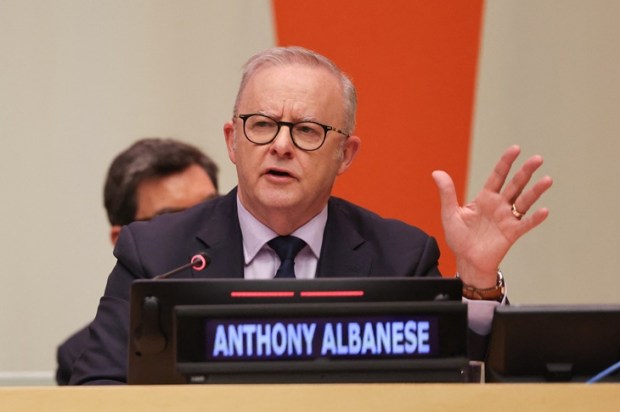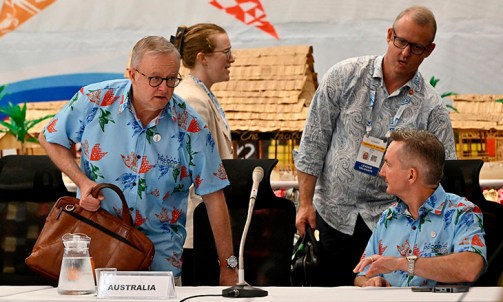
Australia has already acknowledged the undeniable truth about the Islamic regime occupying Iran. In November last year, the Albanese government formally listed the Islamic Revolutionary Guard Corps (IRGC) as a state sponsor of terrorism. It did so after Australian intelligence concluded that Iran had orchestrated at least two antisemitic attacks on Australian soil. These attacks were designed to instil fear, divide Australian society, and challenge Australian sovereignty.
Britain has now moved in the same direction by banning support for the IRGC under new national-security powers similar to terrorist proscription. British authorities concluded the IRGC has used criminal proxies to conduct intimidation, surveillance, and sabotage on British soil.
These decisions cannot be treated as merely symbolic additions to sanctions lists. They require a fundamental reconsideration of how democratic governments interact with Iran. The IRGC is not an isolated terrorist organisation operating at the margins of the Iranian state. It is the Islamic Regime’s military spine, its intelligence apparatus, its instrument of domestic repression, its foreign expeditionary force, and a sprawling economic empire. After US-Israeli strikes eliminated Ali Khamenei and multiple layers of Iran’s political and military leadership, the IRGC’s significance was not diminished. Instead, it became the centre of gravity.
Reuters subsequently reported that the IRGC and security chiefs had seized wartime power, driving Iran’s military and strategic decisions while the new Supreme Leader’s role was largely reduced to assent. Mojtaba Khamenei remains dependent upon the IRGC for both authority and survival.
Iran is therefore no longer simply a theocracy with a powerful military organisation. It is increasingly an IRGC-controlled regime with a clerical facade. That creates an obvious contradiction for Canberra. Australia cannot designate the force controlling Iran as a sponsor of terrorism while continuing to behave as though conventional diplomatic engagement with Tehran represents a sufficient Iran policy. It cannot treat the regime as a normal commercial or political counterpart when the machinery behind that regime has sponsored violence within Australia’s borders.
Geography will not protect Australia from an IRGC-controlled Iran. The organisation operates through cyber networks, organised crime, front companies, and ideological proxies. Its model is designed precisely to project violence without requiring Iranian uniforms on Australian streets. Nor can Australia insulate itself from the economic consequences. The IRGC’s threats against commercial shipping and energy routes through the Strait of Hormuz have already demonstrated its ability to disrupt global trade, drive up energy prices, and endanger the citizens and interests of countries thousands of kilometres away.
A democratic Iran is therefore not merely an Iranian aspiration or a human-rights cause. It is an Australian strategic interest. A free Iran would remove the principal state sponsor of terrorism in the Middle East. It would weaken the transnational networks used to threaten Australians. It would reduce the risk to international shipping and energy markets. It could become a responsible trading nation rather than a rogue state permanently at war with its people, its neighbours, and the West.
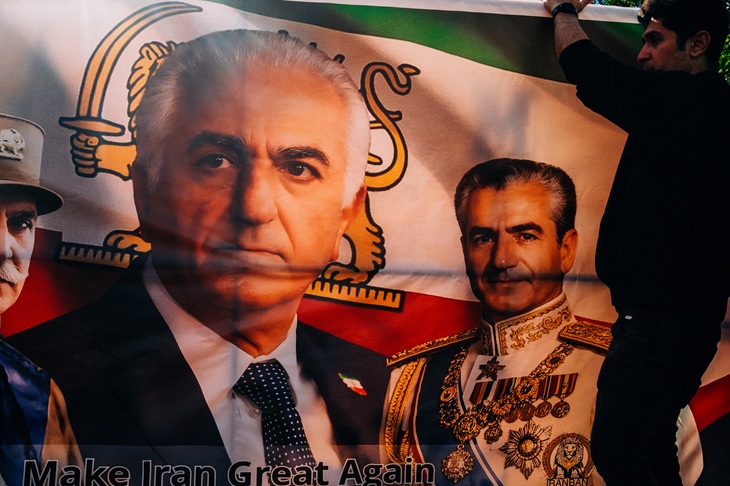
Australia should want to be a stakeholder in that outcome. That requires engaging seriously with Crown Prince Reza Pahlavi. For too long, Western governments have approached Iran’s opposition through a demand for impossible perfection. They ask whether any individual has universal support, as though democratic leaders in Australia, Britain or America enjoy unanimous approval. They point to divisions within the Iranian opposition while ignoring the overwhelming coercive power the regime has used to prevent political organisation inside Iran.
No honest observer can claim that every Iranian supports Pahlavi. That is not the relevant test. The relevant question is whether any other opposition figure possesses a comparable combination of recognition inside Iran, international standing, diaspora mobilisation, organisational infrastructure, and a developed plan for transition. At present, none does.
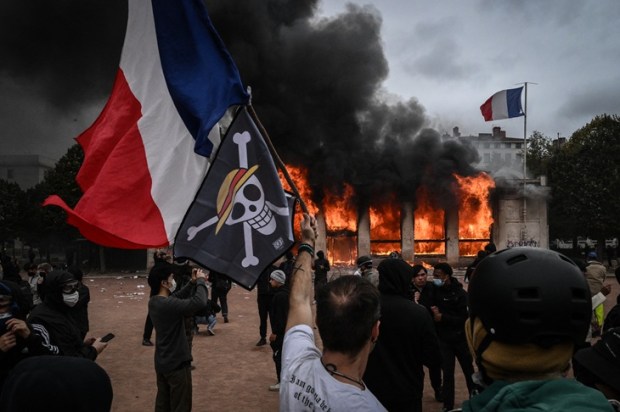
During the January 2026 uprising, verified footage from numerous locations showed protesters chanting in support of Crown Prince Reza Pahlavi and the Pahlavi dynasty. Other crowds demanded the overthrow of the clerical system. Pahlavi became a prominent voice encouraging the largest anti-government demonstrations Iran had seen in years. The Islamic regime answered those voices with industrial-scale murder. The exact death toll remains concealed by internet blackouts, manipulated records, mass burials, and threats against doctors’ and victims’ families. But the evidence already available is staggering. Senior Iranian Health Ministry officials told Time that as many as 30,000 people may have been killed on January 8 and 9 alone. Iran International, after reviewing documents and testimony from medical personnel, witnesses, and families, placed the figure above 36,500. The true toll may well exceed 40,000. These were not activists safely posting slogans from Western university campuses. They were Iranians confronting machine guns, snipers, and security forces while cut off from the world. Many called for Pahlavi. Many paid for that call with their lives.
The response outside Iran has been equally difficult to dismiss. In February 2026, approximately 250,000 people attended a Munich demonstration called by Pahlavi. Large gatherings also occurred in Toronto, Los Angeles, Sydney, and other cities globally. These were not small meetings of royalist nostalgics. They were among the largest coordinated demonstrations in the history of the Iranian diaspora.
Critics may argue that engaging Pahlavi would amount to choosing Iran’s future leader. That argument misrepresents both what Iranians are asking for and what Pahlavi himself proposes. The Australian government is not being asked to restore a monarchy, appoint a shah, or decide Iran’s constitution. It is being asked to recognise that millions of Iranians have moved beyond the Islamic Republic and that Pahlavi is presently the most credible figure capable of leading an orderly transition towards a democratic choice. His stated objective is not to impose Iran’s final form of government. It is to provide stewardship between the collapse of the Islamic Republic and the establishment of legitimate institutions through referendum, constitutional processes, and free elections. That distinction matters.
Iran needs more than an opposition figure; it needs a credible plan for the day after the Islamic Republic falls. Pahlavi and his team have prepared for that transition through the Iran Prosperity Project, which sets out plans for security, governance, economic recovery, and institutional reform, beginning with a six-month emergency phase.
His vision is of a secular, democratic Iran that trades with the world, lives at peace with its neighbours, and derives legitimacy from its people rather than clerical rule and repression.
Canberra should therefore engage directly with Pahlavi and his transition team, examine their plans, and begin discussions with allies about how Australia could support a future democratic transition. The Iranian-Australian community should also be treated as a valuable source of expertise, investment, and institutional knowledge. This would not amount to premature recognition. It would amount to strategic foresight.
The predictable objection will be that Australia must not interfere in Iranian affairs. But the Islamic Republic has already interfered in ours. It directed attacks on Australian soil. It has targeted diaspora communities. It has attempted to export its conflicts, hatreds, and ideology into Australian society. Engaging Iran’s democratic alternative is not interference of the same kind. Terrorism and diplomacy are not moral equivalents. Supporting a transition to a national ballot is not comparable to paying criminals to burn civilian property.
Australia does not need to determine whether Iran will ultimately become a constitutional monarchy or a republic. That decision belongs exclusively to the Iranian people. Australia must decide whether it will help create the conditions in which Iranians can make that choice, or continue watching while a terrorist military organisation makes it for them at gunpoint.
The era of pretending that the Islamic Republic can be moderated through another round of negotiations is ending. The IRGC is the regime, and that regime has made Australia a target.
It is time for Canberra to engage with Crown Prince Reza Pahlavi and ensure that Australia has a stake in the prosperity of a free Iran. We cannot afford to remain on the sidelines of a transformation that would make Australia safer, weaken the forces destabilising the Middle East and return Iran to its rightful place among the community of nations.
Pejman Amirnejad is a Sydney-based Australian-Iranian, community advocate.