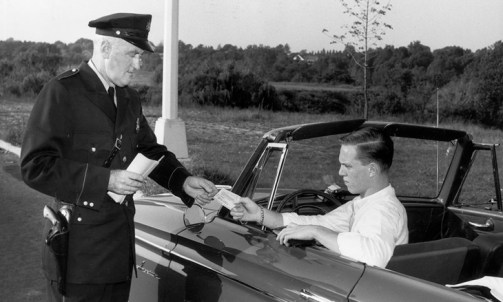
We have all been stuck behind that car. Right-hand lane, twenty under the limit, no indicator, eyes down on the GPS. Not a care. Not even rudeness. The driver simply does not know what he is doing and he is holding a license that says he does.
And we have all sat in front of the GP who never looks up. Five minutes, no eye contact, no hands, no examination – just typing while you talk, eyes on the screen and then a script. He has more letters after his name than anyone you know. He examined nothing.
Now think about the other man. The tradesman who turns up at your house looking rough around the edges – wrong shoes, torn shirt, ute full of gear — who walks in, listens for thirty seconds, puts his hand on a wall and tells you what is wrong behind it. He is right. He is always right. He fixes in an hour a thing that two other blokes could not find. And if you ask him what qualifications he holds, he will look at you as though you have asked him something faintly embarrassing.
Everyone reading this knows all three of those men. And everyone reading this knows something we have collectively agreed not to say aloud: the paper and the person have come apart.
This is not a story about bad luck, or rudeness, or the state of the roads. It is a story about measurement.
Somewhere in the last forty years, we quietly stopped asking whether a person can actually do the thing and started asking whether the documentation is complete. Those are not the same question. They were never the same question. But one of them is cheap, auditable, and legally defensible and the other one is slow, expensive and requires somebody competent to stand there and watch.
We chose the cheap one. We chose it everywhere.
Consider what a driver’s licence used to represent. Not the test – the test was trivial. What it represented was a childhood in the back of your parents’ car.
You were seven years old and you were already learning to drive. You did not know it. You were watching your mother’s hands, watching your father check the mirror before he moved, watching how they read a wet road, how far back they sat off the car in front, when they went and when they held.
You absorbed the hesitation before an unsighted corner. You absorbed what it feels like when someone is going too fast, before anyone said a word. Ten years of that, then two more with an L-plate and a parent beside you, correcting you.
That was the training. The test was merely the receipt.
We have kept the receipt and thrown away the apprenticeship and then we act surprised when the receipt turns out not to be worth anything.
The same swap has been made in medicine, in finance, in teaching, in the public service. In each case, the credential was once the visible end of a long, watched, tested process. In each case, we have hollowed out the process and kept the credential – because the credential is the part you can put in a file.
A certificate is a promise that somebody competent watched. We stopped watching. We kept issuing the promise.
I come from a world where that trick does not work.
In the physical trades, there is no gap between the claim and the thing. A wall is plumb or it is not. A slab cracks or it holds. Water finds every mistake you made, patiently, and it will find them in front of the client. You cannot write a reflective journal about a leaking roof. You cannot form a working group about a sagging beam. The work is done in front of witnesses, in daylight, in a body and at the end of the day the thing you built is standing there, testifying.
Reality is the assessor. It is impartial, it is instantaneous, it cannot be lobbied and it has never once been persuaded by a certificate.
This is why the trades are among the last honest corners of Western life. Not because tradesmen are better people – they are not and anyone who has run a site knows it. It is because the domain will not permit the pretence. Bluffing is available in almost every white-collar profession on Earth; you can produce the report, attend the meeting, use the vocabulary and no one will ever know whether the underlying judgment was sound, because the consequences are diffuse and arrive years later, attached to nobody. On a building site the consequence arrives on Thursday, it has your name on it and it is the wrong size.
Watch a competent tradesman work and you are watching something the modern credential system has no way of describing. He is holding a three-dimensional model of the building in his head. He is reading tolerances by eye. He is sequencing six trades, forecasting where the next problem will surface, adjusting for a set-out error that occurred before he arrived and doing all of it with his hands while carrying on a conversation. He is a performer. He is under continuous, unforgiving assessment by gravity.
Ask him to explain how he knows and he will shrug. This is precisely why the credentialists dismiss him – because he cannot articulate it in the register they recognise and they have made the extraordinary error of assuming that a thing which cannot be written down does not exist.
It exists. It is the most valuable thing in the economy and we have built an entire apparatus of certification that is structurally incapable of seeing it.
This is not an argument against knowledge. The best builder I know reads the Standards properly and can tell you why a bracing calculation works. Theory matters – but theory that is never brought into contact with the physical world is unfalsifiable and unfalsifiable knowledge is exactly the material from which credentialism is made. The trades keep theory honest, because on a building site the theory has to stand up in the rain.
So when we ask how a country regains the ability to measure competence, we do not need to invent a method. We need to copy the one that never stopped working.
The good news is that we are not required to invent anything.
We know exactly what honest assessment looks like, because we have not lost it everywhere. It survives in the cockpit, where a pilot sits in a simulator and is failed by a man watching him. It survives on the trade site, where the work is examined by the thing it was built to resist. It survives, still, in surgery. Wherever the consequence of incompetence is immediate, visible and attached to a name, we have kept the old method – because we did not dare do otherwise.
Everywhere else we have quietly replaced it and the replacement is always the same substitution: we assess the artefact instead of the person.
The undergraduate engineer submits a model. Did he build it, or did the software? Nobody knows, because nobody watched. He will graduate having never once been made to derive a result under pressure, on paper, with a person qualified to judge him standing over his shoulder. He will be certified competent in a discipline where the failure mode is a collapsed bridge.
The law student is assessed on a written assignment produced over three weeks with unlimited resources. He is not made to stand up and argue, extempore, against a hostile bench – which is the actual job. The medical graduate is assessed on multiple-choice recall and a portfolio of reflections and then discovers on his first ward round that the skill required is reading a frightened person’s face and that nobody ever tested him on it, or taught him, or told him it mattered.
The IT professional – perhaps the most quietly protected class of all – works in the only domain where he can look up the answer in the middle of doing the job and no one is permitted to notice. He has read the help menu. He is figuring it out as he goes. He may be excellent. There is no mechanism that would tell us either way.
The remedy is unglamorous, expensive, and entirely obvious. Put the person in front of the task, under conditions they cannot control and have somebody who can actually do the job stand there and watch.
That is it. That is the entire method. It is what an apprenticeship is. It is what a viva is. It is what a flight check is. It is what a trade test is. It is the oldest quality-control mechanism in Western Civilisation and it works for the same reason it has always worked: because performance in front of a competent witness is the only thing that cannot be faked.
This is not a rejection of software, or of the age. A competent engineer should absolutely use the model – after he has proved, once, unassisted, that he understands what the model is doing. The tool is a multiplier of judgment. Applied to zero judgment, it multiplies nothing and hides that it has done so. The failure is not that we gave people tools. It is that we let the tool sit in the place where the competence was supposed to be and then stopped checking whether anything was underneath.
We are about to ask this country to build things it has not built in fifty years — energy systems, advanced manufacturing, defence capability, the industrial base of a serious nation. Every one of those plans assumes a workforce whose ability nobody has actually verified.
You cannot plan a capacity you have never once measured.
None of this is decline and I want to be careful about that word, because it is the lazy conclusion and it is the wrong one.
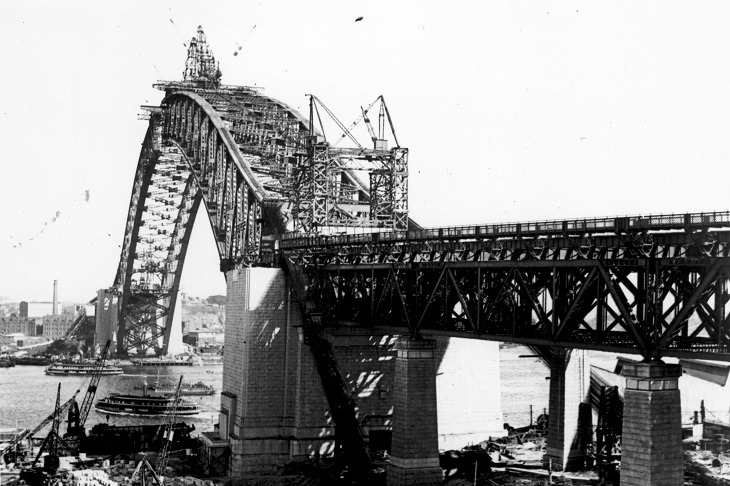
The West did not become the West by accident and it did not become the West through paperwork. It became the West because a thing either worked or it did not and somebody was answerable for which. That is the whole secret. It built the cathedrals, the aqueducts, the bridges, the engines, the vaccines, the aeroplanes. It is why every nation outside the West, without exception, still copies our institutions, our standards, our engineering. They are not copying our compliance frameworks. They are copying the excellence those frameworks were originally built to protect.
And here is the thing that should give us confidence: we have not forgotten what competence looks like. We recognise it instantly. Every one of us can tell, within about ninety seconds, whether the person in front of us is genuinely good at their job – the tradesman who reads the wall, the nurse whose hands know what they are doing, the waiter who has your table running like a machine and never once appears to hurry. It feels like a window opening in a stale room. We remark on it, because it has become unusual and the fact that we remark on it proves the standard is still alive in us.
We have not lost the taste for competence. We have lost the nerve to test for it. Testing properly is slow. It is costly. It requires a competent person to stand there and pass judgment – and judgment is the one thing our institutions have decided they can no longer afford to be seen doing.
That is not a civilisational disease. It is a design fault. And design faults can be corrected – deliberately, sector by sector, by people willing to say the unfashionable thing: show me.
Show me you can do it. Not your transcript, not your portfolio, not your reflective statement. Do it, here, in front of someone who could do it better than you and let them tell me whether you can.
That is the oldest standard we have and it is the only one that has never lied to us.
A country that cannot tell the difference between a certificate and a competent human being cannot build anything that matters.
We have not lost the knowledge. We have lost the nerve.
Find it.
Nathan Whiting, Construction Industry Educator