In this time of political and social instability, there are two things I know for certain.
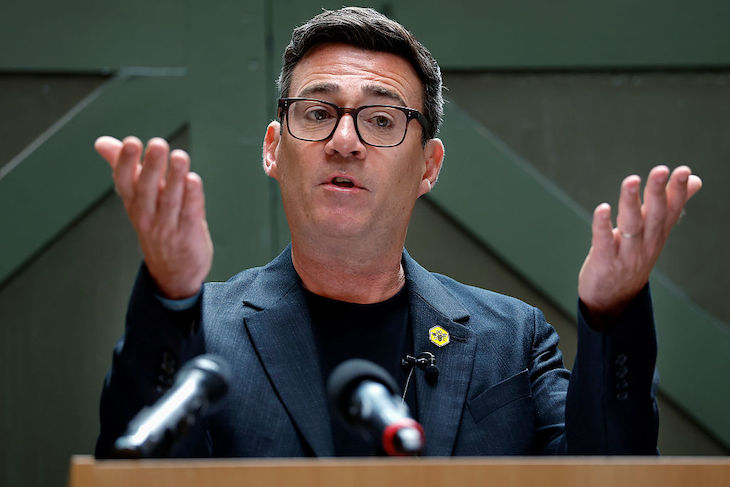
Football is not coming home, perpetuating 60 years of hurt and the death of the restoration of English sporting glory. People are also witnessing the ascension of Labour’s Messiah, Andy Burnham.
After months of speculation and plotting, the self-styled ‘King of the North’ has finally won his crown on the promise of creating a ‘new politics’. To advance the cause of devolution so much it will create a localist premier league of places with more power in the hands of local government.
At first, this sounds like an excellent way to give power back to those who have long been forgotten by Westminster. Empowering local institutions is vital in creating a more robust parliamentary democracy. It could almost be argued that this idea is almost Disraelian in sentiment to the point it resembles One Nation Toryism. Indeed, both David Cameron and Boris Johnson flirted with devolution. However, Andy Burnham may be a nice enough man, gifted a retail politics, and wearing black T-shirts as he dances to Northern Soul, but he is no Benjamin Disraeli.
What Burnham is essentially proposing is a concept of government without a methodology of governance.
How will this work?
What would be its effect on parliamentary sovereignty?
Who would control essential services?
Can local government override the decisions of the national government if they are in conflict with their local agenda?
In the 17th Century, the political debate was between the Divine Right of Kings and the sovereignty of Parliament. In the 21st Century, it will be between parliamentary sovereignty and the sovereignty of the shire.
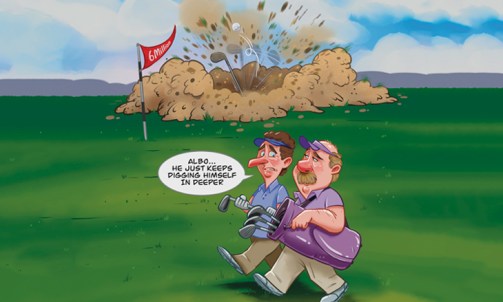
This is not necessarily a wrong way to govern. If done in the correct manner, it may prove a triumph. However, history teaches that grand ideas are rarely translated into reality (just ask the English team). In an extraordinary feat, Burnham has become Prime Minister on the coattails of vibes rather than actual policy. He is a proponent of bridging the divide between North and South, which is admirable as it is long overdue. Yet, he has not articulated a plan of how he plans to accomplish this, except for proposing to build a Northern Number Ten.
He plans to expand the Bee Buses Network throughout Britain without understanding the financial implications or consulting local governments – contradicting the entire point of devolution.
Andy is the 7th Prime Minister in almost a decade in a long line of the mediocre; one would think that this would be a constant incentive to have a plan?
To the utter surprise of no one, though, it is evident that he is incapable of devising one. One could argue that this could make him into the Boris Johnson of the Labour Party. A very popular mayor who had the potential to be great after experiencing a political apotheosis but was ultimately ill-equipped to be Prime Minister.
Political obsessions, such as with Johnson and now with Burnham, always fade when the public inquires more about policy than vibes. One must only look at the KEVIN ’07 campaign to see this…
Substance over looks is the first rule of good government. Policy, in the end, possesses priority over the whims and fancies of politicians. A team is more than its striker.
Devolution is at the forefront of these vibes, even if it lacks all sense of direction, but again, what else is there?
The public knows very little of the Burnhamite vision on foreign policy, plan for reindustrialisation, social issues, or defence spending. There is a great lot of nothing of the nuts and bolts of public policy.
He seems like a good man but that does not mean he will be a great Prime Minister. I hope I am wrong but there is a foreboding feeling among many he is not ready.
Time will tell.