While Australia remains fixated on renewables, the rest of the world is accelerating into a new era of energy and technological competition.
Why? Because Australia sits on extraordinary upstream resources like world-class lithium, critical minerals, and LNG, yet continues to dither with an almost all-consuming transition. This single play helps explain why Australia is being outmanoeuvred in the industries that will define the next economy. This week’s headlines make that gap difficult to ignore.
A flagship lithium hydroxide plant in Western Australia has been idled, placing the last operating train into care and maintenance. Billions were poured into downstream processing. Trains were cut back or scrapped. Now the project stalls, arguably undone by high costs, energy volatility and an inability to compete, particularly with Chinese facilities.
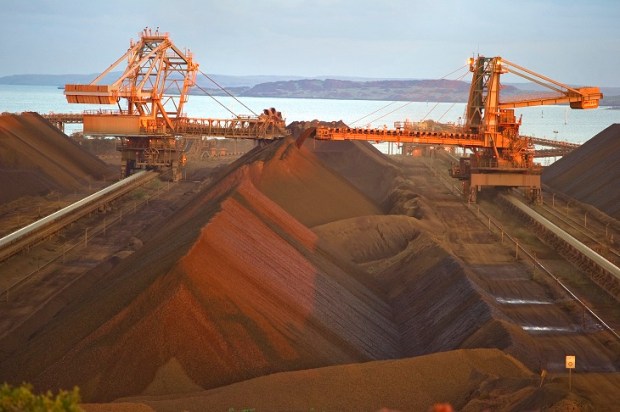
Meanwhile, we mine the spodumene at Greenbushes, ship it offshore, and others turn it into battery-grade chemicals. There is no sovereign capability in this. It’s something. It shows partial participation in the value chain, but that’s dominated elsewhere.
When it comes to fuel security, we are undone. This week, we bet on volatile spot cargoes, ad hoc deals with suppliers, and last-minute diplomatic efforts. The irony is hard to miss: the Prime Minister flew to Singapore to secure fuel – burning significant fuel in the process – to top up Australia’s reserves.
The same pattern extends into the frontier industries we should be helping to shape.
In space, Australia remains a supporting player. We provide tracking infrastructure for programs such as NASA’s Artemis missions, while others push ahead with lunar payloads, launch capability and commercial space platforms. Domestic efforts from Gilmour Space to Fleet are promising, but remain small relative to the scale of global investment. While the architecture of a cislunar economy emerges, Australia plays a supporting role.
The lunar economy seems less abstract when Helium-3 joins the story. This isotope is rare on Earth but increasingly discussed as a potential fuel for advanced fusion systems. Australia’s Gold Hydrogen has identified elevated helium-3 concentrations in South Australia, including at its Ramsay prospect. Yet there it remains. A footnote rather than a strategic priority. Other nations are already thinking in terms of extraction, supply chains, and even lunar sourcing. Australia has the beginnings of an advantage, but little evidence of urgency.
In fusion itself, the gap widens. Australia has credible scientific heritage and pockets of private innovation, including laser-based approaches and investment links to international ventures. But the scale is modest. The United States, China, and Europe are committing serious capital and engineering effort toward pilot systems in the coming decades. The race is hot and industrial.
The economic data reinforces a broader pattern. Labour productivity fell 0.6 per cent in 2024-25, with multifactor productivity also declining. Headline GDP growth is propped up by population expansion, while GDP per capita – and therefore living standards – has stagnated. As Australians feel in their pockets, resource wealth is not translating into productivity gains or value-added industry.
This is not accidental. It is the predictable result of a system geared toward short-term management: reactive energy policy, slow approvals, and a reliance on migration to offset structural weaknesses rather than address them. Investment is deterred by volatility. Projects stall in process. Strategy is replaced by sequencing announcements.
Meanwhile, larger economies are building the architecture of the future: secure supply chains, scaled processing, advanced recycling, firm power for industry, and emerging technologies from space to fusion. Australia continues to supply the inputs while others innovate them.
The pattern is becoming harder to ignore. We have the resources, the capital, and the strategic position. What we lack is the political courage to convert those advantages into capability, instead of hyper-focus on the transition.
Embarrassment, at least, has its uses. It clarifies the gap between potential and performance. The evidence is already visible in idled plants, thin fuel buffers, and missed opportunities across space, helium-3 and fusion.
The question is whether that gap becomes politically significant enough to force action before it becomes economically and culturally entrenched.